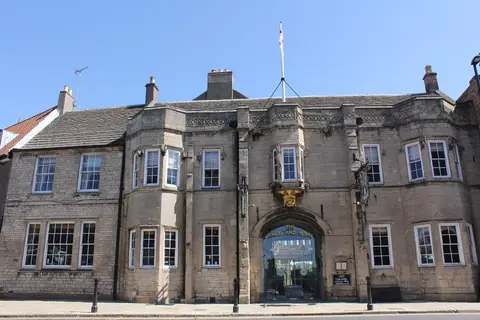
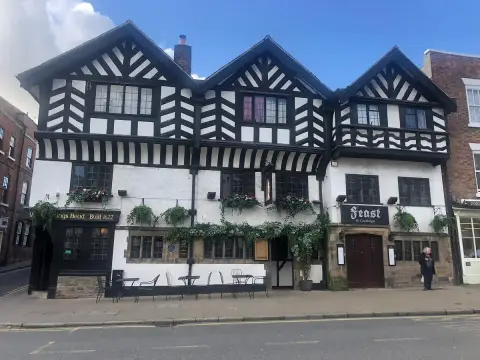
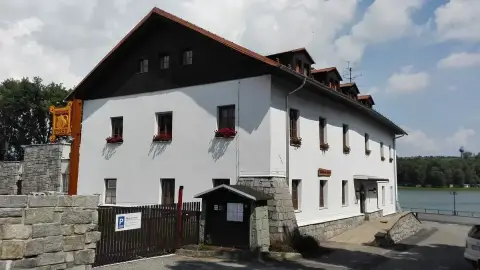
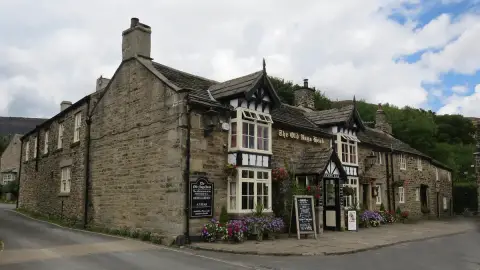
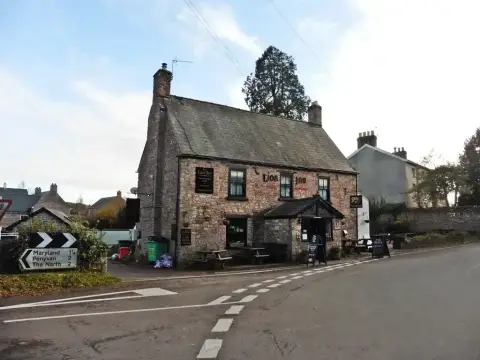
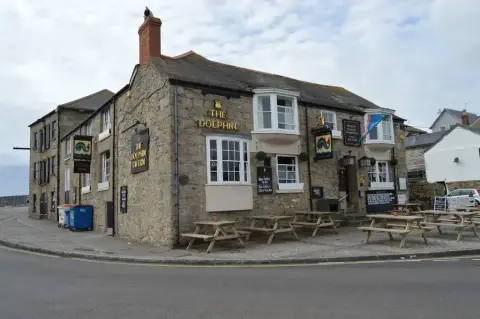
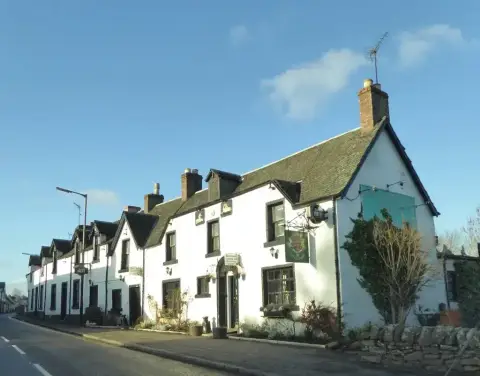
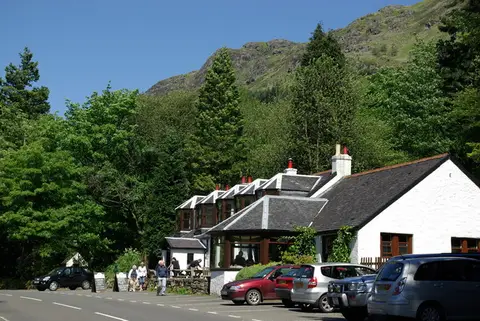
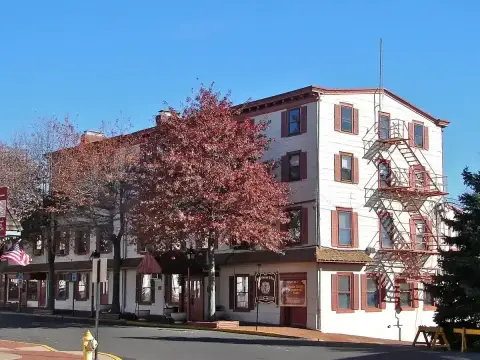
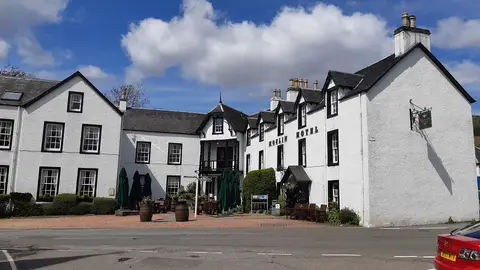
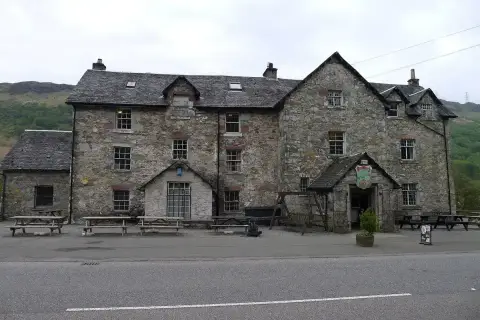
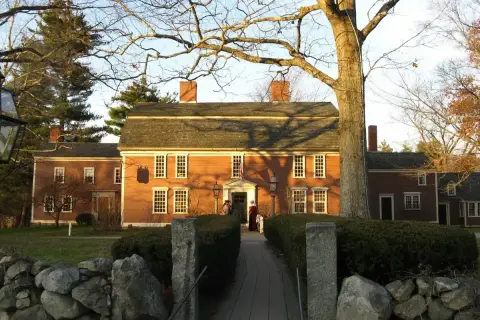
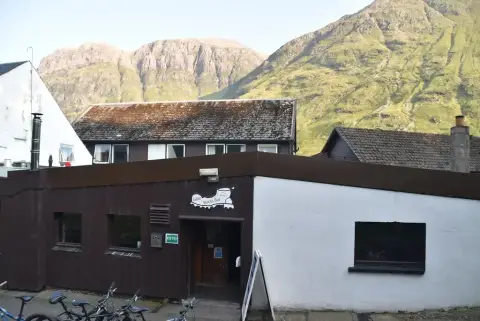
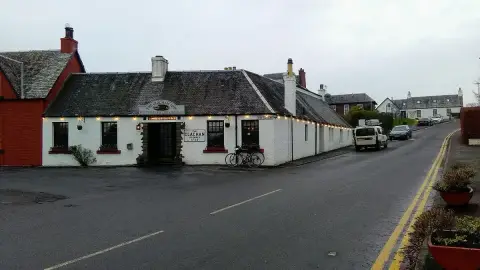
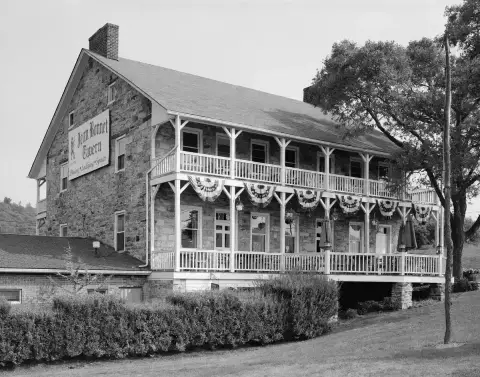
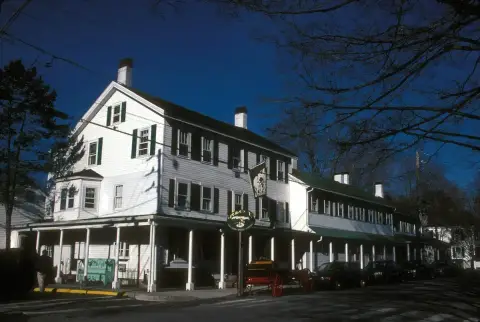
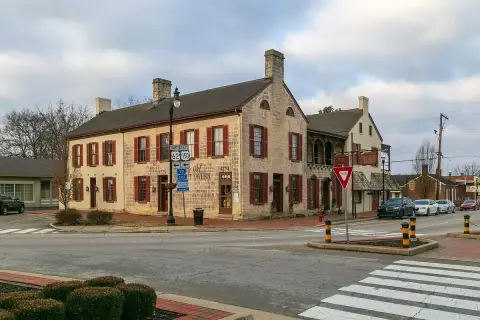
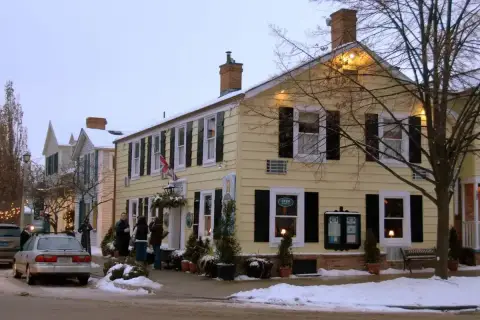
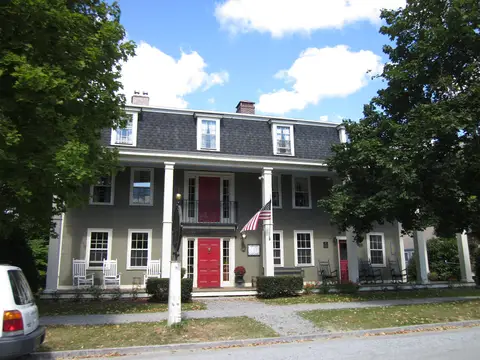
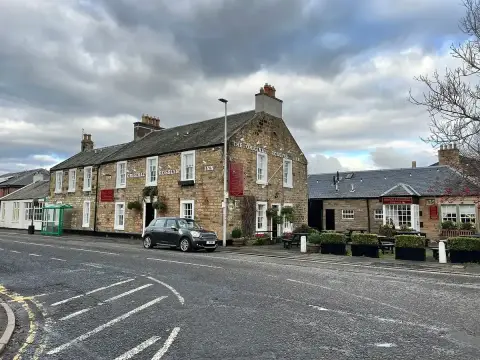
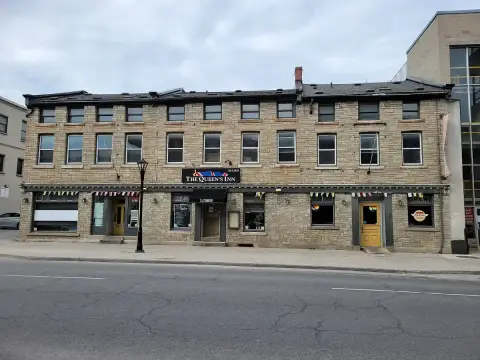
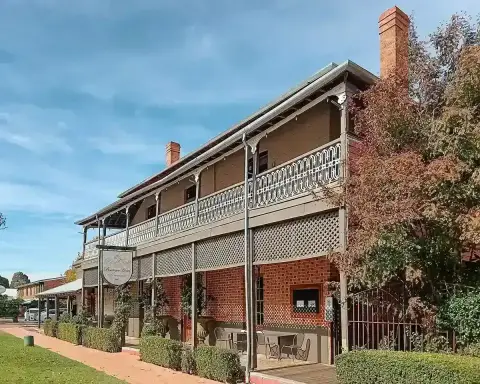
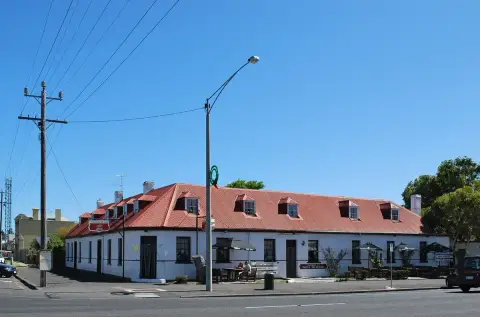
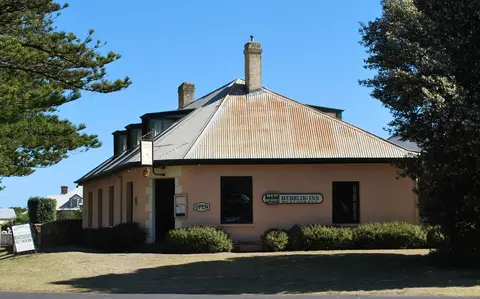
The inn is the older institution. Its licensed business was lodging travellers and their horses, and drink arrived with the bed rather than the other way round — which is why so many of the oldest houses on this site are inns rather than pubs. Eighty-three of them still let rooms, the largest collection here.
An inn had to receive strangers, so it was built large: a yard, stabling, a kitchen working all day
and a row of chambers upstairs. Several were put up for the purpose by institutions that needed
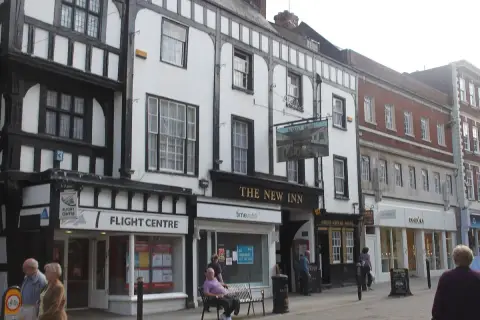
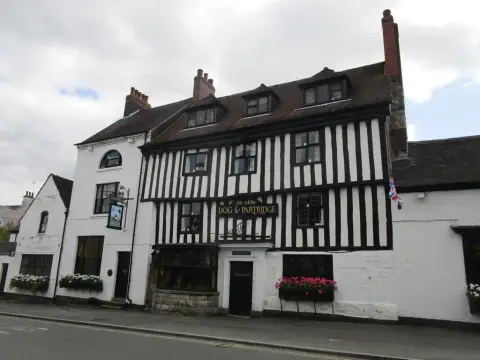
somewhere to put their visitors. The New Inn at Gloucester dates itself
to 1450, when it holds that the monk John Twyning built it for St Peter’s Abbey; no document gives the
year, but Historic England and the Victoria County History both describe a mid-fifteenth-century inn,
built as one rather than converted into one.
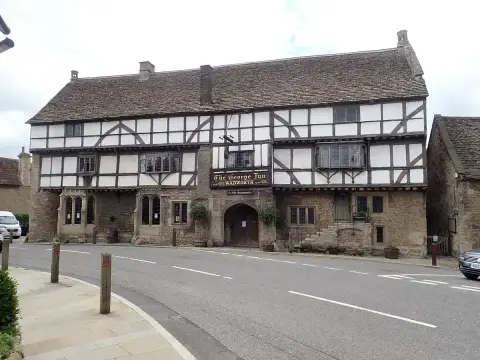
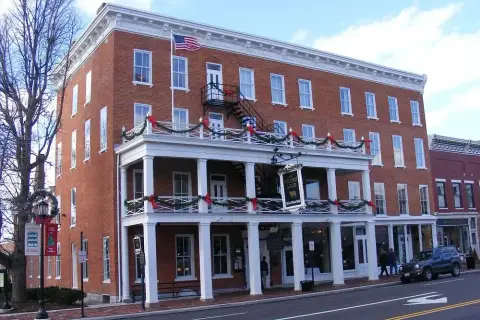
The George at Norton St Philip was raised by the
Carthusians of Hinton Priory for their wool fairs, its timbers tree-ring dated to 1430–32.
Lodging travels better than any other reason for a pub to exist, and this collection reaches eleven
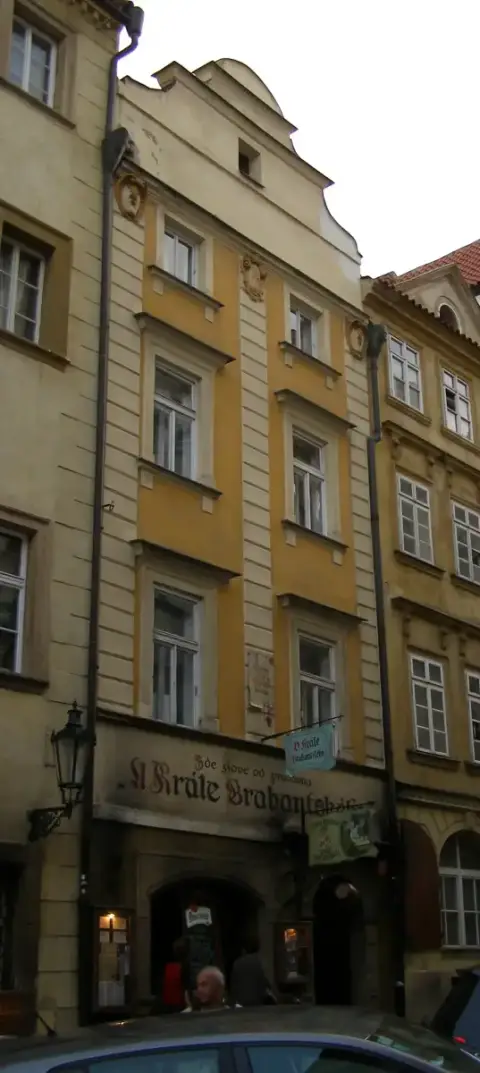
countries because of it. Jaškovská krčma in Czech Silesia rests on
a charter of 12 May 1268 in which Duke Vladislav of Opole renewed the Benedictines’ rights, a tavern
at Těrlicko among them. In Australia and New Zealand the same houses are called hotels: Hobart’s
Central Hotel is permanently registered on the Tasmanian Heritage
Register as the Ship Hotel, 73 Collins Street.
Two cautions. Rooms are not evidence: forty-seven of the eighty-three have no first record of trading
traced, and a bedroom can be last year’s conversion. And whether a house is letting this season only
its own website can answer; we publish no rates, no availability and no opening hours. If the three
licensed trades behind the word inn are unfamiliar,
inn, tavern or alehouse separates them, and the road-going
relatives of these houses are gathered under coaching inns.
Spread across England, Wales, Germany, Czechia, Jersey, Scotland, Denmark, United States, Ireland, Canada, Australia, New Zealand, South Africa. Ordered by the date each one claims, oldest first — which is not the same as the order of the evidence.
The AD 560 date is tradition only; no early documentary source has been published. The listed building is 17th-century with an older cross-wing, and a continuous run of named innkeepers is recorded only from 1841.
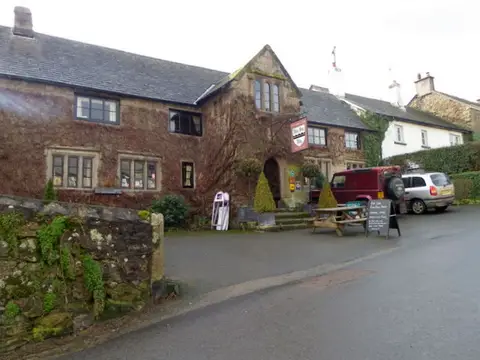
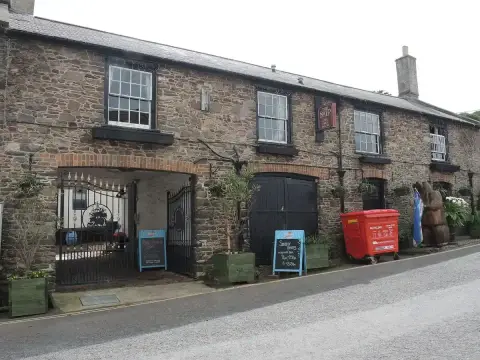
The building is a genuinely old listed Devon longhouse, but it was a farmhouse until it was made into a pub and restaurant in August 1982, which CAMRA's South Devon branch states as plainly as the inn does. Historic England lists it grade II, under the spelling Crideford Inn, and first listed it on 2 July 1986 — four years after the conversion, so the register knows the building as an inn and says nothing about how
The 947 is the house's own claim, though it has faded from its website: the current site says only 'England's oldest inn' and eleven centuries, while the history page archived in September 2020 gave the tradition that part of the building was a hospice built for Aethelmar, Duke of Cornwall in 947AD, quoting a local history published in 2000. The date rests on that tradition. The radiocarbon test usually cited in
The 12th-century date is CAMRA's: its Cornwall entry calls the Crown a 12th-century listed pub on the Saints' Way, and the inn's own website gives no date at all. The listing the grade was recorded from has now been read. Historic England designated the Crown on 28 August 1987 and calls it an inn, probably of early 17th-century origin, with alterations and additions of the later 17th and early 18th centuries, a
The claim is the inn's own: its history page describes Benedictine monks building a nine-room granite and oak monastery around the South Zeal menhir in the 12th century, and the manor being leased and licensed as an inn in 1477, and CAMRA repeats the 1477. The list entry has now been read, and it reaches neither date. Historic England, which listed the house Grade II* on 20 February 1952, calls it an inn, former
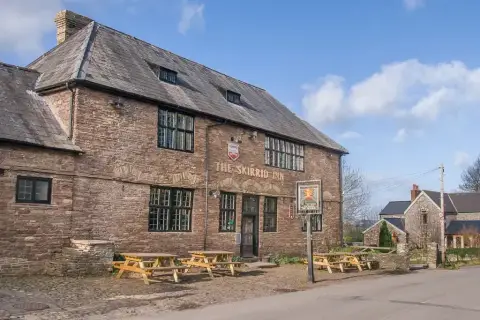
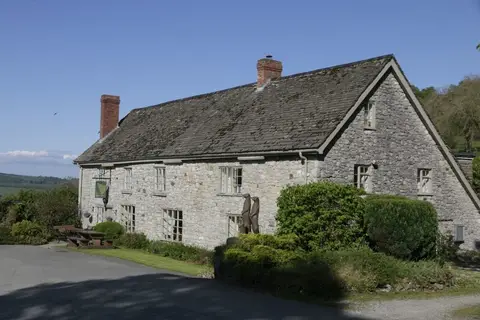
Cadw's listing calls it a fine C17 purpose-built inn and says it is not medieval despite its claims. The Glamorgan-Gwent Historic Environment Record, now kept by the Heneb HER Charitable Trust, says the same from its own survey work: record 01623g describes a mid-to-late 17th-century building that appears to have been purpose-built as an inn, with 17th-century roof timbers, ground-floor ceilings, oak stair and door
The Bären calls itself the oldest inn in Germany and dates itself to 1120, the year the dukes of Zähringen founded Freiburg. What 1120 dates is the ground rather than the trade. German Wikipedia and the city's own tourist service both say the foundations, and the three-storey cellar with its arcades and pillars, belong to the manor house of the Zähringer court that stood here before the city did; the cellar can be
Claims 1120; first recorded 1387; building c.1120.
The claim is the hotel's own: its history page says the Olde Bell first opened in 1135 as a guest house for visitors to the Benedictine priory, and it kept an 890th birthday in 2025. The foundation date is a long-standing tradition, not a documented licence. The surviving timber-framed building is Grade II* listed, but the earliest record of it trading as an inn has not been identified.
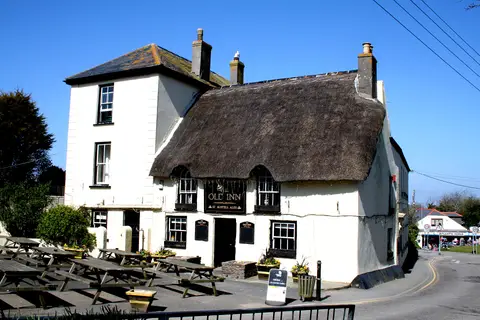
Cadw's listing describes a later-17th-century thatched house extended in the 18th and 19th centuries, with no medieval fabric noted. The Glamorgan-Gwent Historic Environment Record, now Heneb, agrees from its own file: record 02034m gives a 17th-century core with 18th- and 19th-century additions and a modern extension, two storeys under a thatched roof. The Royal Commission's National Monuments Record carries it as
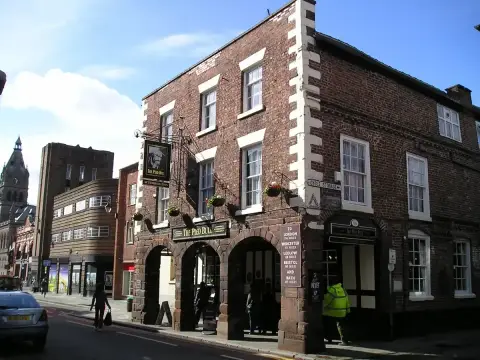
The pub says it dates to 1155, is reputedly Chester's oldest licensed house and has a staircase of 1535. Historic England's entry for 57 Northgate Street, read on 17 September 2026, calls the house an inn, probably on the site of two medieval tenements, and dates the fabric to the 17th century, partly refronted later that century and extended to the rear in the 19th. The oldest thing it names is oak framing on the
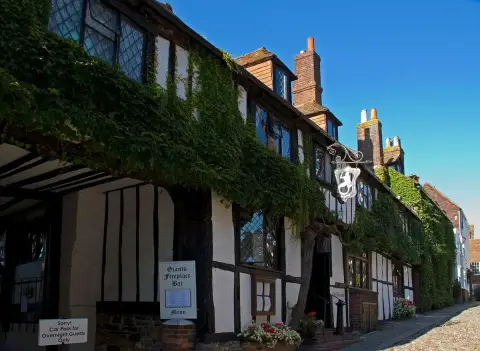
The 1156 date refers to the cellars, which Pevsner and English Heritage place in the 13th century. The timber-framed inn was rebuilt around 1420, and the house traded without a full licence for long periods and reopened with a bar in 1955. William Holloway's history of Rye, printed in 1847 from the town's records, carries it back further than this page could before. He prints the schedule of the king's bailiff's
Claims 1156; first recorded 1670; building c.1420.
The house calls itself Germany's oldest inn and dates itself to 1158, the year it says Emperor Barbarossa lodged here. Its own history page traces that to an 1865 pamphlet by Dr Ph. Madler, which reported the Hof zum Riesen known from documents by the mid-twelfth century, and adds that the records Madler worked from no longer survive — nor do those behind the royal visits of 1314 and 1368. What survives is the
Claims 1158; first recorded 1411; building c.1590.
The inn occupies former buildings of the Premonstratensian abbey at Blanchland, founded in 1165, so the fabric is genuinely medieval and the claim is the abbey's foundation rather than a record of drink. Historic England's list entry, read on 17 September 2026 through an archived copy of entry 1154141, is more precise than anything the page carried before: the range is the abbey's west cloister, probably the abbot's
Popular histories date it to 1180 and cite a crypt-like cellar and secret passage linked to the neighbouring Norman church; the pub itself more cautiously calls the building 14th century. No documentary licence date has been confirmed.
The Ship advertises itself as a 13th-century coaching inn at the foot of Porlock Hill. Historic England lists it as an inn of C16 to C17 date, probably a three-room and cross-passage house, enlarged by a bay to the left and four bays to the right in the early to mid C19, its thatch half-hipped at one end. The Exmoor National Park Historic Environment Record, which keeps the record for this parish, reads it
The hotel's own front page says it has welcomed guests since 1203, and its history page is more careful than the story usually told about it: it says the house stands on ground believed to have belonged to the Knights Templar, and that tradition holds King John and his court lodged here on 23 February 1213. Nothing traced dates a drinking house to 1203. Lincolnshire's historic environment record describes what stood
Claims 1203; no early record found; building c.1370.
Historic England is unusually specific: this Grade II* building was put up about 1208 as the town house of Peter the Clerk, who administered Chester Castle, and rebuilt from the old Row level upward in the C15, C16 and early C17 for Randle Holme I, first of four generations of heralds. So the 1208 is real, but it dates a house, not a house of drink. The pub's own history says it became an inn called the King's Head
The 1268 record is a charter of 12 May 1268 in which Duke Vladislav of Opole renewed the rights of the Benedictines of Orlová, among them a tavern (taberna) at Těrlicko alongside those at Žukov and Ostrava; Czech Wikipedia cites Prasek, Dějiny knížectví Těšínského (1894), p. 40. That is a tavern in a charter, not a house or an owner, at the claimed date. Two caveats stay: the charter names the estate's tavern rather
Claims 1268; first recorded 1268; building c.1691.
The pub says it was built in 1271 for masons working on St Senara's church, but CAMRA's heritage survey of the Grade II building dates the fabric to the early 18th century. Earlier drinking use on the site is unproven. A second publisher adds a little on each side: John Hobson Matthews, in his history of the parishes of St Ives, Lelant, Towednack and Zennor (1892), dates the south side of the nave at Zennor church
The Eight Bells is described as 14th century by CAMRA and by the inn, with a story that it housed the masons who built St James's church and stored the bells that gave it its name. Historic England lists a C17 Cotswold ashlar building with mullioned and bay windows, a stone slate roof and an inglenook by the stone bay. That is three hundred years short of the claim, and no record of drinking here in the 1300s has
The operator dates the inn to around 1300, and local tradition says Edward I visited in 1299 and Elizabeth I in 1573; these visits are not tied to documented use of this building as an inn, which also housed the town's magistrates' court until 1859.
Pembridge's own historians trace the New Inn to 1311, when it is said to have begun as a farmhouse, and tell of the treaty of 1461 that put Edward IV on the throne being ratified inside after the battle of Mortimer's Cross. Historic England describes a C17 timber-framed house, later a public house, with an H-plan front to the market square, and CAMRA calls it a fine 17th-century half-timbered building. So the record
'Reputedly from 1312' is repeated by CAMRA and the inn itself, and the building is a 17th- and 18th-century house. Historic England's listing, read on 17 September 2026, says so in as many words: the Sloop is listed Grade II, first listed on 4 June 1952, and described as C17-18, low and L-shaped, of colourwashed granite rubble with a tarred plinth, two storeys, slate-hung above the ground floor on the sides of the
The thatched house is long, low and genuinely old, and the 1320 with the story of Johannes Cott is the inn's own, repeated by CAMRA. Historic England, which listed it Grade II on 11 November 1952, dates it early in the 17th century or of earlier origins, remodelled later that century and extended at both ends in the 18th: a three-room-and-through-passage house with gable-end stacks, a plank-and-muntin screen
The pub says it began in 1347 as cottages for workmen building the adjacent chantry college tower. Historic England dates that tower to about 1372 or 1373 and records Sir Guy de Brian, Edward III's standard-bearer at Crecy and lord of the manor, founding the collegiate chantry in 1373 with six priests, a rector, five fellows and four clerks; the tower is listed Grade I and is all that stands of the chantry church.
The 1350 is KentOnline's, in a 2021 survey of Kent's oldest pubs, which says the Angel was a hostelry as long ago as 1350 without naming a record. The pub's own site and CAMRA's Kent branch both say only that the building is 14th-century and the oldest in the village. No documentary evidence of early use as an inn has been published.
The 1375 is the tavern's own — "Otevřeno od roku 1375" stands on its front page — and CzechTourism repeats it on Kudy z nudy, where the house is called one of the oldest almost continuously open inns in Prague. Prague City Tourism calls it one of the oldest pubs in the city but names no year, and nobody cites a record. Pražský deník, writing on 8 May 2021, is the most careful of them: it reads the inscription on
Claims 1375; first recorded 1884; building c.1629.
Nobody states 1378. The pub's own site says the inn was built in the 14th century and was the monastic quarters for the Norman church until the Reformation, but gives no year; CAMRA reads the frame as 16th-century and records the first reference to a licence in 1694; Historic England, as Wikipedia relays, dates the timber frame to probably the early 16th century while noting that an earlier date has been claimed
1378 with no published claimant; first recorded 1694.
The inn says it dates to the 14th century and popular histories give 1383, linking it to pilgrims travelling between Winchester and Canterbury and to a stay by Edward VI in 1552. No primary documentation was located in this research.
Claims 1383; no early record found; building c.1350.
Historic England regards it as probably the earliest surviving purpose-built inn, erected by Hinton Priory. The claimed 1397 licence is not itself verified, but tree-ring dates of 1430-32 and its medieval function as an inn for the priory's wool fairs are well documented, and the earliest documented use recorded here is that tree-ring date. The Grade I list entry, written in 1968, disagrees with the tree-ring
Claims 1397; first recorded 1432; building c.1430.
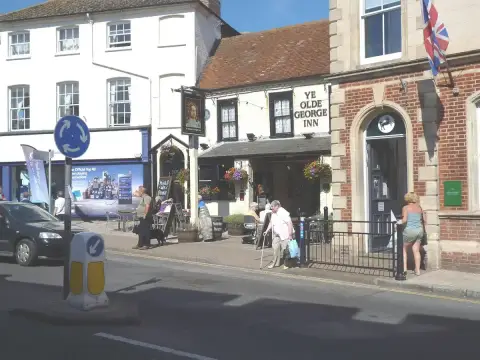
CAMRA describes a Grade II listed 15th-century coaching inn, rebuilt after the Civil War with stone said to have come from Christchurch Castle. The listing it points at has now been read, and it will not date the frame. Historic England, which listed the house on 12 February 1976 as Ye Old George Inne, Castle Street, calls it a timber-framed building refaced in the 18th century with painted brick: two storeys, three
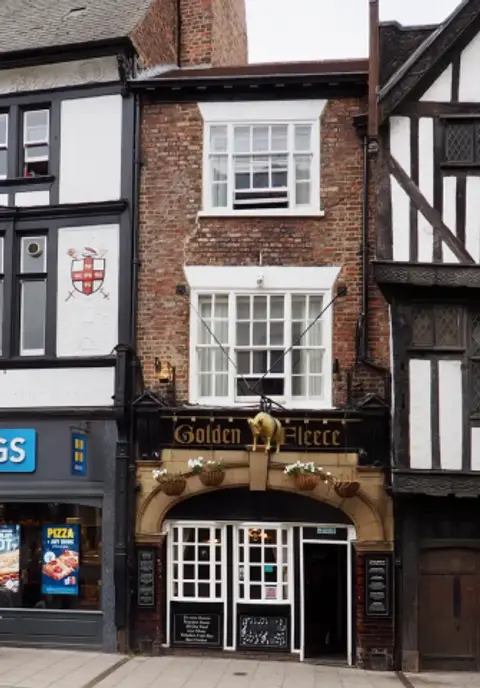
The pub's history page says the house was built for William Bowes, a merchant and Sheriff of York, in 1417, and that he became Lord Mayor in 1428. The same page says the building dates to the fifteenth century "when it was a private house", and that a medieval inn is only supposed to have stood on the site before the present one. Historic England lists the building Grade II* (list entry 1256886, first listed in
Claims 1417; no early record found; building c.1560.
The claim is the pub's own: its history page says the building dates from circa 1420 and the home page gives it 600 years. Historic England lists the house Grade II and describes it as a cottage, now a public house: 16th-century, timber-framed and roughcast, with 18th-century alterations and extensions and a 20th-century range at the rear. That puts the walls a century later than the 15th-century date CAMRA gives
The 1443 is the hotel's own: its history page, archived in 2016, says the Luttrell Arms occupies the site of three ancient houses recorded from 1443, when two were conveyed to Richard Luttrell by William Dodesham, and adds that nothing shows how old those houses were or what part they play in the building standing today. The Grade II* building is late 15th century. The tradition that it was a guest house of the
Claims 1443; no early record found; building c.1443.
The New Inn gives 1450, when the monk John Twyning built it for St Peter's Abbey to lodge visitors — an inn from the start rather than a house that later took a licence. No document states that year: Historic England lists it Grade I as a mid-C15 inn of four ranges around a galleried courtyard, the most complete survival of its kind in Britain, and the Victoria County History of Gloucestershire says the same without
1450 with no published claimant; first recorded 1450; building c.1450.
The 1450 is Visit Jersey's, which says the rear building, the original court house, has parts dating back to 1450. The Liberation Group, which runs the inn, claims only history dating back to the 15th century, and CAMRA's Channel Islands guide says about 400 years old. Sources disagree and no documentary date for inn use was found.
Locally dated 1450; no early record found; building c.1611.
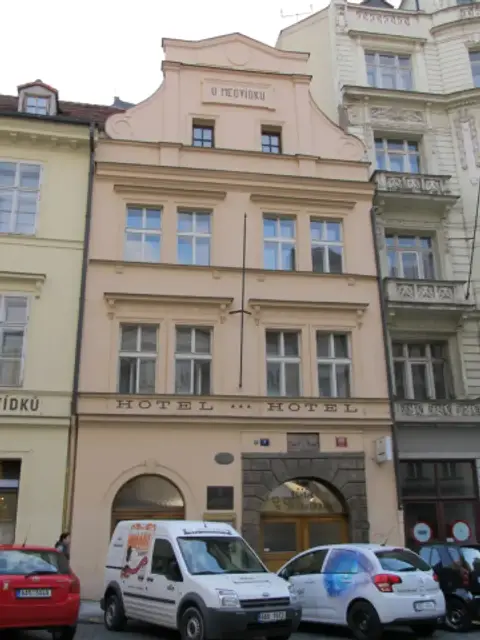
The house is documented in writing from 1404, but that entry names the house of the late Pavel Hubený and has nothing to do with drink: between about 1410 and 1433 his relatives, one of them Nicolaus the soap-boiler, appear to have boiled soap in it. Malt arrives in 1433, when Mikuláš the maltster bought the house and with it, probably, the right to brew, and from 1438 Jakub Starostka brewed here. Jan Nedvídek, who
Claims 1466; first recorded 1438; building c.1614.
Cadw listed the inn Grade II* on 23 September 1950 and dates it to the seventeenth century, recording a painted sign that once carried 1617, a rebuilding and enlargement in 1766 lettered on a rainwater head, and only a stair surviving from the earlier house; the plan the building has now is on the town plan of 1829. The 1472 is published by Visit Wales, not by the house: the Inn Collection Group, which has run the
This is a pub that undersells itself. Neither its own pages nor its pub company make an age claim, but Historic England lists it Grade II* as originally a coaching inn, probably of late C15 to early C16 date, timber-framed with close studding on a stone base and C18 brick wings; CAMRA calls it a Tudor coaching inn. Fabric of the claimed age is documented and the building was an inn from the start, so the grade is B.
Widely described elsewhere as an early fifteenth-century inn, including by CAMRA, but the pub itself says only that it has offered hospitality since the sixteenth century. Cadw's full report agrees with the pub and not with the guidebooks: the house is of the sixteenth or seventeenth century, a former cross-passage timber-framed dwelling whose walls were rebuilt in rubble stone, with large-panel framing still
Claims 1500; no early record found; building c.1500.
CAMRA and the inn describe a 16th-century partly thatched house beside the church. Historic England's entry, read on 17 September 2026, reads it differently: a public house possibly of the late 17th century, with two mid-19th-century wings to the side and rear, the older part whitewashed stone rubble with a cob first floor under a thatched roof with gabled ends and eyebrow eaves, on a two-room plan with a central
York's city archives record the property in 1503, when it belonged to the Merchant Adventurers, but nothing in that entry makes it an inn. York Archaeological Trust's Jorvik pages and the Wikipedia article, following Young (2015), have it known as an inn from 1656 and licensed only in 1668, and that licence is the first firm record of drinking use. Historic England lists the standing building as a rebuilding of
Claims 1503; first recorded 1668; building c.1840.
Cadw's listing, number 3905, describes a seventeenth-century house built in several phases, all probably of that century, with the windows altered in the nineteenth and replaced with leaded lights about 1900, and lists it as a rare surviving seventeenth-century building inside the walled town. Nothing in it reaches 1522, so the inn's claim runs about a century ahead of its fabric; the earliest record cited for the
The house dates itself from a document of 1536 that names the cooper Linhard Großkopf as the founder of the brewing house, and the German Wikipedia article says the same; the name Spezial arrives later, with Nikolas Delscher, called Spicial, who was a brewer and a cooper too. What 1536 dates is brewing, not a counter, so on its own it is no evidence of a drinking house in that year. The earliest account traced of
The inn's own history places its origin in 1553 or 1558, when a bush was hung out after brewing, and admits the evidence is circumstantial: medieval pottery found nearby and possible links to a friary. A search of the national heritage list around Blakey Ridge returns boundary stones and guide stones but no entry for the inn, so there is no listing description to date the walls. Newspaper writing about the pub
The 1568 date is the inn's own, and CAMRA's Dumfries and Stewartry branch repeats it, calling the building the oldest in Moffat still in use. Historic Environment Scotland takes a different view: its category B record dates the standing building to probably the 18th century, on the site of an earlier inn, and writes the 1568 date down as a claim rather than a finding. Claverhouse's lodging here in 1678 is also given
Cadw's listing opens with a record rather than a tradition: the house was established as an inn by 1578, when the 'tavarne y Groes' is named in a court order, and it appears again under that name in June 1580. That is drink trade on these premises five years after the 1573 that North Wales Live gives as a first licence, which is why the grade is A. The licence itself has not been seen, and the 1573 is the
The date the pub gives, 1577, is cut into the stone. Historic England lists the building as a public house of 1577 and early C20 date and records the dated lintel over the right-hand doorway, along with a C16 doorway inside the porch and a chamfered mullion window. That fixes the fabric to the claimed year, which is a grade B. Historic England's map service for the national list gives the entry its date: 1096618
Claims 1577; no early record found; building c.1577.
The pub says it was built in 1580 as a coaching inn, brewhouse and smallholding. Cadw's full report, read on 17 September 2026, dates the house to probably about 1700, allowing that it could fall either side of that, with a rear outshut of about 1800 and a second from the late 20th century when the house was refurbished. It describes red sandstone rubble under Welsh slate, a two-storey and garret central-entry plan
The 1585, the link to Sir John Hawkins and the story of the first pipe of tobacco smoked in England are local tradition; no documentary proof has been found. A second account, published by Cornish Story at the Institute of Cornish Studies, is franker than the tavern's own and differs from it in two places. It says the age of the building is unknown, placing the granite front somewhere in the fourteenth century
The Danish agency for palaces and culture registers this house as listed, and its account — published through the national encyclopaedia — dates the five western bays of the front to about 1600, with three eastern bays added some decades later, all on the foundations of a medieval house. An article by K. H. Rosenstand in Ripenser-Bladet for December 1917, transcribed on RibeWiki, is the second reading and the more
Claims 1600; first recorded 1830; building c.1600.
The 1635 is the inn's own, and CAMRA's Forth Valley branch repeats it as a date for a coaching inn without adding a record; the inn's own page on the history of Thornhill offers nothing to support it. The national designations have now been searched around the house and the absence is established rather than assumed: within two hundred metres they hold Blairhill, Norrieston Parish Church and churchyard, Norrieston
The 1650s comes from the press: the Scotsman's round-up of Scotland's oldest pubs says the inn dates back to the 1650s, when it was a coaching inn, and a trade report and the 2024 sale particulars call it 17th-century. The inn's own site gives no date. The Geological Survey's memoir on Cowal names the Coylet Inn on the east shore of Loch Eck in 1897, which fixes an inn of that name here by then. The national
The 1681 belongs to the Pennsylvania press, not to the inn. The Pennsylvania Independent, on 25 July 2024, has the house opening as the Ferry House in 1681 under Samuel Clift, who ran the ferry between Bristol and New Jersey, and quotes a state tourism official who says it is the oldest bar in Pennsylvania. The inn's own pages claim America's oldest inn and tavern and print no year. Wikipedia records inn use from
Dated 1681 in the press; first recorded 1705; building c.1735.
The inn's current page says only that it has served locals for over three centuries; the 1695 is widely quoted elsewhere. Historic Environment Scotland's record, read on 17 September 2026, is the first outside reading of the building this page has carried. It lists the Moulin Hotel at category C, added on 5 October 1971 and revised in December 2000, and dates the oldest part — the block to the north-east, in the
The pub's own account gives 1696 as the year the premises was first licensed, and says the house sold drink from the 1500s as the Wooden Man Tavern, named for a carved Viking figure on the corner. Neither statement has been traced to a record. The National Inventory of Architectural Heritage, read again on 18 September 2026 from the survey's published data rather than from an archived copy of its web page, dates the
Claims 1696; first recorded 1862; building c.1900.
Historic Environment Scotland dates the core to the eighteenth century, notes the inn on a map of 1776, and suggests it may have begun as barracks for Caulfield's military road of 1748-53, with additions of about 1825-30 and of 1853. All of that sits against the 1705, for which no source has been found, and the house itself is careful in its wording, claiming three centuries rather than a year. Read in full on 17
The National Register nomination is the record behind the claim: Samuel Howe, a carpenter, is believed to have begun the inn about 1700 with two rooms, a taproom below and a guest chamber above, and his son David was granted a licence for innkeeping by the Concord Court in 1716, keeping Howe's Tavern until 1746. Ezekial Howe, landlord from 1746, renamed it the Red Horse and led two companies of Sudbury militia to
The inn's own claim is a length of time rather than a century: its about page says Clachaig has been a source of accommodation and hospitality to travellers for over three hundred years, which the ranking sorts from 1726. The 16th century came from Wikipedia, unsourced, and the inn does not repeat it, so the row now claims what the house claims. The same page produces the earliest records traced here, both
The inn, the village heritage trail and CAMRA all repeat a licence of 1734 and a first licensee called Mistress Gow, said to be Rob Roy's sister; the licence itself has never been produced. The national designations have now been searched across Drymen rather than left open: they hold the Winnock Hotel on the other side of the square and 4 The Square, a cottage the record dates 1864 from a window lintel, and no
The stone building is dated about 1762 in its National Register listing, built by the Indian trader Robert Callender, who sold it in 1779 to Jean Bonnet and his wife; documented inn use begins there, and the Pennsylvania marker has Bonnet and his heirs keeping it from 1779 to 1815. A meeting of Whiskey Rebellion men here in 1794 is recorded. So the 1762 belongs to the walls and 1779 to the trade. The house is a
Claims 1762; first recorded 1779; building c.1762.
The inn's opening by the Griswold family in 1776 is its own tradition and no licence has been traced; what is recorded on the state marker is that the house was here at the time of the British raid on Essex in 1814. Wikipedia has the Tap Room building beginning as a schoolhouse of about 1735, moved to the site. Six families have owned the inn in its history, the present one the Pauls, for about thirty years, and the
The 1779 is traditional, and the National Register nomination that lists the building says so itself: 'According to tradition, since the first guest arrived in 1779, the Tavern has never been closed', with General George Rogers Clark's use of the cellars given as local tradition and the visit of Louis Philippe in October 1797 as legend. A Kentucky state marker dates the stone portion before 1790, suggests it was
Claims 1779; first recorded 1800; building c.1790.
The inn says it is 'believed to have been founded' as the Harmonious Coach House about 1789, and offers nothing to support the year. What is documented is the rebuilding by John Ross in 1815, after American forces burned Newark in 1813, and the hand-hewn beams and plank floors of that rebuilding are what a drinker sits among. No heritage designation for the property has been traced, although the town's old core is a
Claims 1789; first recorded 1815; building c.1815.
The inn says on its own pages that it has been welcoming locals and travellers since 1789 and is regarded as New Hampshire's oldest, and its reopening announcement and the press repeat both. The National Register nomination for the Hancock Village Historic District, entered on 8 March 1988, is the reason this is graded C rather than higher: it says the building was put up as a tavern for Noah Wheeler and that 1789
On 23 December 1803 Jonas Seaman paid four dollars for a licence to keep 'a house of public entertainment' on the site. The present brick building dates from 1815, so the site, not the structure, goes back to 1803. The county history of Warren County published in 1882, whose general chapters were prepared by Josiah Morrow, adds two things and complicates a third. Jonas Seaman is listed there among the pioneers who
Claims 1803; first recorded 1803; building c.1815.
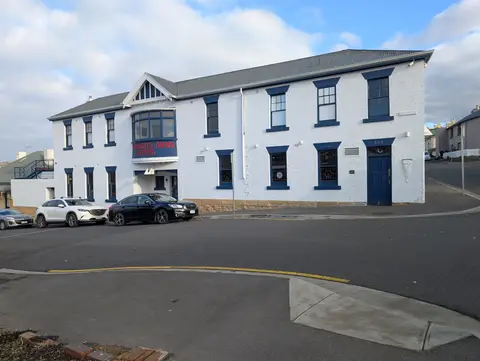
A licence was granted to Thomas L. Richardson on 3 October 1818 for the New Inn, known as the Ship Inn by 1821. That date rests on one pub historian's reading of the Hobart records; we have not seen the licence itself. The Tasmanian Heritage Register lists 73 Collins Street as the Ship Hotel and reads the standing building as an Old Colonial Georgian public house behind a Federation front of about 1900. The two
Locally dated 1818; first recorded 1818; building c.1923.
The hotel traces itself to Johnny Johnston's grog shop of 1827 — an ex-convict, well regarded locally, in its own telling — and claims New Zealand's first liquor licence, issued in 1840. Neither has been traced to a document, and no entry on the New Zealand Heritage List for the building could be found. Two buildings were lost before this one: the first burned in the Battle of Kororāreka in 1845 and a successor in
Claims 1827; no early record found; building c.1875.
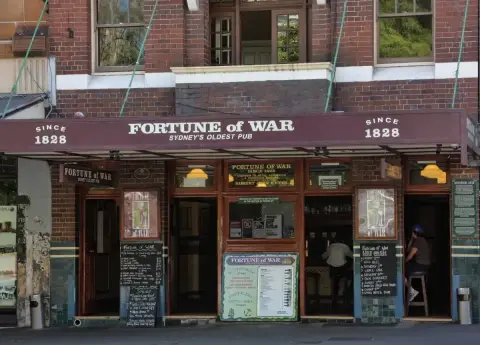
The State Heritage Register has the emancipist Samuel Terry building a terrace of three on this site, completed in the mid to late 1820s and constructed as a public house known as the Fortune of War; its footprint appears in Robert Russell's survey of 1834, and the register places that terrace at today's 139-143 George Street. The first recorded licensee was John Boreham in 1830, for the sale of wines, malt and
Claims 1828; first recorded 1830; building c.1921.
The inn calls itself the oldest continuously licensed pub in South Africa, and its own history is the fullest account traced: Thomas Hartley, a blacksmith from Nottinghamshire, came out with the 1820 settlers, built a forge and a house in Bathurst in the early 1820s, and by 1832 had opened an inn beside the forge. A second and independent account disagrees with that year and with part of the story. The architectural
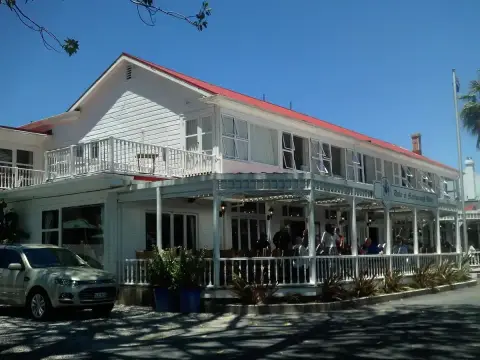
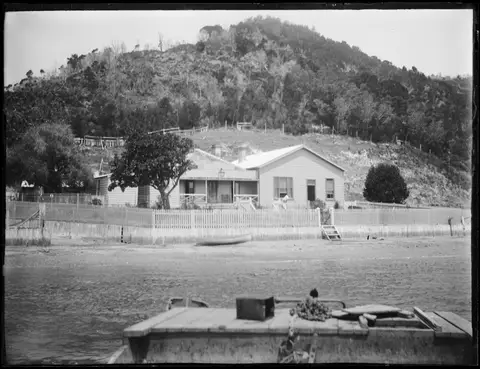
The claim is the hotel's, reported by the New Zealand Herald: the Horeke claims to be the country's oldest surviving pub, with a history dating to 1833, though the Herald adds that it was not legally licensed then. RNZ (2018) notes parts may date to the 1820s shipbuilding era. No documentary evidence has been published. The Herald described it in 2020 as trading with food and lodging, and the Bay of Islands tourism
The inn's own site dates the business to 1837 and the Harris family's tenure to 1973. Historic Environment Scotland (LB44175, category C, designated on 7 March 1997) dates the building to 1857 with an addition of 1892, and reads the front as two three-bay dwellings amalgamated, so the standing house is later than the claimed start. Read in full on 17 September 2026, the record adds where the 1892 comes from: a panel
Claims 1837; no early record found; building c.1857.
The inn says it was established in 1839 by the Wolfe Island businessman Martin Staley and is one of Canada's oldest continually operating inns. A record for the trade has now been traced, and it names somebody else. The Kingston local-history project STONES, working on the city's Black history, sets out the career of George Mink, who announced in May 1838 that he had taken extensive premises at the head of Brock
Western Australia's heritage record for the place says Thomas Jecks moved to Guildford in 1839 to open a general store and in 1841 extended the business to include an inn he named the Rose and Crown, its buildings grouped in a U set back from the street and used as a public meeting place, for the Town Trust and for the court, in the absence of a public hall. Its description of the fabric puts most of what stands
The Victorian Heritage Register's report for the house records that the Scottish-born David McLaws entered into a lease for the block at the corner of Bank and James Streets in 1844 and is first recorded as the licensee of the Caledonian Hotel in the same year. The size of the house he held then is not known, and it was built in stages: the interior of the whole attic storey on the James Street elevation remains
The Victorian Heritage Register entry for the house, H0248, does two things worth separating. It dates the fabric: William Middleton executed a lease with James Atkinson for the corner of Campbell and Gipps Streets in September 1845 and apparently began building the inn then, and it was named the Royal Merrijig to tell it apart from an earlier Merrijig Inn that Archibald McNeill had built nearer the Moyne River
Claims 1845; first recorded 1847; building c.1845.
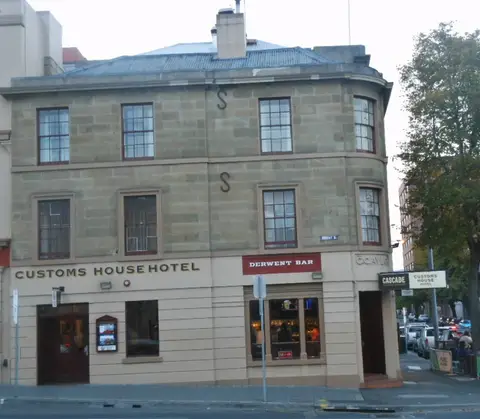
The hotel's own history says the house was built for Charles Gaylor and licensed in 1846, trading first as the Chop House. The Tasmanian Heritage Register lists 1 Murray Street as the Customs House Hotel and describes a corner sandstone building with three bays to each street, a recessed corner entry, a parapet and hipped roof and twelve-paned sash windows, significant as an Old Colonial Georgian hotel. That fits
The 1846 founding date comes from the pub's own website (its phone number even ends 1846). No independent licensing or heritage documentation confirms it.
Claims 1846; no early record found; building c.1845.
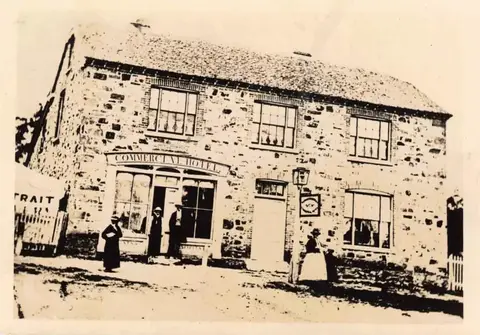
The construction years are the New South Wales State Heritage Register's: 1860-1861, for Kimberley's Commercial Hotel, built by a bootmaker who folded his shop into the hotel. Its hotel use is firmly documented by Ben Hall's gang raid on 26 January 1865, when Constable Samuel Nelson was shot dead outside. The register and Wikipedia say it has operated as a hotel ever since. That sentence describes the record up to
Dated 1860 by its listing; first recorded 1865; building c.1860.
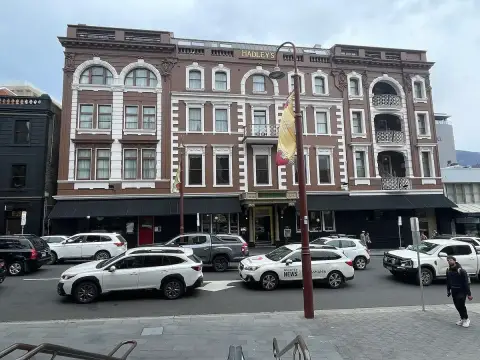
The date the hotel gives for itself and the date the travel trade gives for it are twenty-eight years apart. Hadley's own history page says the house was founded and run as Webb's Family Hotel in 1862, that the Hadley family bought it in 1890 and gave it their name, and that a consortium took it over in 1935 and kept the name; its timeline of guests starts with the comedian Sir William Don in 1862. The widely
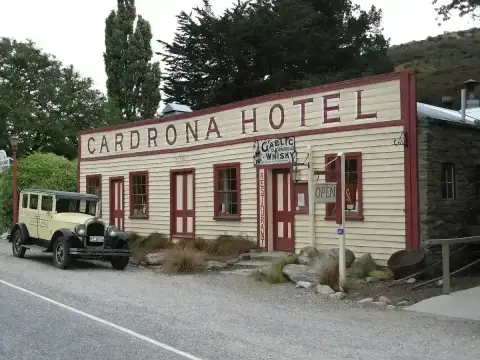
Heritage New Zealand lists the Cardrona Hotel's false front, and only the false front, as a Category 2 historic place entered on 15 December 2011. Its entry says the building dates from the 1860s, when Cardrona was a busy gold-mining community, that it was originally called the Empire Hotel after a nearby claim, and that it was renamed the Cardrona Hotel only in 1926. It was one of four hotels serving the
The State Library of Queensland, using the Queensland Hotels and Publicans' Index 1843-1900 and Trove newspapers, records a certificate granted to Thomas Bradford in 1864 for the Nindigully Hotel: a publican's licence at the claimed date. The shearers'-quarters origin is repeated there without a citation. The house traded as the Traveller's Rest from 1876 and the Sportsman's Arms from 1880, its licence was cancelled
The hotel first took a permanent liquor licence in 1879, when it was called the German Hotel, a nod to the Bohemian and German-speaking settlers of the valley; Wikipedia records the year and the north Auckland paper Local Matters names the licensee, John Schollum. The same paper adds something no other account here carried: a watering hole of a sort existed six years earlier, when an Irishman, Andrew Meaney, took a
Claims 1879; first recorded 1879.
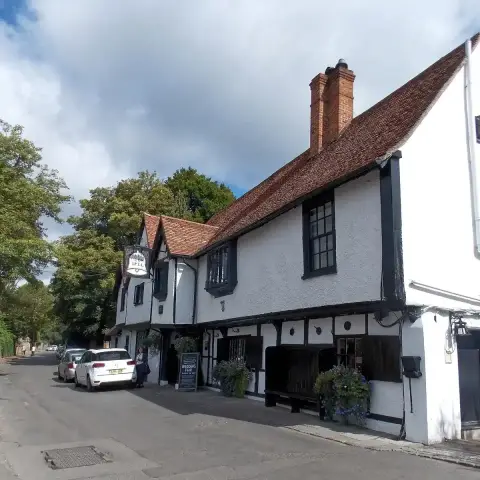
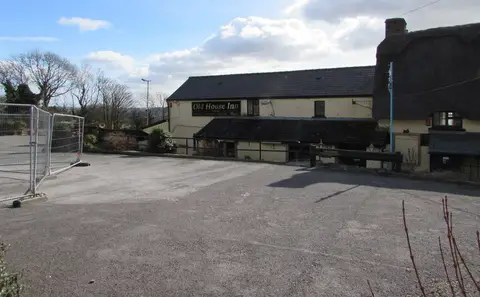
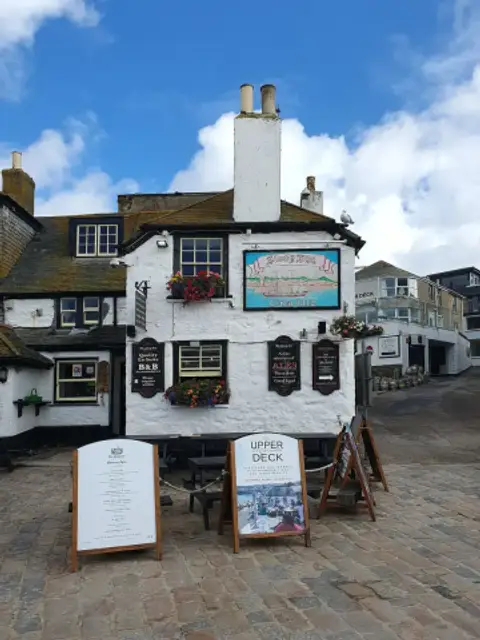
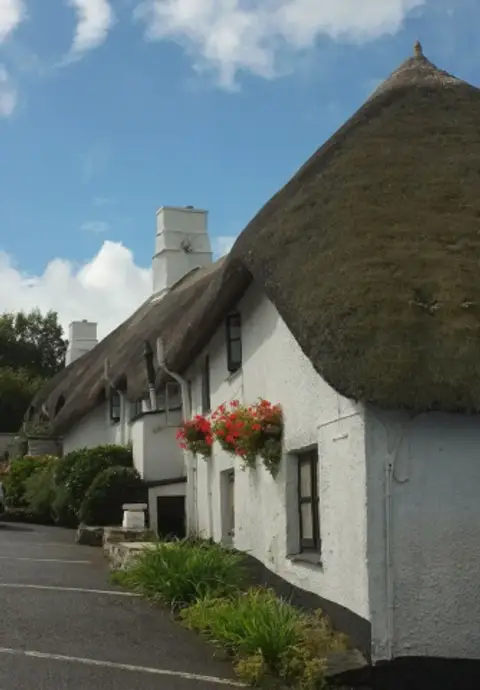
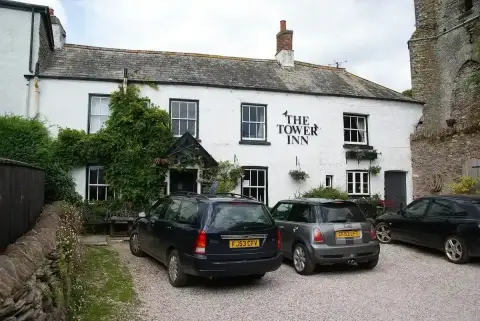
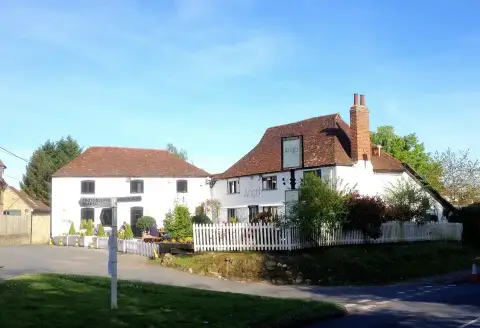
The photographs above are other people's work, used under open licences, or in the public domain. Every photographer, licence and source page is named in the image credits. A pub with no licensed photograph shows an illustrated façade instead.