10 posts · 40 findings
Blog
The pub pages say what the records support. They do not say what it took to get there — which archive answered, which one refused, what turned out to be a postcard rather than a deed. This is where that goes.
28 September 2026
Why the Pub Matters to the British
Britain protects its pubs in two separate ways and the two protect different things. Listing protects the fabric — section 7 of the 1990 Act is about the character of a building and says nothing about what it sells. Community-value law protects the use, for five years at a time, as a right to try rather than a right to keep. Our archive is where the two come apart: 42 closed pubs with pages of their own, several of them protected buildings with nobody behind the bar.
4 findings · 7 pubs
28 September 2026
Why Do London Pubs Close at Eleven?
They do not have to, and no law says they must. Fixed national closing times ended with the Licensing Act 2003, which left each pub's hours to its own premises licence. Eleven o'clock is a habit with a paper trail, and it runs back to a 1921 statute that gave London an hour the rest of England and Wales did not get — and further back to a wartime board set up to keep munitions workers at their benches.
5 findings · 3 pubs
28 September 2026
Why Britain Has So Many Pubs
The answer is not thirst or weather. It is licensing, decided twice: in 1552, when justices of the peace were given the power to say who could keep an alehouse, and in 1830, when Parliament took that power away again and let any ratepayer sell beer for two guineas. Within six months 24,342 people had paid. Every count since has been a subtraction from the number that produced, and our own files show the paper trail starting exactly where the licence does.
4 findings · 9 pubs
28 September 2026
The Oldest Pubs in the World
Every country with a drinking culture has a house that says it is the oldest, and the dates on the signs run from AD 560 upwards. We went through 351 of them looking for the ones where a document agrees with the sign, and the answer is not in Britain, not in Ireland, and not nearly as old as the signs would have you believe.
3 findings · 6 pubs
28 September 2026
The Oldest Pubs in the UK
Britain makes the loudest claims about pub age and holds the youngest evidence for them. Of the 152 British pubs on this site, 107 have no dated record at all behind the year on the sign, and the oldest one that does is traced to 1430 — against a claim of 1002 made by the same house.
3 findings · 7 pubs
26 September 2026
Three Capital Cities With No Page
Lisbon, Lima and Buenos Aires each have a page on this site that search engines are told to ignore. Not because the writing was poor — it was good enough to pass every check we have — but because every Portuguese pub we hold is in Lisbon, every Peruvian one in Lima and every Argentine one in Buenos Aires, so the city page and the country page are the same page wearing two addresses.
3 findings · 3 pubs
26 September 2026
The Mermaid Leaves the Top 100
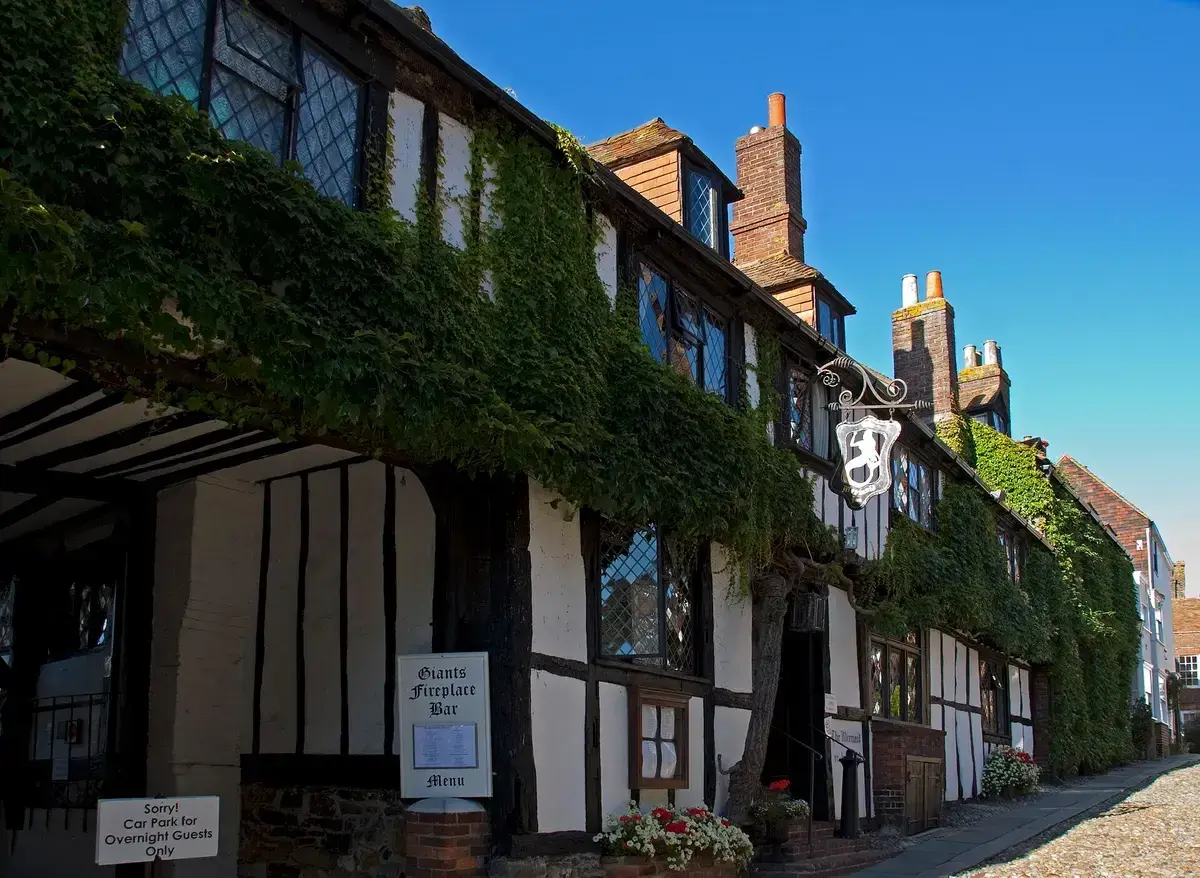
The Mermaid at Rye is one of the best-known old inns in England and it has come off our own Top 100, because a topographer writing in 1847 says the house stopped being an inn about 1767 and names the private owner who had it instead. That is a break in the trade, not a gap in the paperwork, and the rule we published in September says a pub dates from when it resumed.
5 findings · 2 pubs
25 September 2026
The Six Claims With a Record, Read One by One
Of the hundred oldest pub claims this site holds, 33 have a dated document of any kind behind them and six have one that reaches the year on the sign. In September this post said seven. One house has left the list because the record we held for it was its own claimed year entered twice, and that correction is the most useful thing on this page.
7 findings · 8 pubs
25 September 2026
The Photographs We Cannot Publish
Every photograph on this site prints its photographer's name and its licence, which means a photograph nobody can be credited for is a photograph we cannot use, however free it looks. Three cases we worked through this month: an archive release with the author field set to "unknown", two public-domain files released by uploaders rather than photographers, and a 1989 frame refused for a reason that had nothing to do with its licence.
3 findings · 4 pubs
25 September 2026
The Bingley Arms: What the Directories Say
A claim to AD 953 cannot be tested against a licensing record, because England has none that early. So we went at it from the other end and read the lists that do survive for Bardsey: a trade directory of 1822, which names a publican in two other places in the same parish and none in the village, and a poll tax of 1379 that does not cover the village at all.
3 findings · 1 pubs
Where the rest of it is
Every change to the data, dated and with its reason, is at what changed, and the full log is on corrections. The claims that do not survive checking are in myths, checked, the method is on how we date a pub, and the whole dataset is free to download.