14 pubs checked · updated 18 September 2026

The oldest pub in Wales

The short answer

Oldest claim

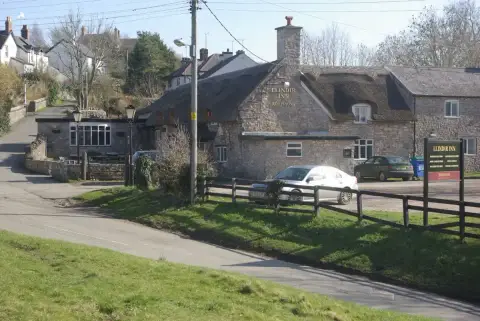
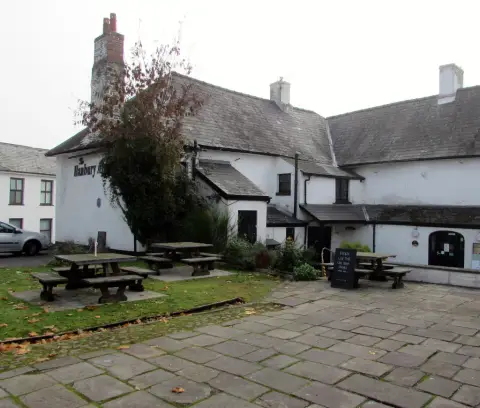
The White Lion Inn

Says AD 800. No document from that date has been found.

Grade C · Tradition

Oldest proof

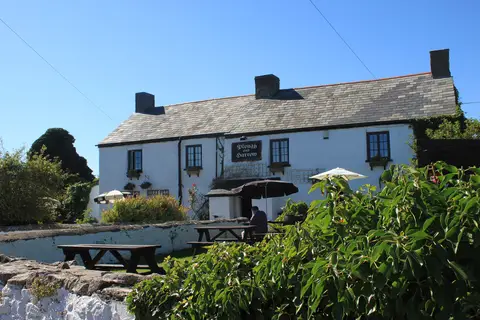
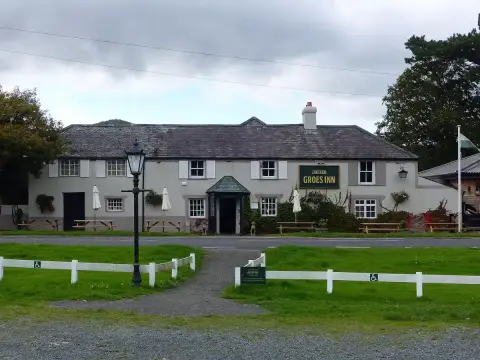
The Groes Inn

On record from 1578.

Grade A · Documented

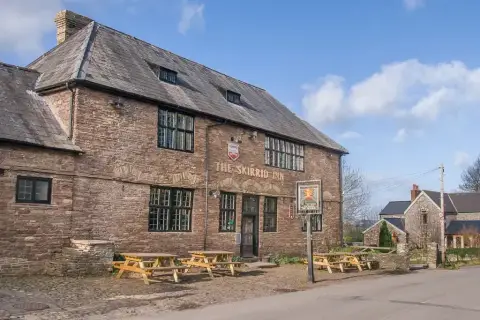
By claim, the oldest pub in Wales is the Skirrid Inn at Llanvihangel Crucorney below the Skirrid mountain, which advertises more than 900 years of trade and a date of about 1110. Cadw's listing calls it "a fine C17 purpose built inn" and says plainly that it is not medieval. No Welsh pub here can produce a document from its claimed date, and the oldest fabric belongs to a different house altogether: the Blue Anchor Inn at East Aberthaw, painted "Est. 1380" but dated by Cadw to a mid-sixteenth-century hall house.

Wales has fewer very old pubs on record than England, and rather better commentary on the ones it has. Cadw's listing descriptions are unusually direct about publicans' claims: the entry for the Skirrid Inn calls it a fine seventeenth-century purpose-built inn and states that it is not medieval, while the entry for the Blue Anchor at East Aberthaw notes the "Est. 1380" on its wall before dating the house to the middle of the sixteenth century. That candour is useful, because it means the Welsh argument is usually about a century or two rather than about eight hundred years. The physical pattern is distinctive too: thatched stone houses set against churchyard walls, long low ranges with great fireplaces and bread ovens, and in the north the timber-framed merchants' houses of the walled towns of Beaumaris and Caernarfon, which became inns generations after they were built. Two of the pubs on this page closed within the last decade and reopened after expensive restoration, which is a kind of survival in itself.

What the listings actually say

Wales is the clearest illustration on this site of why a listing entry beats a signboard. The Skirrid Inn is a genuinely fine building with a fine oak staircase, and its ghost stories about hangings from the stair beam are undocumented in every sense. The Old House at Llangynwyd puts 1147 in its name and stands beside a church dedicated to St Cynwyd, which is the kind of setting that generates such dates. The Blue Anchor is the one where the fabric does much of the arguing for itself: thick limestone walls, thatch that has survived fires in 1922, 2004 and 2009, and chamfered beams over oak-lintelled hearths.

Inns of the walled towns

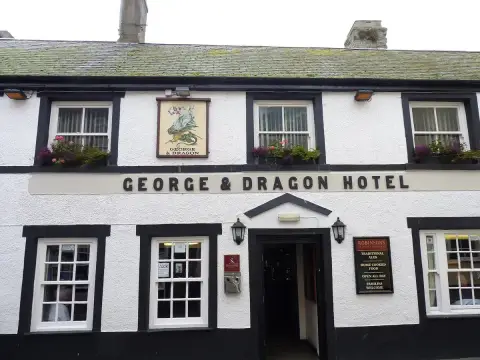
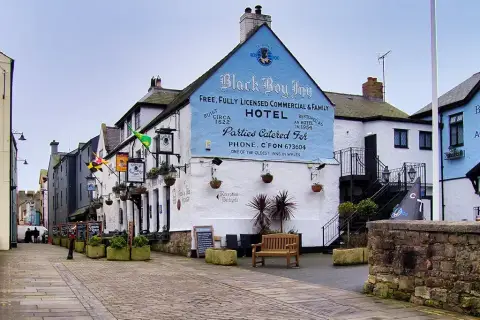
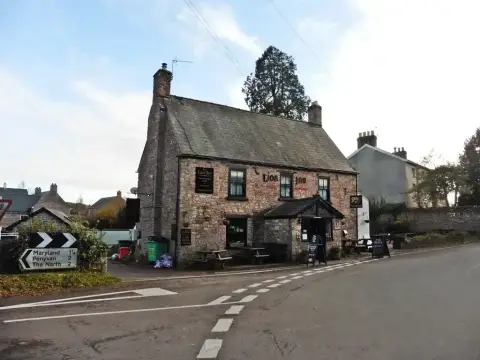
North Wales contributes a different type. The George & Dragon in Beaumaris and the Black Boy in Caernarfon both sit inside towns laid out around Edwardian castles, and both began as houses for people with money rather than as drinking places. The Black Boy’s Welsh street name, Stryd Pedwar a Chwech — Four-and-Six Street — is said to record the price of a sailor’s night’s lodging. Further inland, the Lion at Trellech describes itself as a 1580 coaching inn, brewhouse and smallholding, and still holds cider and perry festivals. For the wider picture see the oldest pubs in the UK and England, and for our grading rules the methodology.

WalesCities

OpenFreeMap · © OpenMapTiles · Data © OpenStreetMap contributors

Open the full map

The contenders, oldest claim first

Order the contenders
  1. Llanelian-yn-Rhos, Conwy

    The 1,200-year claim has been traced to one place only: a 2024 holiday-letting blog, which attributes it to the inn itself. North Wales Live gives late 14th to early 15th century. Cadw's full report, read on 17 September 2026, gives the only reading of the building by anybody with the building in front of them: the White Lion Public House, listed Grade II on 2 July 1998, is a second-quarter 19th-century inn with
    Claims AD 800; no early record found.
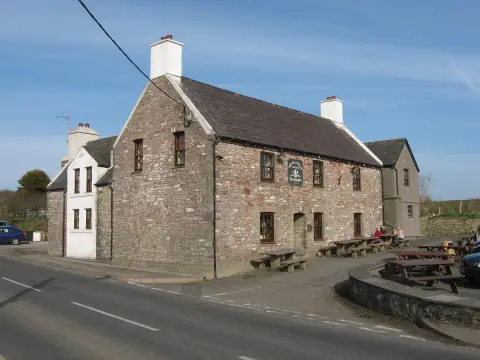
  2. Llanvihangel Crucorney, Monmouthshire

    Cadw's listing calls it a fine C17 purpose-built inn and says it is not medieval despite its claims. The Glamorgan-Gwent Historic Environment Record, now kept by the Heneb HER Charitable Trust, says the same from its own survey work: record 01623g describes a mid-to-late 17th-century building that appears to have been purpose-built as an inn, with 17th-century roof timbers, ground-floor ceilings, oak stair and door

    Claims 1110; no early record found.
  3. Llangynwyd, Bridgend

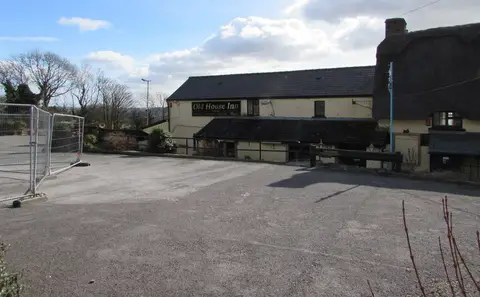
    Cadw's listing describes a later-17th-century thatched house extended in the 18th and 19th centuries, with no medieval fabric noted. The Glamorgan-Gwent Historic Environment Record, now Heneb, agrees from its own file: record 02034m gives a 17th-century core with 18th- and 19th-century additions and a modern extension, two storeys under a thatched roof. The Royal Commission's National Monuments Record carries it as

    Claims 1147; first recorded 1800.
  4. Llindir Inn

    Grade C

    Henllan, Denbighshire

    North Wales Live, Visit Wales and a 2024 holiday-cottage blog repeat a 13th-century date. Cadw's full report for the Llindir, read on 17 September 2026, gives a different reading: a storeyed building of several phases, the earliest probably late 16th-century, traditionally always an inn though perhaps beginning as a farmhouse, with a crow-stepped gable now swallowed by a raised roofline, the stone walling of the

    Claims 1200; no early record found.
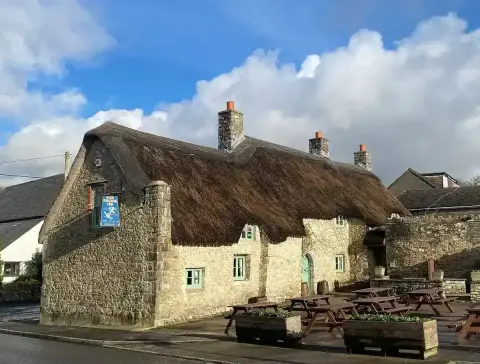
  5. East Aberthaw, Vale of Glamorgan

    Cadw notes the 'Est. 1380' claim but dates the thatched limestone house to the mid-16th century. The Royal Commission on the Ancient and Historical Monuments of Wales records the same house as an inn in its national database and adds a reading of its own: it was probably built as a house, and its position and the way it grew suggest it became a public house early in its life. Two bodies therefore date the standing

    Claims 1380; no early record found.
  6. Monknash, Vale of Glamorgan

    The 1383 on the pub's own page belongs to the monastic grange at Monknash, the richest estate of the Cistercian abbey at Neath, whose barn and dovecote are separately listed a field away. The listing describes the pub itself as an early seventeenth-century lobby-entry house, extended early in the eighteenth, and the pub's own history agrees that a lobby-entry house of that kind was built after the dissolution of

    Claims 1383; no early record found; building c.1600.
  7. Kenfig, Bridgend

    CAMRA's guide entry says this inn dates from the 15th century; CAMRA's own heritage record, and Wikipedia's account of Kenfig, describe a building that began as the Kenfig Corporation guildhall, raised on pillars in the early 17th century and largely rebuilt in 1808, serving as town hall, courthouse and even a mortuary for sailors washed ashore, with the judges' benches and some 17th-century panelling still in the

    Dated 1400 by CAMRA; first recorded 1886.
  8. Beaumaris, Isle of Anglesey

    Cadw listed the house Grade II* on 23 September 1950 and dated it probably 1610, from a date recorded on a roof truss in the 1930s and since concealed; it was originally timber-framed with a jettied upper storey, and the present front is a twentieth-century remodelling after the pub absorbed the house and shop to the south. The 1410 the house is known by is raised lettering on a rendered band between the storeys

    Claims 1410; first recorded 1770; building c.1541.

The photographs above are other people's work, used under open licences. Every photographer, licence and source page is named in the image credits.

Common questions

Which is the oldest pub in Wales?
The Skirrid Inn claims the title with a story going back more than 900 years. Cadw dates the building to the mid-to-late seventeenth century, and the Glamorgan-Gwent Archaeological Trust also found mainly mid-seventeenth-century fabric. By fabric the oldest is the Blue Anchor at East Aberthaw, a mid-sixteenth-century hall house.
Which Welsh pub claims the first licence?
The Groes Inn at Ty'n-y-Groes in the Conwy valley describes itself as the first licensed house in Wales, with a licence said to date from 1573 — a date repeated in the North Wales press. The document has not been published, so for now it stands as a claim rather than a record.
Is the Old House 1147 in Llangynwyd really from 1147?
Cadw describes a later seventeenth-century thatched house, enlarged in the eighteenth and early nineteenth centuries, and notes no medieval fabric. Nothing we could find supports the 1147 in the pub's name. It closed in 2015 and reopened around 2019 after a seven-figure restoration, and now pours only Welsh drinks.
Which is the oldest pub in north Wales?
Two contenders. The George & Dragon in Beaumaris is a timber-framed merchant's house said to have been built in 1410, which became an inn around 1770. The Black Boy in Caernarfon claims 1522 against a seventeenth-century building and a 1717 deed that mentions "Street y Black Boy".