A ghost story is something a pub tells about itself, and this collection records that it tells one. It is not a finding of ours and it never changes a grade. Thirty-one houses carry the tag, and the right way to read them is as folklore — a real interest, and a different one from evidence.
The stories are often the oldest thing a house will say about itself, and always the hardest to check.
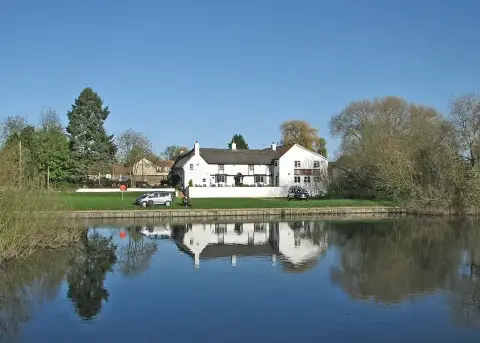
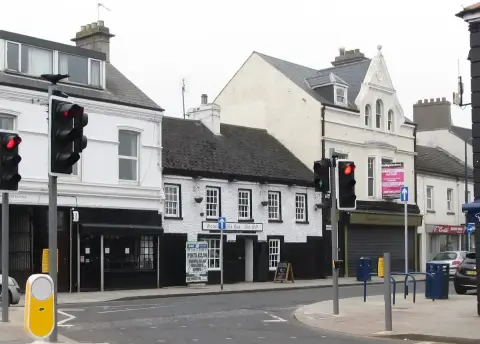
The Old Ferry Boat Inn keeps the memory of Juliet Tewsley,
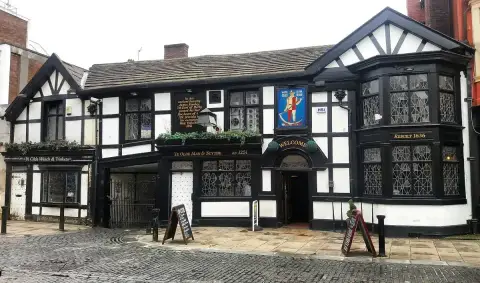
said to walk on the anniversary of her death. At Ye Olde Man & Scythe
in Bolton the celebrated occupant is not a ghost at all: the 7th Earl of Derby sat in the house before
his beheading on Churchgate in 1651, and the chair he is said to have used is still kept there. The
difference between those two kinds of story is the point of this page.
Where they part is in the record. Twenty-five of the thirty-one hold a grade C and sixteen have no
first mention of the house trading traced at all, so the storytelling is frequently the fullest
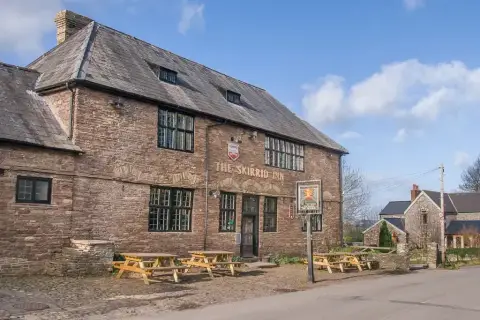
account a building has of itself. The Skirrid Inn is
known for tales of hangings from the beam above its stair and dates itself before 1110; Cadw calls the
building a fine seventeenth-century purpose-built inn and says plainly that it is not medieval. Both
are true of the same good pub.
A legend can be dated in its own right, and that is usually where the interest lies: several here turn
out to be Victorian or later, fastened onto a house long after it was built. We take the
best-travelled ones apart in myths, checked, and
how we weigh a claim explains why a story is never entered as a record.
Spread across England, Wales, Jersey, Scotland, Northern Ireland, United States, Canada, Australia. Ordered by the date each one claims, oldest first — which is not the same as the order of the evidence.
The AD 560 date is tradition only; no early documentary source has been published. The listed building is 17th-century with an older cross-wing, and a continuous run of named innkeepers is recorded only from 1841.
The pub cites hospitality from around 950 AD and a 13th-century building, and offers no documentation for either. Two searches on 12 September 2026 turned up nothing to support them and two blanks worth recording. Historic England's list holds 23 entries in Morwenstow parish - the church, six chest tombs, the vicarage, Tonacombe Manor, Hawker's hut, the ship's figurehead by the lych gate - and not the inn; the only
The claim is the inn's own: its history page describes Benedictine monks building a nine-room granite and oak monastery around the South Zeal menhir in the 12th century, and the manor being leased and licensed as an inn in 1477, and CAMRA repeats the 1477. The list entry has now been read, and it reaches neither date. Historic England, which listed the house Grade II* on 20 February 1952, calls it an inn, former
Cadw's listing calls it a fine C17 purpose-built inn and says it is not medieval despite its claims. The Glamorgan-Gwent Historic Environment Record, now kept by the Heneb HER Charitable Trust, says the same from its own survey work: record 01623g describes a mid-to-late 17th-century building that appears to have been purpose-built as an inn, with 17th-century roof timbers, ground-floor ceilings, oak stair and door
The 1148 that local accounts attach to the Red Lion belongs to the cellars, not to any record of drinking here. Historic England lists the building Grade II* as a well-preserved late C15 or early C16 hall house, with a medieval vault below probably left from an earlier house, and the frontage is 1920s. Southampton's local histories give the first licence as 1552. The upper room is shown as the court of the 1415
1148 with no published claimant; first recorded 1552.
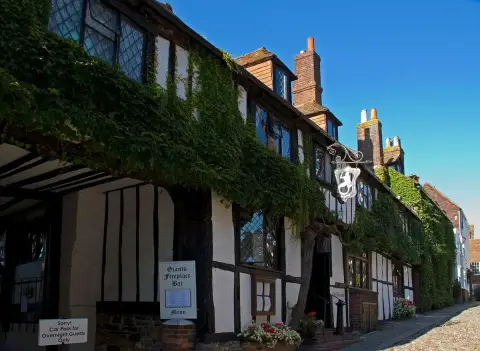
The 1156 date refers to the cellars, which Pevsner and English Heritage place in the 13th century. The timber-framed inn was rebuilt around 1420, and the house traded without a full licence for long periods and reopened with a bar in 1955. William Holloway's history of Rye, printed in 1847 from the town's records, carries it back further than this page could before. He prints the schedule of the king's bailiff's
Claims 1156; first recorded 1670; building c.1420.
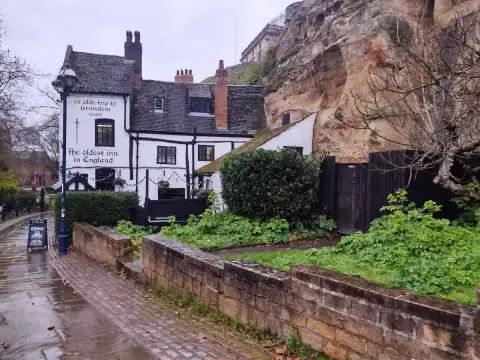
The 1189 is the pub's own, in black letters on the building and in print: the Greene King page for the house says its doors first opened in 1189, making it England's oldest surviving inn. No document supports it. Historic England notes the first reference to a pub here (as The Pilgrim) in 1751 and the Trip name by 1799; the standing building is mid-17th century, though the sandstone caves behind it are older.
Claims 1189; first recorded 1751; building c.1650.
North Wales Live, Visit Wales and a 2024 holiday-cottage blog repeat a 13th-century date. Cadw's full report for the Llindir, read on 17 September 2026, gives a different reading: a storeyed building of several phases, the earliest probably late 16th-century, traditionally always an inn though perhaps beginning as a farmhouse, with a crow-stepped gable now swallowed by a raised roofline, the stone walling of the
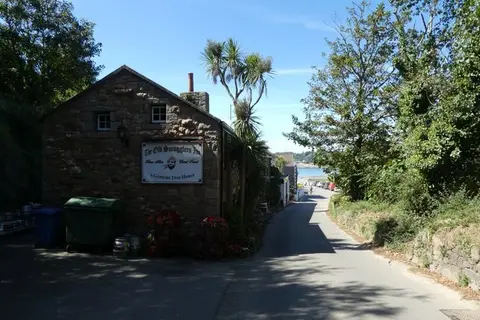
Visit Jersey and the pub say the house grew from two fishermen's cottages of the 13th century, and CAMRA repeats foundations reputedly of that date. Jersey's own Historic Environment Record, kept by Jersey Heritage, reads the building as Georgian: a good example of an 18th-century rural property, now an inn, of four bays and two storeys with two bays added to the west, granite rubble with dressed quoins and thatch
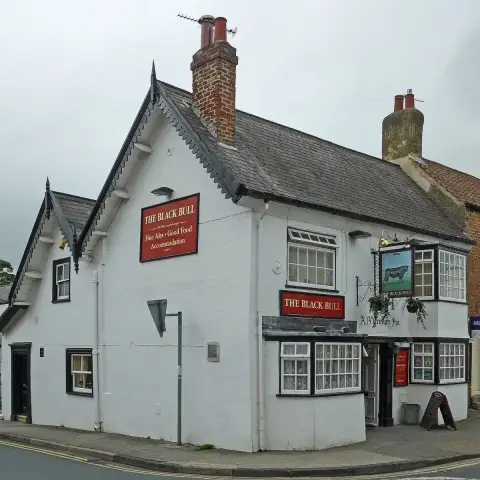
The 13th century is CAMRA's: its Harrogate and Ripon branch entry calls the Black Bull a 13th-century inn and a Grade II listed building. Regional round-ups (On: Yorkshire 2021, The Yorkshireman October 2025) repeat the same origin and note it is the last of the town's 22 former inns. The pub's own domain no longer resolves to a site. The listing CAMRA points at has now been read: Historic England designated the
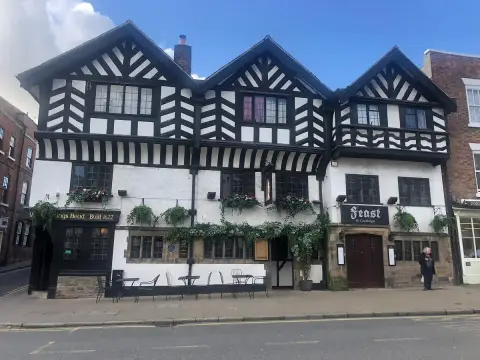
Historic England is unusually specific: this Grade II* building was put up about 1208 as the town house of Peter the Clerk, who administered Chester Castle, and rebuilt from the old Row level upward in the C15, C16 and early C17 for Randle Holme I, first of four generations of heralds. So the 1208 is real, but it dates a house, not a house of drink. The pub's own history says it became an inn called the King's Head
The 1240 is on the building itself: CAMRA's national inventory description records a date of 1240 on the exterior of the jettied St Nicholas Street range, and reads the fabric as a combination of at least three buildings, most likely 16th- and mid-18th-century, heavily restored later. So the date is the house's own assertion rather than anyone's dating of it. Tree-ring work reported on Wikipedia puts the oldest
Claims 1240; no early record found; building c.1360.
The 1251 is published by Bolton's local history site, which says the pub dates back to 1251, the year of the charter permitting the market held beside it, and that only the vaulted cellar is that old. Boak & Bailey note an 1892 history of Bolton showing the charter does not name the house. The pub's inn sign carries no date, and the pub has no website of its own beyond a Facebook page. Historic England calls the
Nobody states 1378. The pub's own site says the inn was built in the 14th century and was the monastic quarters for the Norman church until the Reformation, but gives no year; CAMRA reads the frame as 16th-century and records the first reference to a licence in 1694; Historic England, as Wikipedia relays, dates the timber frame to probably the early 16th century while noting that an earlier date has been claimed
1378 with no published claimant; first recorded 1694.
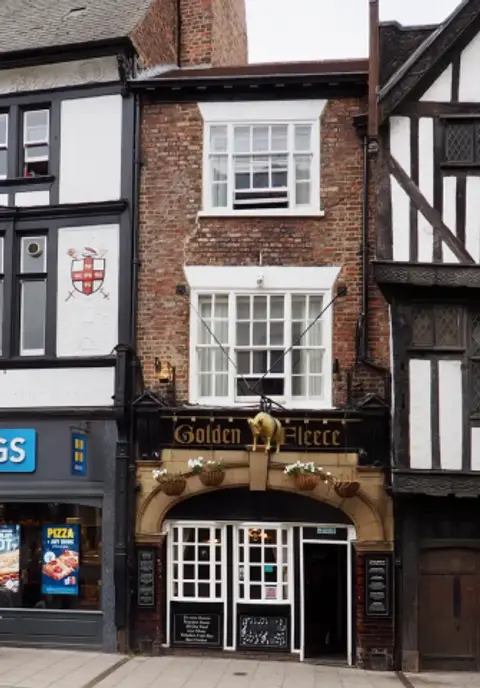
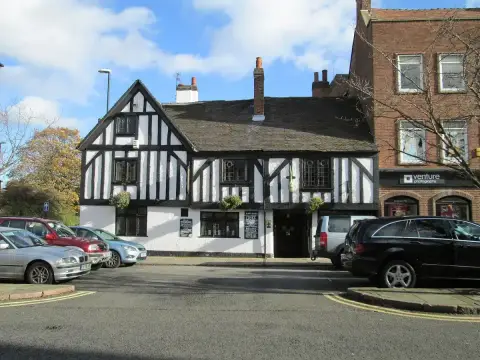
The pub's history page says the house was built for William Bowes, a merchant and Sheriff of York, in 1417, and that he became Lord Mayor in 1428. The same page says the building dates to the fifteenth century "when it was a private house", and that a medieval inn is only supposed to have stood on the site before the present one. Historic England lists the building Grade II* (list entry 1256886, first listed in
Claims 1417; no early record found; building c.1560.
York's city archives record the property in 1503, when it belonged to the Merchant Adventurers, but nothing in that entry makes it an inn. York Archaeological Trust's Jorvik pages and the Wikipedia article, following Young (2015), have it known as an inn from 1656 and licensed only in 1668, and that licence is the first firm record of drinking use. Historic England lists the standing building as a rebuilding of
Claims 1503; first recorded 1668; building c.1840.
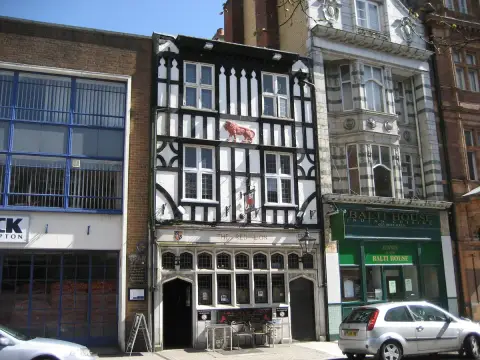
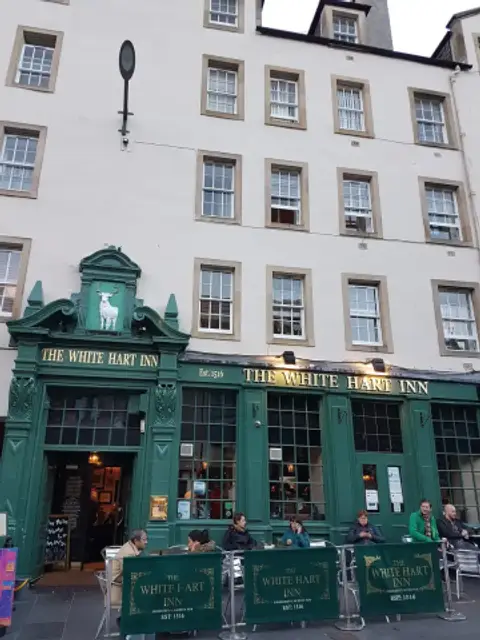
Historic Environment Scotland lists 30-40 Grassmarket, which takes in the White Hart, at category B, and its statement of special interest says records of the inn go back to 1516 — without naming one. So the 1516 is not the pub's alone, but nobody who publishes it points at a document. The tenement itself is about 1740, built by James Lithgow, damaged in a Zeppelin raid in 1916 and restored in 1994-5. CAMRA's
Claims 1516; no early record found; building c.1740.
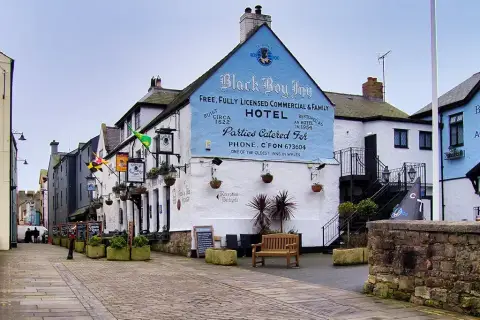
Cadw's listing, number 3905, describes a seventeenth-century house built in several phases, all probably of that century, with the windows altered in the nineteenth and replaced with leaded lights about 1900, and lists it as a rare surviving seventeenth-century building inside the walled town. Nothing in it reaches 1522, so the inn's claim runs about a century ahead of its fabric; the earliest record cited for the
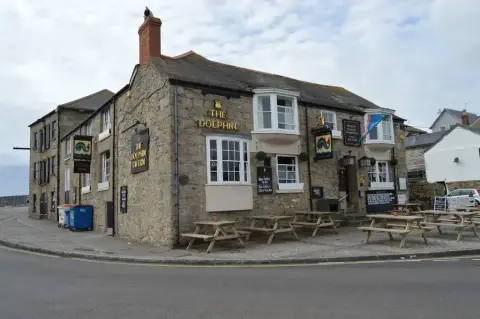
The 1530 is Visit Derby's, whose listing calls the Dolphin the city's oldest pub, dating back to 1530; the pub has no website of its own recorded, and CAMRA says only that it claims to be Derby's oldest and occupies a late 16th-century building. Historic England lists it as a public house of late C16 date, much restored in the early 20th century, and records that the licence is only said to date from 1580. Large C16
Wikipedia records the present house as about 1660 in Artisan Mannerist style, attributed to William Catlyn, with a house on the site in 1550 and pub use only from the 1730s; the 1730 is decade-level rather than a dated licence. CAMRA's Hull and East Yorkshire branch agrees — licensed premises since the eighteenth century, parts of the building from the seventeenth — and gives the interior three stars on the national
Claims 1550; first recorded 1730; building c.1660.
The 1585, the link to Sir John Hawkins and the story of the first pipe of tobacco smoked in England are local tradition; no documentary proof has been found. A second account, published by Cornish Story at the Institute of Cornish Studies, is franker than the tavern's own and differs from it in two places. It says the age of the building is unknown, placing the granite front somewhere in the fourteenth century
The 1611 date, originally as the King's Arms, is widely repeated (Wikipedia, tourism guides) but no licence or deed was found. Its reported Guinness 'oldest pub' listing is its own claim. The bar's own site is current rather than abandoned — it advertises tribute nights and a Christmas 2026 brochure — but its security certificate expired in August 2026, so a browser refuses the page: it is cited here as an archived
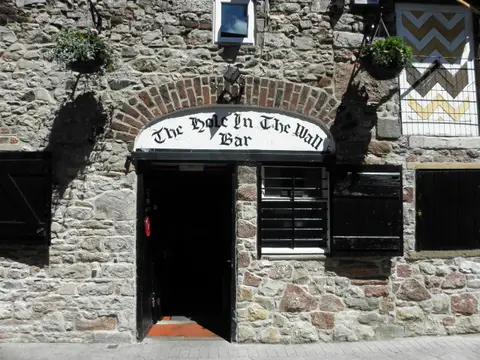
The date the bar keeps, 1615, is the year the building went up as Armagh's jail, where families passed food to prisoners through a hole in the wall, which is where the name comes from. Drinking came later: the same local account gives 1693 for the first licence as a public house, and that is the first record of a drinking house here rather than a prison. The Northern Ireland register of historic buildings has now
Claims 1615; first recorded 1693; building c.1615.
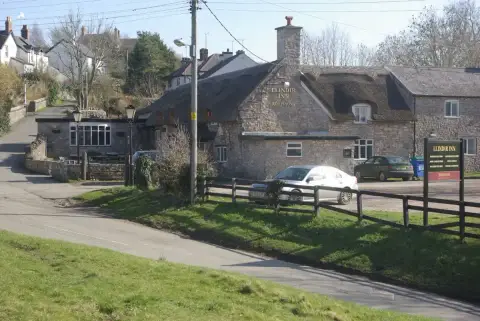
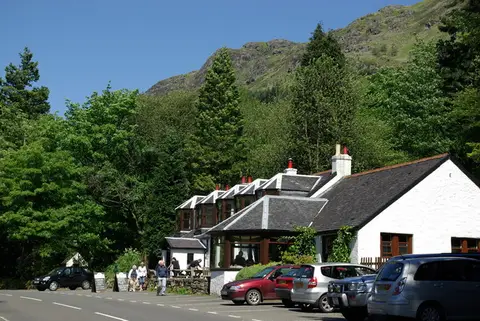
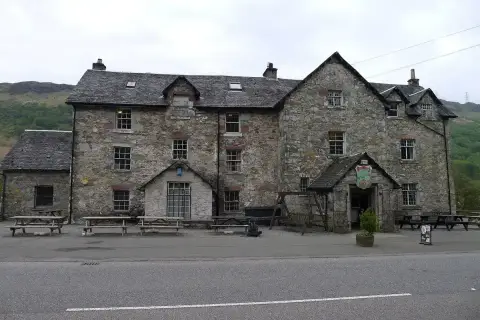
The 1650s comes from the press: the Scotsman's round-up of Scotland's oldest pubs says the inn dates back to the 1650s, when it was a coaching inn, and a trade report and the 2024 sale particulars call it 17th-century. The inn's own site gives no date. The Geological Survey's memoir on Cowal names the Coylet Inn on the east shore of Loch Eck in 1897, which fixes an inn of that name here by then. The national
Historic Environment Scotland dates the core to the eighteenth century, notes the inn on a map of 1776, and suggests it may have begun as barracks for Caulfield's military road of 1748-53, with additions of about 1825-30 and of 1853. All of that sits against the 1705, for which no source has been found, and the house itself is careful in its wording, claiming three centuries rather than a year. Read in full on 17
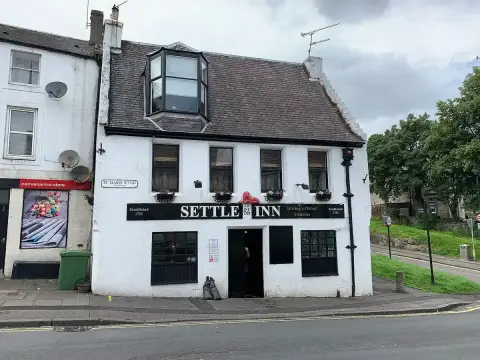
The 1733 is CAMRA's: its entry says the Settle Inn was built in 1733 and is the oldest pub in Stirling, and a Scottish round-up repeats both. There is now a second and independent reading of the same year. Historic Environment Scotland listed 91 St Mary's Wynd, the Settle Inn, at category C on 3 February 1978, and its description opens by recording the house as dated 1733 with the initials G T E G — a datestone on
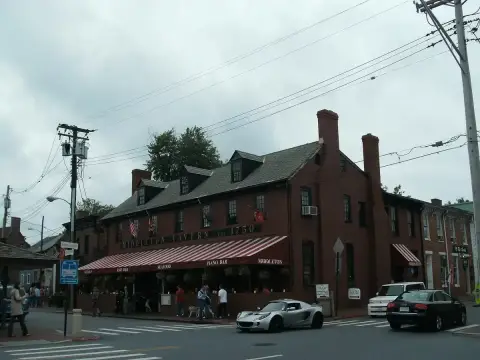
The Maryland Historical Trust's survey file for the property dates it to about 1754, built as a tavern and boarding house on the Ship Carpenters Lot that Governor Francis Nicholson set aside about 1696 for shipwrights, and known first as the Inn for Seafaring Men. The Middletons' fifty-year tenure was reported often in the Maryland Gazette, and George Mann ran the house through much of the Revolution, lodging
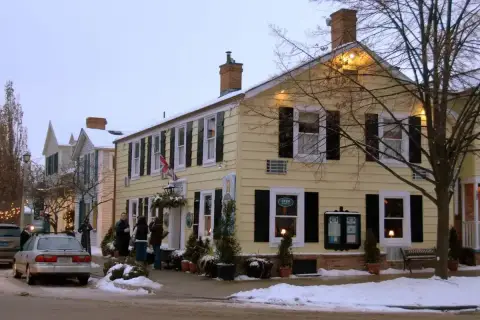
The inn says it is 'believed to have been founded' as the Harmonious Coach House about 1789, and offers nothing to support the year. What is documented is the rebuilding by John Ross in 1815, after American forces burned Newark in 1813, and the hand-hewn beams and plank floors of that rebuilding are what a drinker sits among. No heritage designation for the property has been traced, although the town's old core is a
Claims 1789; first recorded 1815; building c.1815.
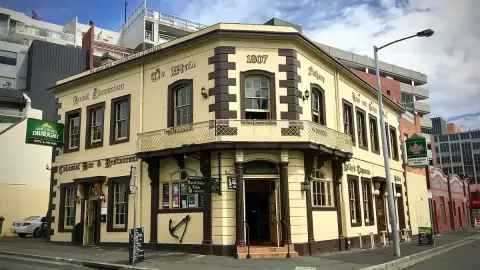
Robert Knopwood's diary for 25 July 1807 records Hopkins opening a public house at the Sign of the Whale Fishery, and the ABC has reported doubt about whether that house stood on this site. The premises went on the Tasmanian Heritage Register in 1998, on the strength of their archaeological importance. The trade has not been unbroken: the pub was closed to the public from 2008 to 2014, and earlier in the 1980s, with
Claims 1807; first recorded 1807; building c.1820.
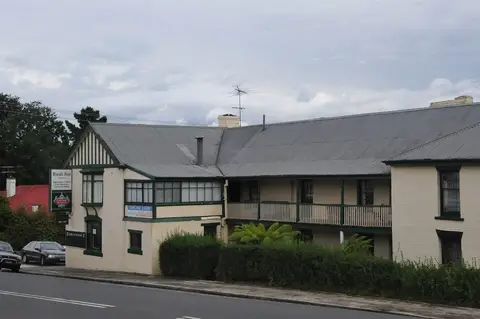
Building began about 1815 and the house was finished in 1825, with the first licence granted to Ann Bridger, a widow who had arrived in Hobart two years earlier. The Derwent Valley Gazette, marking the inn's two hundredth year in October 2025, dates that licence precisely to 29 September 1825 and names Belinda Smith as the licensee now, after the lease changed hands in April 2023 when the twins Peter and Don Smith
Claims 1815; first recorded 1825; building c.1815.
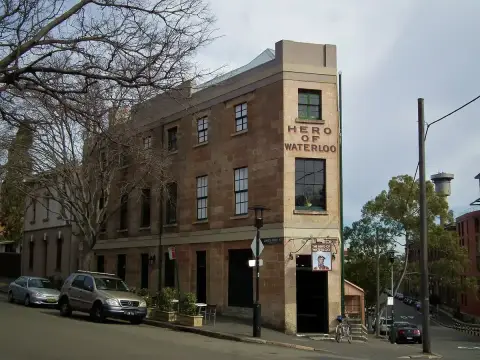
The State Heritage Register has the land sold by a man named Clarke to the builder George Payten in 1840; Payten built the Garrison Church in 1842 and this hotel in 1843-44, and took out a licence in the name Hero of Waterloo in 1845. The stone for both church and hotel probably came from the Kent Street quarries, the earliest in Sydney. The register also explains the room a drinker stands in: the present main bar
Claims 1843; first recorded 1845; building c.1843.
The photographs above are other people's work, used under open licences. Every photographer, licence and source page is named in the image credits.