A coaching inn was a transport building before it was a drinking one. Its trade was the changing of horses on a long road, and the arch, the yard, the stabling and the chambers above all served that timetable. These are the best-documented houses on the site, because a business run on contracts and licences leaves paper behind it.
Read one as a building and the plan explains itself. The arch off the street is sized for a coach; the
yard behind it is where a fresh team was backed into the traces; and with the ground floor given over
to the trade, the bedrooms were reached from open galleries. Two of those yards survive here intact.
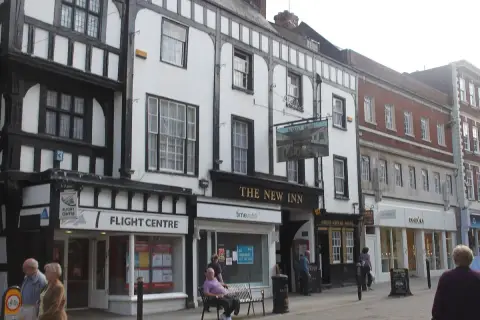
Historic England lists the New Inn at Gloucester Grade I as a
mid-fifteenth-century inn of four ranges about a galleried courtyard, the most complete survival of
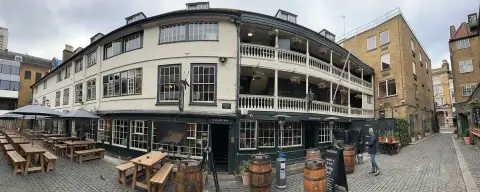
its kind in Britain, and the George Inn at Southwark is the only
galleried inn left in London — two of its three wings went in 1889 for railway warehousing.
The paperwork is why this collection grades so much better than the rest. Eight of its twenty houses
reach grade A, against one in thirty-one among haunted pubs, because a deed
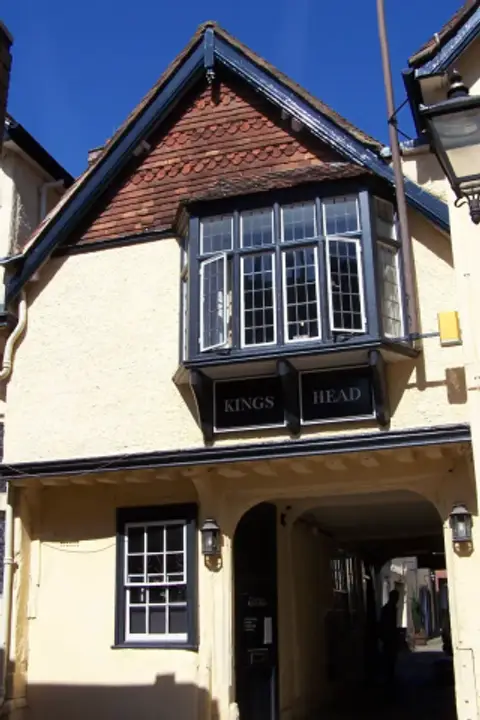
or a licence names a house and a year in a way a tradition never does. A conveyance of 18 December
1455 names the newly built Kyngeshede at Aylesbury; the Concord Court
granted David Howe a licence to keep an inn at
Sudbury in Massachusetts in 1716. Both record the trade
itself rather than the walls around it.
The railways then closed that trade inside a generation: mail travelled by rail between Liverpool and
Manchester from November 1830, and London’s last Norwich mail coach ran in 1846. Our guide to
what a coaching inn actually was sets out the working day, and
how we grade a claim explains the letters beside each date.
Spread across Ireland, England, Scotland, Northern Ireland, United States, Australia. Ordered by the date each one claims, oldest first — which is not the same as the order of the evidence.
The 900 AD founding by Luain is tradition with no archival support. The NIAH dates the building to c.1725 and describes the wattle partitions found in the 1970s as possibly 17th-century, not 10th-century; the inn is recorded as The Three Blackamoor Heads in 1738. Guinness World Records named it Ireland's oldest pub in 2004 but reportedly no longer keeps an oldest-pub category. The present trade is on the state's own
Claims AD 900; first recorded 1738; building c.1725.
No record supports 1198. A property called the Brazen Head is documented in 1613 (Richard Fagan), an ale licence in 1661 and use as an inn by 1668; the present building was completed around 1754. The 1668 has a second reading behind it now: John Thomas Gilbert, in his History of the City of Dublin, written from the city's own records in the 1850s, says that the Brazen Head was an inn located from the year 1668 in a
The hotel's own front page says it has welcomed guests since 1203, and its history page is more careful than the story usually told about it: it says the house stands on ground believed to have belonged to the Knights Templar, and that tradition holds King John and his court lodged here on 23 February 1213. Nothing traced dates a drinking house to 1203. Lincolnshire's historic environment record describes what stood
Claims 1203; no early record found; building c.1370.
Historic England regards it as probably the earliest surviving purpose-built inn, erected by Hinton Priory. The claimed 1397 licence is not itself verified, but tree-ring dates of 1430-32 and its medieval function as an inn for the priory's wool fairs are well documented, and the earliest documented use recorded here is that tree-ring date. The Grade I list entry, written in 1968, disagrees with the tree-ring
Claims 1397; first recorded 1432; building c.1430.
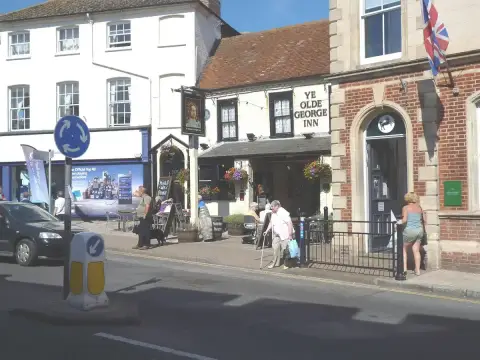
CAMRA describes a Grade II listed 15th-century coaching inn, rebuilt after the Civil War with stone said to have come from Christchurch Castle. The listing it points at has now been read, and it will not date the frame. Historic England, which listed the house on 12 February 1976 as Ye Old George Inne, Castle Street, calls it a timber-framed building refaced in the 18th century with painted brick: two storeys, three
The New Inn gives 1450, when the monk John Twyning built it for St Peter's Abbey to lodge visitors — an inn from the start rather than a house that later took a licence. No document states that year: Historic England lists it Grade I as a mid-C15 inn of four ranges around a galleried courtyard, the most complete survival of its kind in Britain, and the Victoria County History of Gloucestershire says the same without
1450 with no published claimant; first recorded 1450; building c.1450.
The inn dates itself to 1455, and a document stands behind it. A conveyance of 18 December 1455, between the London wool merchant William Wandeford and Ralph Verney, names the newly built Kyngeshede along with a cellar, a shop and cottages. Historic England's Grade II* entry describes C15 to C17 fabric with a C15 left-hand gable, and the great hall is dated to the 1470s, so building and record agree within a
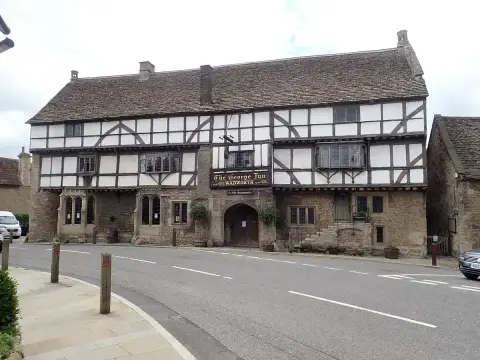
This is a pub that undersells itself. Neither its own pages nor its pub company make an age claim, but Historic England lists it Grade II* as originally a coaching inn, probably of late C15 to early C16 date, timber-framed with close studding on a stone base and C18 brick wings; CAMRA calls it a Tudor coaching inn. Fabric of the claimed age is documented and the building was an inn from the start, so the grade is B.
The c.1542 comes from Historic England's public history writing rather than from the inn, which claims only the 16th century: Heritage Calling gives the earliest known reference to an inn on the site as a map of Southwark made around 1542, and notes John Stow's later list of 'many fair inns'. The surviving galleried range was rebuilt in 1677 after the 1676 fire; two other wings were demolished in 1889 for railway
Dated 1542 in the press; first recorded 1542; building c.1677.
The 1595 is published by Visit Dublin, which says there has been a pub on this hilltop since at least that year; a travel guide adds that the figure comes from deeds the pub itself cites. The deeds have not been published, and the pub has no website of its own we could find. The national inventory has now been read, and it puts the house two centuries later than the claim. The National Inventory of Architectural
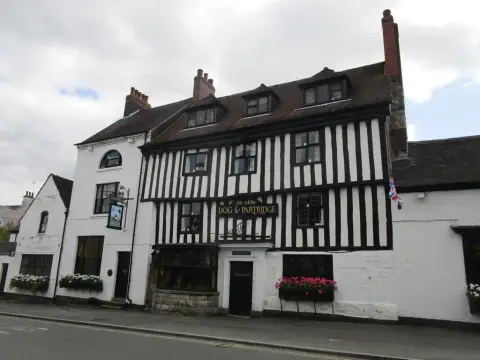
The 1635 is the inn's own, and CAMRA's Forth Valley branch repeats it as a date for a coaching inn without adding a record; the inn's own page on the history of Thornhill offers nothing to support it. The national designations have now been searched around the house and the absence is established rather than assumed: within two hundred metres they hold Blairhill, Norrieston Parish Church and churchyard, Norrieston
The 1650s comes from the press: the Scotsman's round-up of Scotland's oldest pubs says the inn dates back to the 1650s, when it was a coaching inn, and a trade report and the 2024 sale particulars call it 17th-century. The inn's own site gives no date. The Geological Survey's memoir on Cowal names the Coylet Inn on the east shore of Loch Eck in 1897, which fixes an inn of that name here by then. The national
The inn brands itself as established in 1654, and that is where the date comes from; the address it used for its own site now leads to a page offering the domain for sale, so nothing it publishes can be read. Tourism NI and others cite tree-ring dating by Queen's University Belfast, reportedly in 2010, placing the building before 1654, while Wikipedia gives c.1740. No report of that dating has been traced, only
Claims 1654; no early record found; building c.1654.
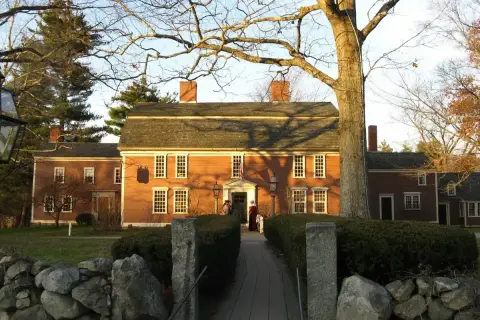
The National Register nomination is the record behind the claim: Samuel Howe, a carpenter, is believed to have begun the inn about 1700 with two rooms, a taproom below and a guest chamber above, and his son David was granted a licence for innkeeping by the Concord Court in 1716, keeping Howe's Tavern until 1746. Ezekial Howe, landlord from 1746, renamed it the Red Horse and led two companies of Sudbury militia to
The pub says it was founded in 1728 as a coaching inn and is Dún Laoghaire's oldest surviving premises; no independent document was found. Its licence is documented. Revenue's register of liquor licences renewed for 2025/2026, standing as at 2 September 2026, carries a seven-day ordinary publican's licence under reference S0302, held by Vor Purty Taverns Limited, at 3/4 Old Dunleary Road with premises attached at
The inn says on its own pages that it has been welcoming locals and travellers since 1789 and is regarded as New Hampshire's oldest, and its reopening announcement and the press repeat both. The National Register nomination for the Hancock Village Historic District, entered on 8 March 1988, is the reason this is graded C rather than higher: it says the building was put up as a tavern for Noah Wheeler and that 1789
On 23 December 1803 Jonas Seaman paid four dollars for a licence to keep 'a house of public entertainment' on the site. The present brick building dates from 1815, so the site, not the structure, goes back to 1803. The county history of Warren County published in 1882, whose general chapters were prepared by Josiah Morrow, adds two things and complicates a third. Jonas Seaman is listed there among the pioneers who
Claims 1803; first recorded 1803; building c.1815.
A licence was granted to Thomas L. Richardson on 3 October 1818 for the New Inn, known as the Ship Inn by 1821. That date rests on one pub historian's reading of the Hobart records; we have not seen the licence itself. The Tasmanian Heritage Register lists 73 Collins Street as the Ship Hotel and reads the standing building as an Old Colonial Georgian public house behind a Federation front of about 1900. The two
Locally dated 1818; first recorded 1818; building c.1923.
The 1857 is the date the travel press and Wikipedia give for the slab hut Joseph Shumack built, not for an inn: Australian Traveller has it beginning as a home for Irish immigrants in 1857 and becoming a coach stop serving beer and food by 1876, which is when it was licensed. It then passed to the Read family as a private home, The Pines, from 1887 until the Commonwealth bought it in 1974 and restored it as an inn
Dated 1857 in the press; first recorded 1876; building c.1857.
The State Library of Queensland, using the Queensland Hotels and Publicans' Index 1843-1900 and Trove newspapers, records a certificate granted to Thomas Bradford in 1864 for the Nindigully Hotel: a publican's licence at the claimed date. The shearers'-quarters origin is repeated there without a citation. The house traded as the Traveller's Rest from 1876 and the Sportsman's Arms from 1880, its licence was cancelled
Claims 1864; first recorded 1864.
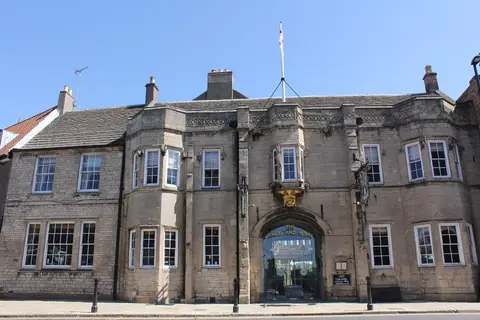
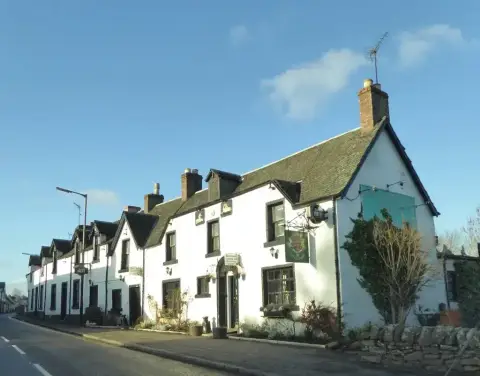
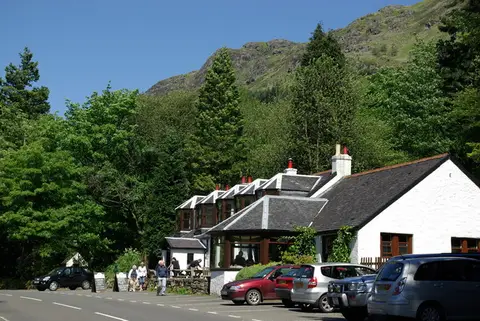
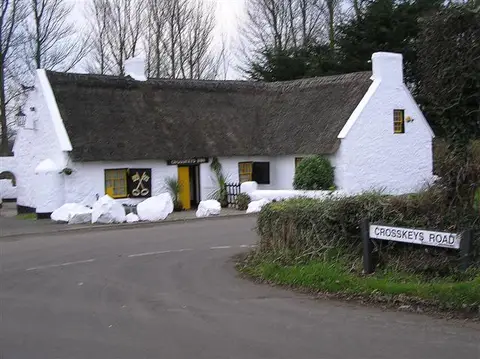
The photographs above are other people's work, used under open licences. Every photographer, licence and source page is named in the image credits. A pub with no licensed photograph shows an illustrated façade instead.