Before bridges were everywhere, a river meant a crossing, and a crossing meant waiting. Twenty-seven houses here stand on a river, a creek, a canal or a harbour, and most were put there by the traffic rather than the view — a ferry slip, a quay, a customs house, a lock.
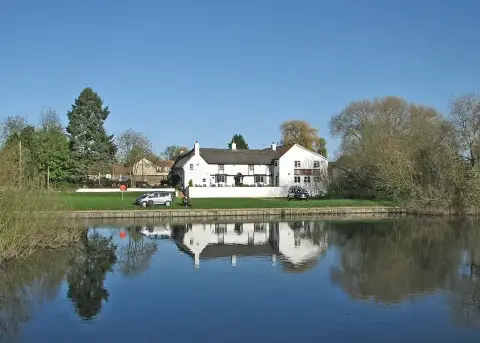
The passenger trade built the first sort. The Old Ferry Boat Inn
marks a crossing of the Great Ouse; the Hawes Inn stands at
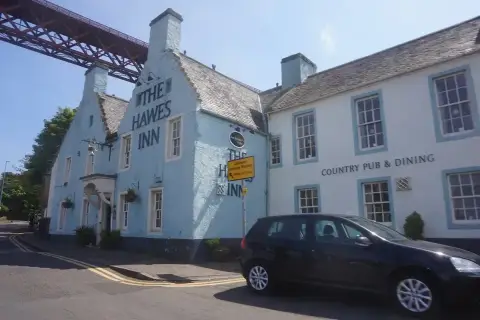
the old Queensferry crossing on the Forth, with boats still leaving the pier opposite. The plainest
case is on Gozo, where the Gleneagles Bar occupies a building the
Għajnsielem council’s history of the port dates to 1732, raised as the harbour’s barrakka — the cabin
in which passengers waited for the boat. Gozitans call it Il-Barrakka still, and a room for people
waiting is very close to the definition of a pub.
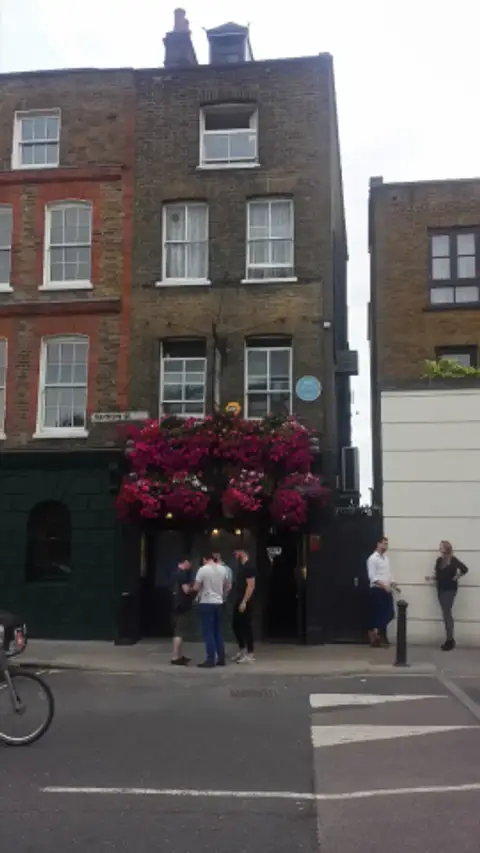
The cargo trade built the rest, and it reads differently. The Grapes and
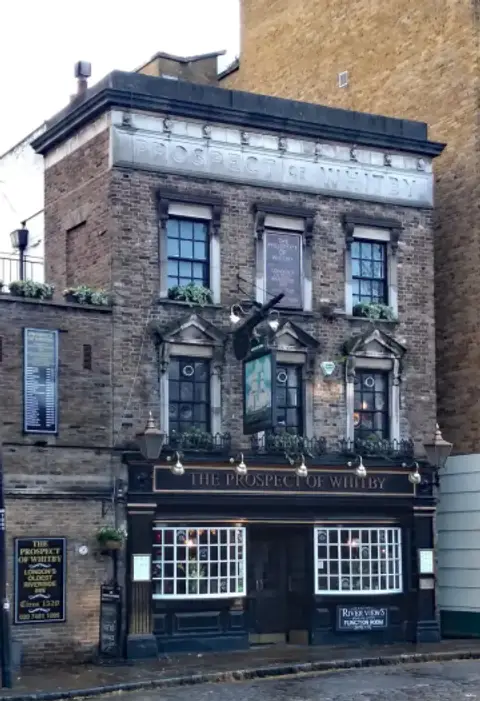
the Prospect of Whitby have their backs to the Thames among the
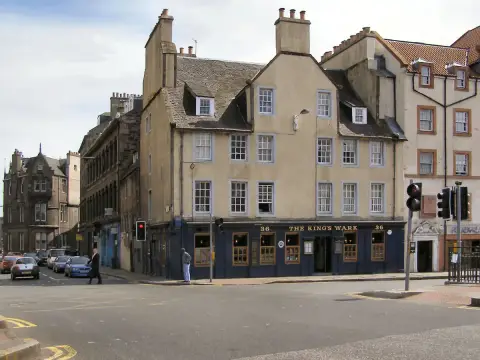
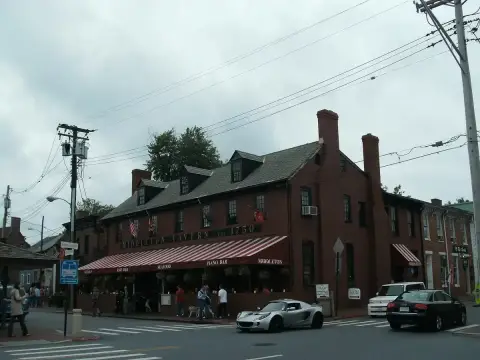
old Wapping and Limehouse wharves; the King’s Wark sits on the
Shore in Leith where the Water of Leith meets the docks; the
Nindigully Pub began as shearers’ quarters on the bank of the
Moonie in Queensland. The water was the road, and the pub is what is left of the depot.
This is the widest-travelled collection after old pubs with rooms, with
houses in eight countries, and it is also a caution. Water places a pub beautifully and dates it not
at all: sixteen of the twenty-seven have no first record of trading traced, and a waterfront is
rebuilt more often than almost anything else. The road’s version of the same story is under
coaching inns.
Spread across England, Germany, Scotland, Wales, Netherlands, United States, Ireland, Malta, New Zealand, Australia. Ordered by the date each one claims, oldest first — which is not the same as the order of the evidence.
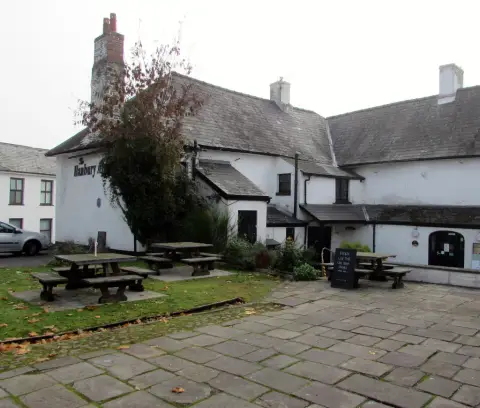
The AD 560 date is tradition only; no early documentary source has been published. The listed building is 17th-century with an older cross-wing, and a continuous run of named innkeepers is recorded only from 1841.
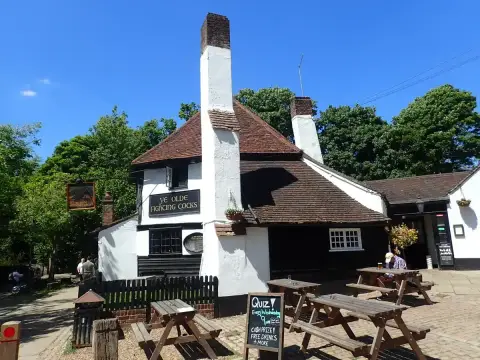
The 793 is the pub's own claim: its website says the original structure has been dated as far back as 793AD. Historic England notes the 793 date first appears on an early-20th-century postcard. Legal papers show the old pigeon house was rebuilt as the 'Round House' by 1622; the first firm record as an alehouse (the Three Pigeons) is 1756, and the Fighting Cocks name appears by 1806.
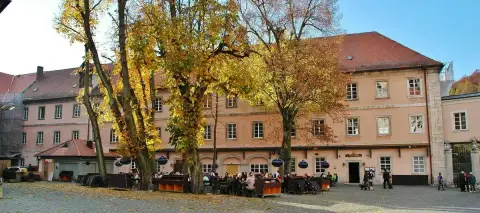
The abbey advertises brewing since 1050, a date repeated by Wikipedia but resting on monastic tradition rather than a published charter; the date refers to the brewery, not to the present tavern. When the courtyard Klosterschenke first served the public is not documented in the sources checked.
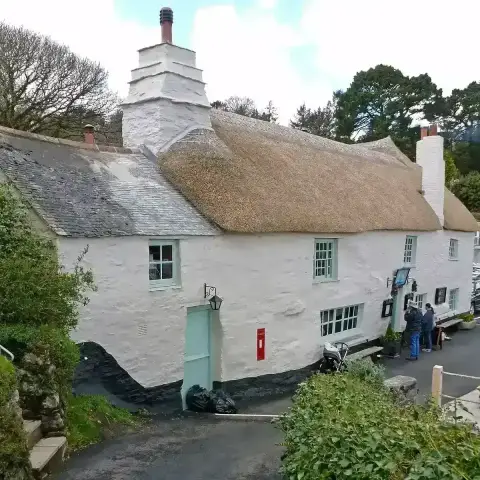
The inn's own page claims the 13th century for parts of the building, and says plainly what stood here then: a small farm on the edge of Restronguet Creek. So the claimed date dates a farm rather than a drinking house, which is why the grade is C. The page gives one real record: by 1488 the Restronguet Estate Accounts put the rent at 8s 4d a year, which it calls one of the earliest written references to the place.
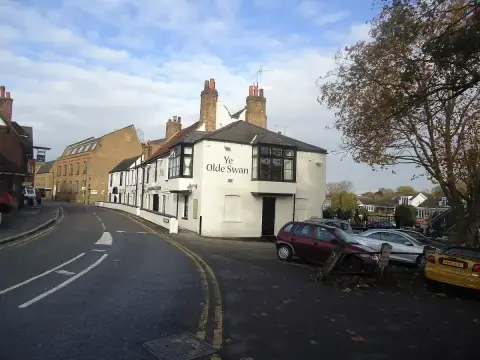
The Swan is advertised as a 13th-century riverside pub, with a story that Henry VIII used the site as a hunting lodge. Historic England describes something quite different: two early C18 houses in colourwashed brick, joined by a C19 link and extended again at the right-hand end to make one public house. Nothing in the listing reaches beyond about 1700, and no medieval record of drinking on the bank here was traced.
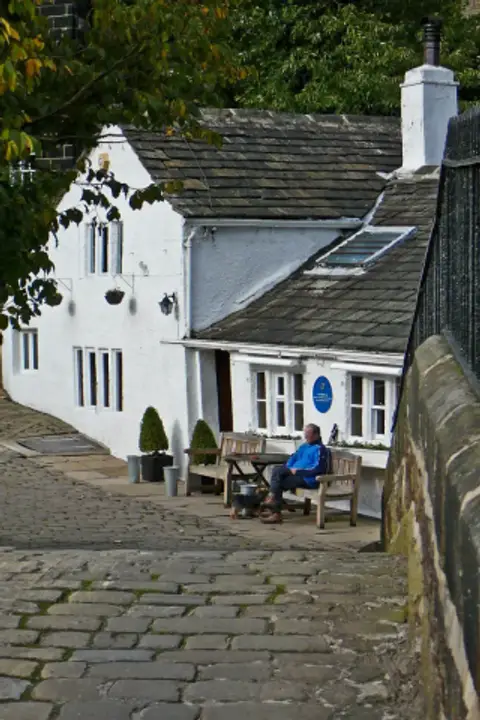
The pub cites a 1307 record of the site's yeoman-clothier owners. Historic England lists the first recorded landlord as John Hurstwood in 1754, with a 16th-century cruck truss and 17th-century panelling inside, so the fabric is old but pub use is only documented from the 18th century. A commercial directory confirms it independently: Edward Baines's directory of the county of York (1822) lists John Schofield as
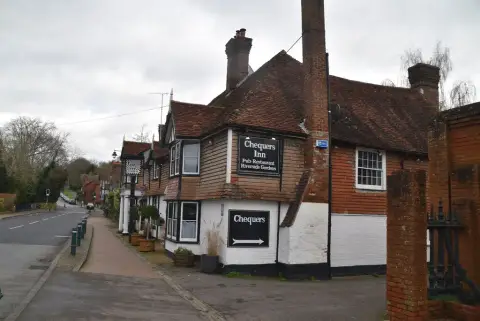
The Chequers calls itself one of the oldest 15th-century village inns in Kent. Historic England describes a hall house of C16 or earlier date, much extended in the early C18 and again in the early C19, tile-hung above painted brick with a five-bay front of casements. Its listed outbuildings — a stable block and an outhouse — were added to the list in 1989. Nothing was found to place drinking here in the 15th
The bar takes its name and its date from the King's Wark, the royal arsenal and storehouse James I of Scotland began building on the Shore in 1434. That complex is documented in the royal accounts through the 15th and 16th centuries, was burnt by the English army in 1544 and its tower, drawn by Slezer in 1693, has since been demolished. Drink enters the record in 1613: James VI's grant of the Wark to Bernard
Historic England notes that references to a 1520 foundation did not appear until the 1950s and "may have been related to a marketing campaign rather than historical research"; the building is of the 18th and 19th centuries. The statutory list entry itself was read on 17 September 2026 and hedges in the same direction. Entry 1357505, first listed on 29 December 1950 at grade II, describes No 57 Wapping Wall as a
The c.1550 belongs to History Hit, whose page on the pub says it was established in 1550. The pub states no year of its own: its website calls itself the oldest pub on the River Thames and its history page reaches back only as far as the seafarers who bought a pint and a postage stamp here in the 1800s, when the house was the Spread Eagle and Crown. Historic England's Heritage Calling finds no continuity with 1550 —
The 1565 is neither the inn's, which publishes nothing we could find, nor CAMRA's, which gives the 16th century and no year. HistoryPoints, the Welsh local-history project behind the QR plaques on buildings, states that most of this riverside inn dates from about 1565, with the rear section rebuilt probably in the 18th century and the windows reshaped in the early 19th, and that it began as a town house for the
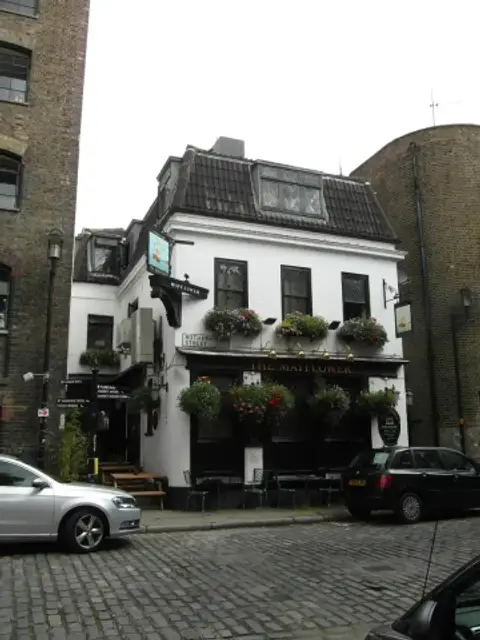
The claim is the pub's own: its website calls it a traditional London pub since 1583. No record is cited for that date, and the surviving narrow riverside building is 18th-century.
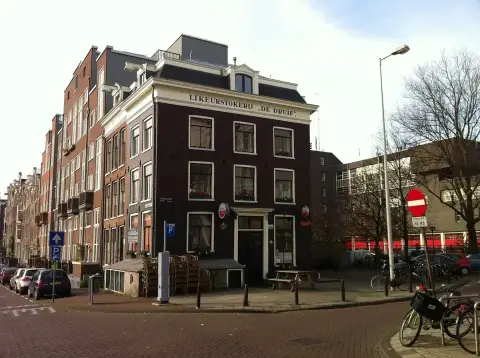
The 1585 dates a distillery, not a café, and comes from the local press: Oost Online reports that the De Druif liqueur distillery dates from 1585 and that a café is said to have been in the building from 1631, while rejecting the story that the admiral Piet Hein drank here — he was dead by then. Amsterdam750 goes further and finds that De Druif began as a drinking house only in 1863.
The 17th century is the listing's date, not the inn's. Historic Environment Scotland lists 2 Newhalls Road, the Hawes Inn, at Category B and dates the original part to the later 17th century, with 19th-century extension westward and a Baronial east wing of 1893 by Sydney Mitchell & Wilson. The date stone reading 'IS BB 1638' was reused from the old house of New Halls, so it dates that house and not this one, and a
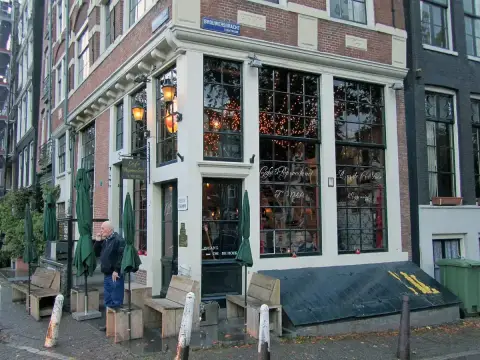
The Dutch national monuments register describes Prinsengracht 2 as a corner house with stepped gables to the street and the side, decorated with heavy arched blocks, and dates it 1641 — a year off the 1642 the cafe gives, and near enough to hold the claim up. Vereniging Hendrick de Keyser, which has owned the house since 1918 and is the second publisher this row needed, gives the same year: built in 1641 as a shop
Claims 1642; first recorded 1896; building c.1641.
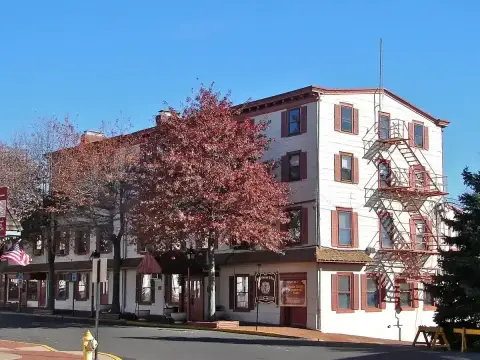
The 1681 belongs to the Pennsylvania press, not to the inn. The Pennsylvania Independent, on 25 July 2024, has the house opening as the Ferry House in 1681 under Samuel Clift, who ran the ferry between Bristol and New Jersey, and quotes a state tourism official who says it is the oldest bar in Pennsylvania. The inn's own pages claim America's oldest inn and tavern and print no year. Wikipedia records inn use from
Dated 1681 in the press; first recorded 1705; building c.1735.
The bar claims the site of one of Limerick's oldest pubs, dating to 1724; no supporting documents were found. The holding page that was on its website has gone, and Limerick.ie listed full opening hours when we checked in September 2026. There is a licensing record as well, found on 18 September 2026: Revenue's register of liquor licences renewed for 2025/2026, standing as at 2 September 2026, carries a seven-day
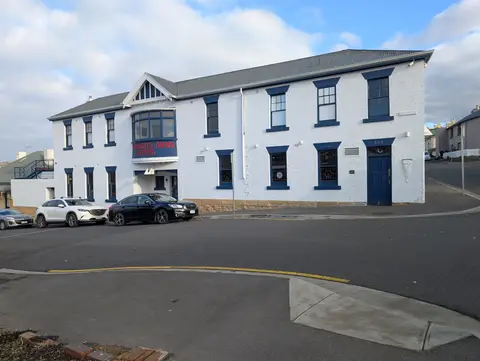
The 1732 comes from the Għajnsielem local council's own account of Mġarr harbour, which says the building went up as the port's barrakka — the cabin where passengers waited for the passage boats — under Grand Master António Manoel de Vilhena, and which places it beside an osteria that was still standing when the account was written. English Wikipedia carries the same year and the sloping roof. The year therefore
Locally dated 1732; no early record found; building c.1732.
The Maryland Historical Trust's survey file for the property dates it to about 1754, built as a tavern and boarding house on the Ship Carpenters Lot that Governor Francis Nicholson set aside about 1696 for shipwrights, and known first as the Inn for Seafaring Men. The Middletons' fifty-year tenure was reported often in the Maryland Gazette, and George Mann ran the house through much of the Revolution, lodging
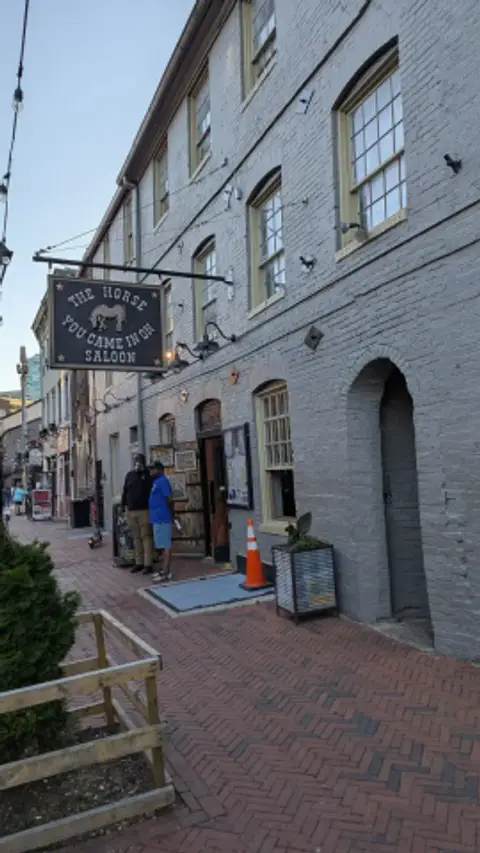
The 1775 is published by the National Trust for Historic Preservation's magazine, which says the tavern that originally occupied this colonial building was founded in 1775 and that the building has been a bar ever since; Wikipedia attaches the year to the Fountain Inn, the saloon's predecessor. No primary record was found, and nothing the bar publishes was traced. The popular story that this was Edgar Allan Poe's
The hotel traces itself to Johnny Johnston's grog shop of 1827 — an ex-convict, well regarded locally, in its own telling — and claims New Zealand's first liquor licence, issued in 1840. Neither has been traced to a document, and no entry on the New Zealand Heritage List for the building could be found. Two buildings were lost before this one: the first burned in the Battle of Kororāreka in 1845 and a successor in
Claims 1827; no early record found; building c.1875.
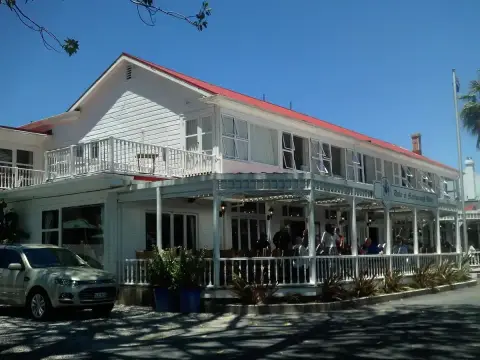
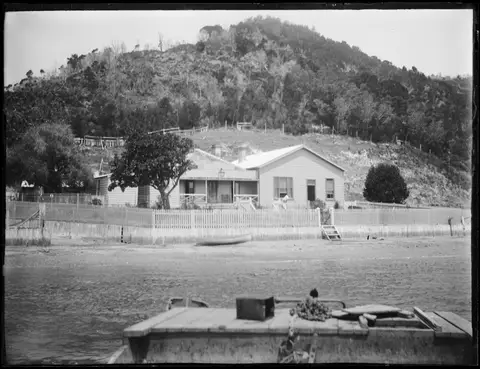
The claim is the hotel's, reported by the New Zealand Herald: the Horeke claims to be the country's oldest surviving pub, with a history dating to 1833, though the Herald adds that it was not legally licensed then. RNZ (2018) notes parts may date to the 1820s shipbuilding era. No documentary evidence has been published. The Herald described it in 2020 as trading with food and lodging, and the Bay of Islands tourism
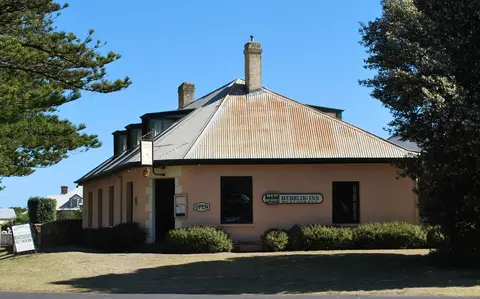
The Victorian Heritage Register entry for the house, H0248, does two things worth separating. It dates the fabric: William Middleton executed a lease with James Atkinson for the corner of Campbell and Gipps Streets in September 1845 and apparently began building the inn then, and it was named the Royal Merrijig to tell it apart from an earlier Merrijig Inn that Archibald McNeill had built nearer the Moyne River
Claims 1845; first recorded 1847; building c.1845.
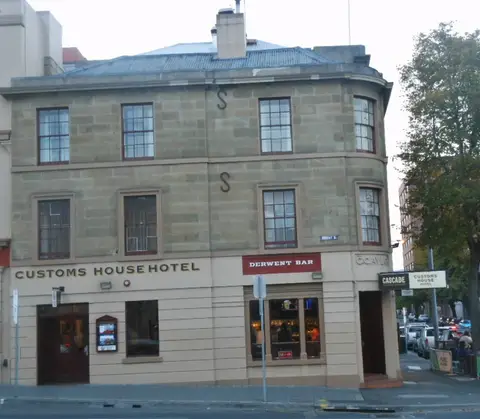
The hotel's own history says the house was built for Charles Gaylor and licensed in 1846, trading first as the Chop House. The Tasmanian Heritage Register lists 1 Murray Street as the Customs House Hotel and describes a corner sandstone building with three bays to each street, a recessed corner entry, a parapet and hipped roof and twelve-paned sash windows, significant as an Old Colonial Georgian hotel. That fits
The 1846 founding date comes from the pub's own website (its phone number even ends 1846). No independent licensing or heritage documentation confirms it.
Claims 1846; no early record found; building c.1845.
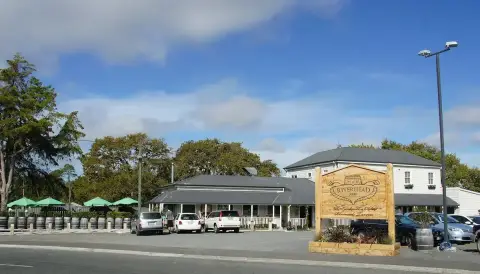
The owners' history says Thomas William Deacon established the house in 1857 and claims New Zealand's second-oldest liquor licence, which the Thistle Inn in Wellington also claims; no licensing record has been traced for either. The New Zealand Herald, reporting the tavern's sale on 10 October 2019, gives the same year — the house began trading in 1857 and is believed to be the country's oldest riverside tavern —
The State Library of Queensland, using the Queensland Hotels and Publicans' Index 1843-1900 and Trove newspapers, records a certificate granted to Thomas Bradford in 1864 for the Nindigully Hotel: a publican's licence at the claimed date. The shearers'-quarters origin is repeated there without a citation. The house traded as the Traveller's Rest from 1876 and the Sportsman's Arms from 1880, its licence was cancelled
Claims 1864; first recorded 1864.
The photographs above are other people's work, used under open licences, or in the public domain. Every photographer, licence and source page is named in the image credits.