21 pubs checked · updated 18 September 2026

The oldest pub in Scotland

The short answer

Oldest claim

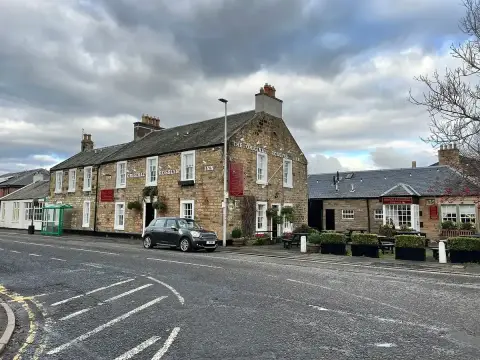
The Sheep Heid Inn

Says 1360. No document from that date has been found.

Grade C · Tradition

Oldest proof

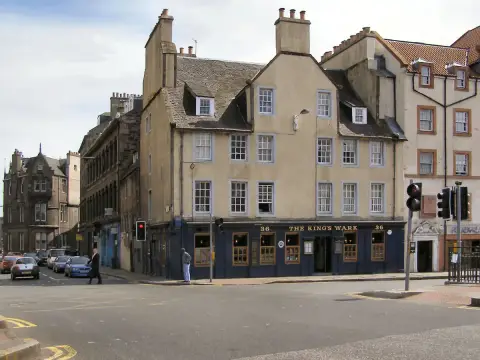
The King's Wark

On record from 1613.

Grade C · Tradition

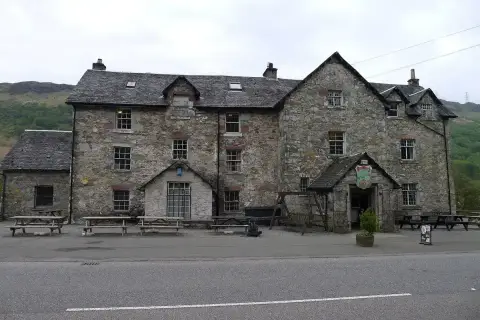
By claim, the oldest pub in Scotland is the Sheep Heid Inn at Duddingston in Edinburgh, which dates itself to about 1360; Historic Environment Scotland's listing describes an essentially eighteenth-century building. No pub on this page can yet produce a document from at or near the date it claims, so the honest answer is that Scotland has no proven oldest pub. The nearest things to evidence here are a map and a listing: the Drovers Inn at Inverarnan is marked as an inn on a map of 1776, and the Cramond Inn's north block is dated to about 1670 by Historic Environment Scotland, which is the date attached to that pub.

Scotland's oldest-pub question has a published answer, and it is a negative one. In his history of Scottish drinking, Anthony Cooke concludes that no surviving building in Scotland proven to have been built as an inn is older than the seventeenth century, and that the houses claiming earlier origins have usually been rebuilt on the site of something older, or are older buildings that were never inns to begin with. Falkland, Linlithgow and Haddington all supply candidates of that second kind: handsome sixteenth- and seventeenth-century houses that took in travellers only later in their lives. Two other things shape the Scottish list. The surviving interiors are strikingly Victorian, built around the island counter and the tall gantry of spirit casks rather than the snug and the settle. And outside the towns the characteristic old drinking house is the change-house or drovers' stop — an inn set alone on a military road or a cattle route, where the trade is genuinely ancient even where the paperwork is thin. Twenty-one Scottish houses are gathered here, town bars and drove-road inns together.

The pattern the listings show

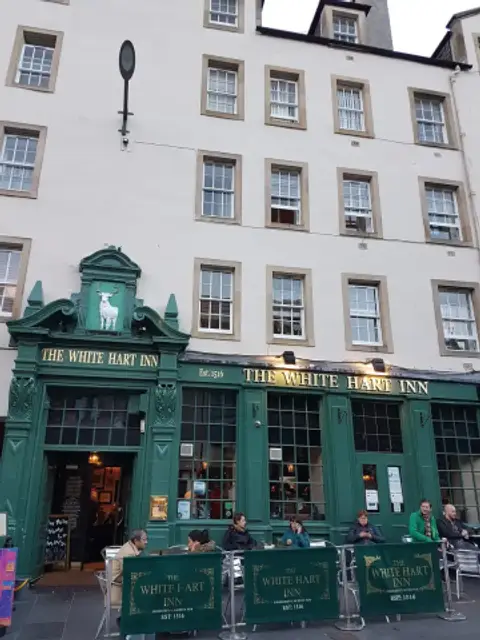
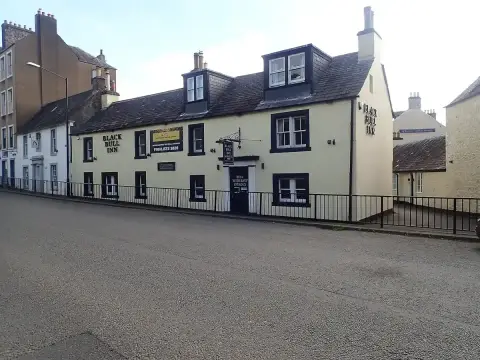
Read the Historic Environment Scotland entries alongside the pubs’ own histories and the same gap opens every time. The Sheep Heid claims 1360 against an eighteenth-century core. The White Hart claims 1516 against a building of about 1740. The Drovers Inn claims 1705, while the listing suggests the building may have begun as barracks for the military road driven north past Loch Lomond in 1748–53 and records it on a map of 1776. The Black Bull in Moffat dates itself to 1568, and the listing for it writes that down as a claim while dating the building to probably the eighteenth century, on the site of an earlier inn. The Drovers is the useful case: the claim is wrong and the building is still genuinely old, which is why it grades better than pubs with earlier dates and no evidence at all.

Where the trade is older than the paperwork

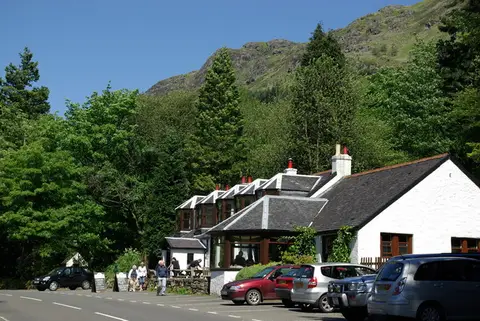
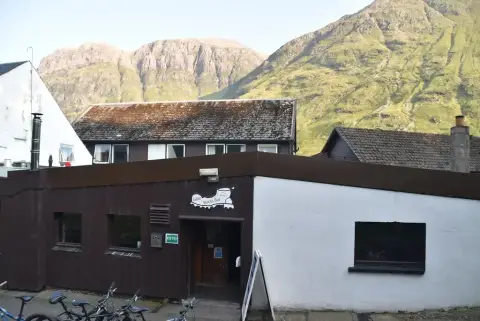
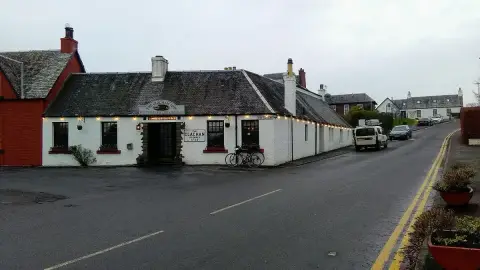
Scotland’s most convincing old drinking houses are the ones whose function you can see from the road. Clachaig Inn sits where anyone crossing Glen Coe would have had to stop. The Clachan at Drymen stands on the square where the Rob Roy Way begins, and keeps a salt box hidden in its old fireplace from the years of the salt tax. The Globe Inn in Dumfries admits that little is documented about its early proprietors, but its role as Robert Burns’s howff in the 1790s is beyond doubt — his verses are still scratched into the window panes upstairs. For the wider comparison see the oldest pubs in the UK, and for how we grade a claim against a listing entry, the methodology.

ScotlandCities

OpenFreeMap · © OpenMapTiles · Data © OpenStreetMap contributors

Open the full map

The contenders, oldest claim first

Order the contenders
  1. Edinburgh, City of Edinburgh

    No documentary support for 1360 was found. The listed building is essentially 18th-century, and the James VI snuffbox story is tradition. Anthony Cooke's history of the Scottish pub finds no surviving purpose-built inn older than the 17th century.
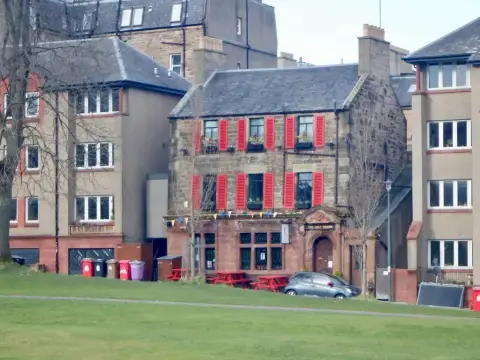
    Claims 1360; no early record found.
  2. Edinburgh, City of Edinburgh

    The bar takes its name and its date from the King's Wark, the royal arsenal and storehouse James I of Scotland began building on the Shore in 1434. That complex is documented in the royal accounts through the 15th and 16th centuries, was burnt by the English army in 1544 and its tower, drawn by Slezer in 1693, has since been demolished. Drink enters the record in 1613: James VI's grant of the Wark to Bernard

    Claims 1434; first recorded 1613.
  3. Edinburgh, City of Edinburgh

    The 1456 comes from secondary lists and seems to attach to traditions of golf on Bruntsfield Links rather than to any documented tavern; no licence, deed or directory entry for it has been traced. The national designations have now been searched around Wright's Houses: within a hundred and fifty metres they hold twenty-six listed buildings, including the tenements at 1-19 Barclay Place next door and the Barclay

    Claims 1456; no early record found.
  4. Edinburgh, City of Edinburgh

    Historic Environment Scotland lists 30-40 Grassmarket, which takes in the White Hart, at category B, and its statement of special interest says records of the inn go back to 1516 — without naming one. So the 1516 is not the pub's alone, but nobody who publishes it points at a document. The tenement itself is about 1740, built by James Lithgow, damaged in a Zeppelin raid in 1916 and restored in 1994-5. CAMRA's

    Claims 1516; no early record found; building c.1740.
  5. Moffat, Dumfries and Galloway

    The 1568 date is the inn's own, and CAMRA's Dumfries and Stewartry branch repeats it, calling the building the oldest in Moffat still in use. Historic Environment Scotland takes a different view: its category B record dates the standing building to probably the 18th century, on the site of an earlier inn, and writes the 1568 date down as a claim rather than a finding. Claverhouse's lodging here in 1678 is also given

    Claims 1568; no early record found.
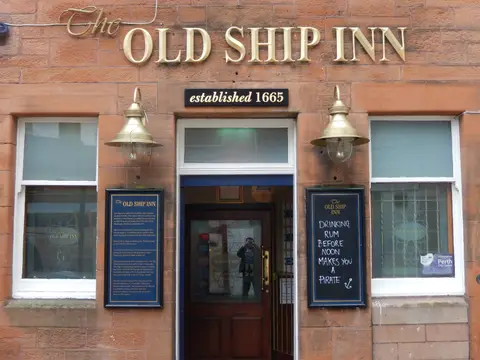
  6. Ship Inn

    Grade C

    Irvine, North Ayrshire

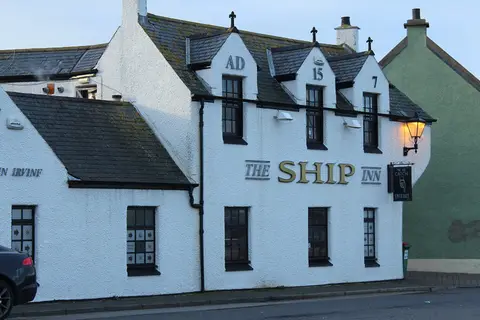
    Two community-written accounts disagree by a year and neither cites a record. CAMRA's Ayrshire and Wigtownshire branch says the building dates from 1595 and that it has been a pub since 1754; Wikipedia's Irvine Harbour article says built 1596 and licensed as an inn since 1754. The national designations have now been searched around the house rather than left open: within a hundred and twenty metres they hold one

    Dated 1595 by CAMRA; no early record found.
  7. South Queensferry, City of Edinburgh

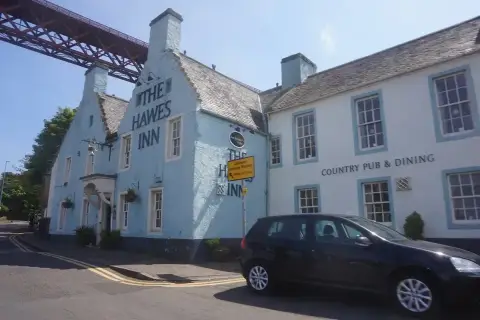
    The 17th century is the listing's date, not the inn's. Historic Environment Scotland lists 2 Newhalls Road, the Hawes Inn, at Category B and dates the original part to the later 17th century, with 19th-century extension westward and a Baronial east wing of 1893 by Sydney Mitchell & Wilson. The date stone reading 'IS BB 1638' was reused from the old house of New Halls, so it dates that house and not this one, and a

    Dated 1600 by its listing; no early record found.
  8. Dumfries, Dumfries and Galloway

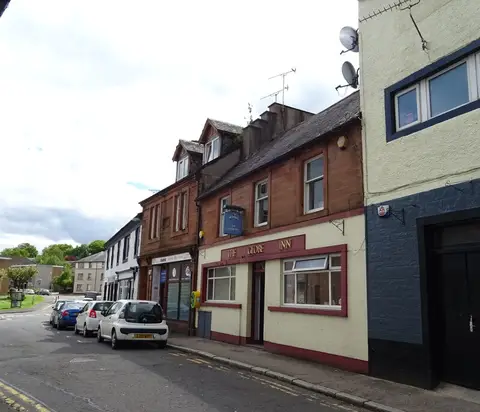
    Historic Environment Scotland lists the Globe at category A, its highest grade, and dates the building to the mid eighteenth century with alterations and additions; the oldest year on it is a re-set datestone of 1696, re-set meaning carried here from somewhere else. So the 1610 the inn claims is a century and a half ahead of anything the register can see, and the inn itself admits little is documented about its

    Claims 1610; no early record found.

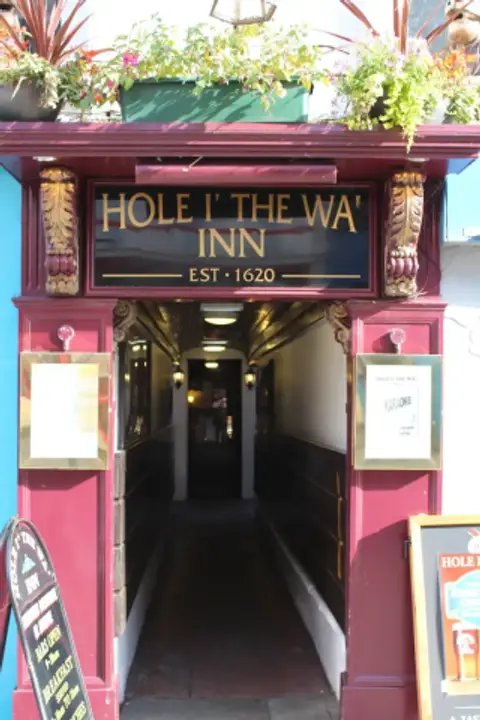
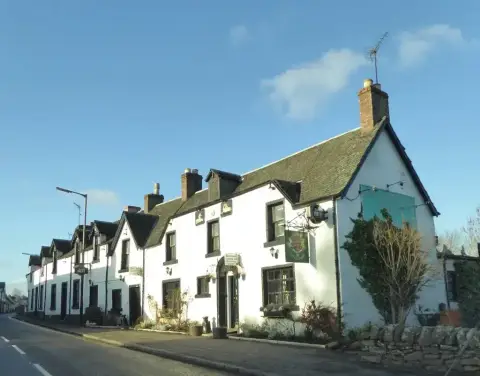
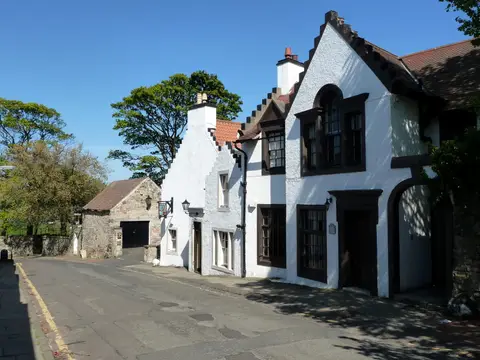
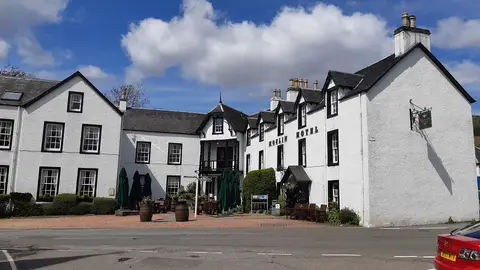
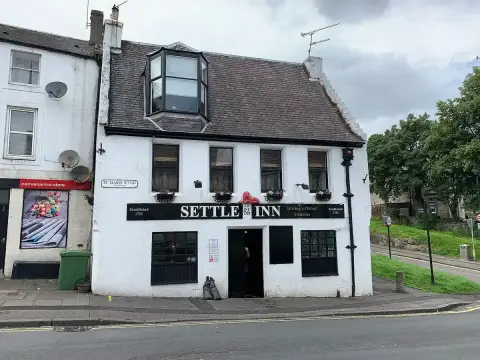
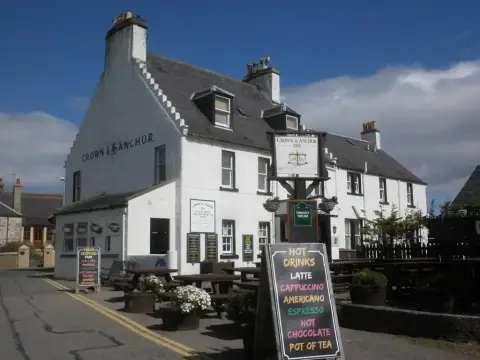
The photographs above are other people's work, used under open licences. Every photographer, licence and source page is named in the image credits.

Common questions

Which is the oldest pub in Scotland?
No Scottish pub has produced a document from the date it claims. The Sheep Heid Inn at Duddingston claims about 1360 and is listed as an essentially eighteenth-century building. Anthony Cooke's conclusion still stands: nothing in Scotland proven to have been built as an inn is older than the seventeenth century.
Which Scottish pub has the oldest licence?
The Clachan Inn in Drymen claims Scotland's oldest surviving pub licence, granted in 1734, and names its first licensee as Mistress Gow, said to be a sister of Rob Roy MacGregor. The inn, CAMRA and the village heritage trail all repeat it; the licence itself has not been produced.
Is the White Hart Inn in Edinburgh really from 1516?
The pub says written records for the site reach back to 1516 and that its cellars survive from then, without citing a source. Historic Environment Scotland dates the building above to about 1740. The documented history is later and rather good: Robert Burns stayed in 1791 and Dorothy Wordsworth in 1803.
Which is the oldest pub in Edinburgh?
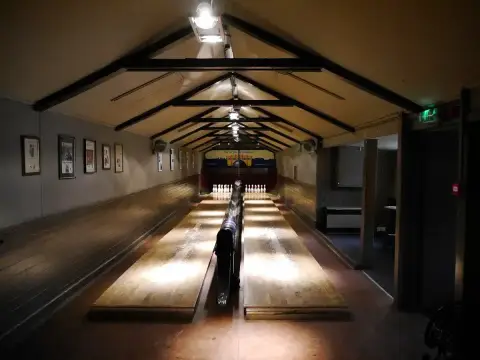
Two contenders, both Category B listed and both essentially eighteenth-century in fabric: the Sheep Heid at Duddingston, which still has its skittle alley of about 1880, and the White Hart in the Grassmarket. Neither has produced a record from the date painted on its sign.