11 pubs checked · updated 18 September 2026

The oldest pub in the Netherlands

The short answer

Oldest claim

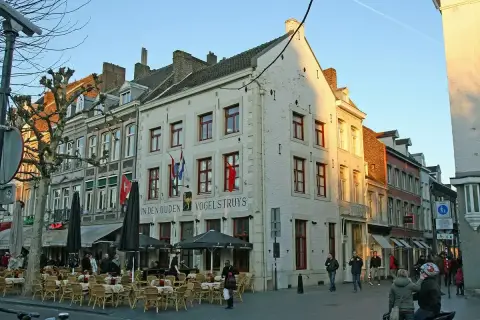
In den Ouden Vogelstruys

Says 1309. The first record is 1840.

Grade C · Tradition

Oldest proof

De Drie Fleschjes

On record from 1618; the building is dated to about 1888.

Grade A · Documented

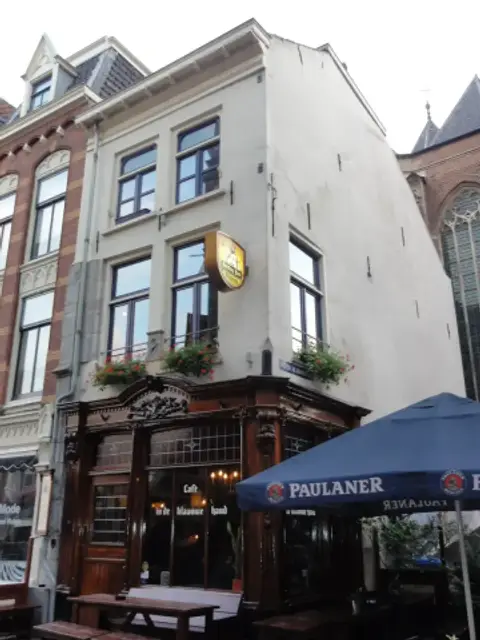
By claim, the oldest pub in the Netherlands is Café 't Rozenhoedje on the Boschstraat in Maastricht, whose door reads "Anno 1486" and which now dates itself to 1466 on the strength of local research. By evidence it is a different house in a different province: De Drie Fleschjes, the standing-room jenever tasting house behind Amsterdam's Nieuwe Kerk, where archival work has found a drinking house on the spot in 1618 under the name Het Sufflet. Doesburg's late-Gothic weigh house, De Waag, holds a Guinness listing as the country's oldest still-operating hospitality business, dated 1478.

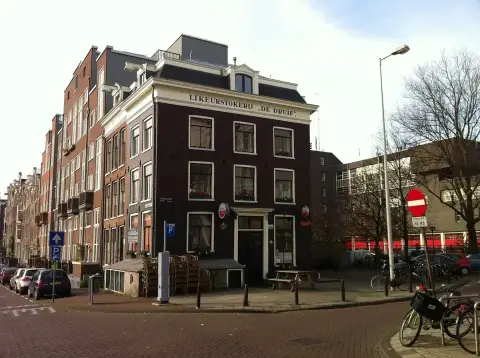
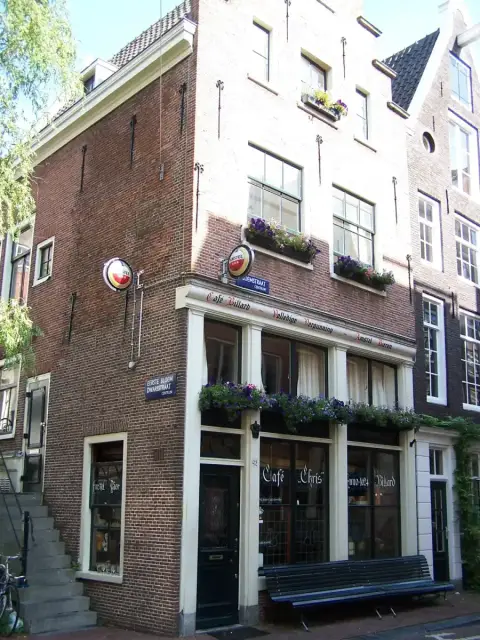
The Netherlands is the one country on this site where somebody has gone through the archives specifically to test the pub claims and then published the results. For Amsterdam's 750th anniversary the city historian Maarten Hell examined the paperwork behind the capital's best-known oldest-bar stories, and found most of them to be nineteenth-century arrivals wearing seventeenth-century costume: De Druif was not pouring for Admiral Piet Hein in 1585 but opened in 1863, and Café Chris did not pay the builders of the Westerkerk in 1624, because no bar existed at the address before 1882. The Dutch drinking room also comes in more varieties than the English one. There is the bruin café, tobacco-darkened and held together by its regulars; the proeflokaal, a distiller's tasting house where jenever is poured to the brim and the first sip is taken bent over the counter; and the stadsbierhuys or town beer house, sometimes lodged in a weigh house that also held the merchants' scales. Each of the three keeps a different kind of record.

What the archives changed

The Amsterdam 750 research is worth understanding because it shows how an oldest-bar claim usually fails. It rarely fails because someone lied. It fails because a building is old, a neighbourhood is old, a family memory is long, and at some point in the twentieth century all three were rolled into a founding date. De Druif genuinely is a beautiful old bar on a quiet harbourside square; it simply began in 1863 rather than 1585. Café Chris is a fine Jordaan local that postdates the Westerkerk by two and a half centuries. Café ’t Papeneiland occupies a house of 1642 and was fully licensed as a pub in 1896, which is a distinction its own history page makes honestly.

Beyond the capital

Four of the strongest cases are outside Amsterdam. Stadsbierhuys De Waag in Doesburg still has the great merchant’s scales hanging inside the weigh house where it pours its own Hanseatic blond. Café In de Blaauwe Hand in Nijmegen has been in hospitality use since at least 1542, in part of a cloth hall of around 1320, and takes its name from the indigo-stained hands of the dyers next door. Café ’t Rozenhoedje in Maastricht is marked by a carved gable stone of a rosary, which is the kind of detail Dutch researchers use to date a house. In den Ouden Vogelstruys, on the corner of the Vrijthof a few streets away, dates its house to a chapter deed of 11 September 1309 and carries an ostrich and the year 1730 on the gable stone over its door; the café inside it is recorded from about 1840, which is the date its own page leads with. The Amsterdam list is at the oldest bars in Amsterdam, and there is a walking route through Amsterdam’s brown cafés.

NetherlandsCities

OpenFreeMap · © OpenMapTiles · Data © OpenStreetMap contributors

Open the full map

The contenders, oldest claim first

Order the contenders
  1. Maastricht, Limburg

    The house makes its own claim and makes it carefully: the present front dates from 1730, it says, but the Struys is said to be far older, and the oldest reports of the building go back to 1309, so the café counts a history of more than 700 years. The 1309 is real and it is not about drink. A deed of the St Servaas chapter of 11 September 1309 names a stone house on this corner belonging to a knight of Schonecghen
    Claims 1309; first recorded 1840; building c.1730.
  2. Maastricht, Limburg

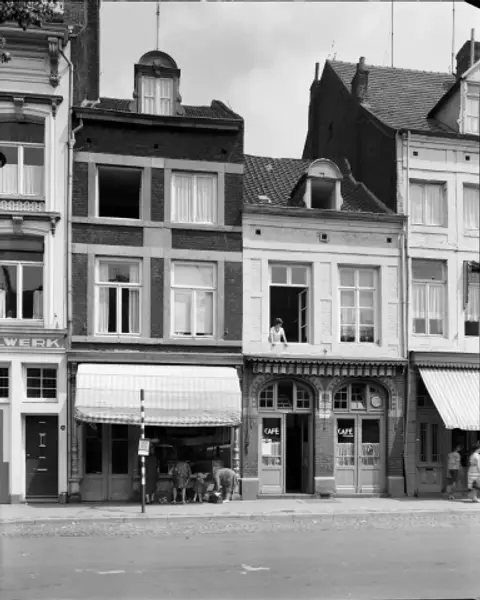
    The café long used 1486 (painted on the door); local amateur historian Jef Moers argued it was serving drinks 20 years earlier, so it now claims 1466. The archival basis for either date has not been published in the sources checked. Two Dutch state registers date the building instead of the drinking: the national monuments register, which has the house as a protected monument and dates its cornice façade to the

    Claims 1466; no early record found; building c.1733.
  3. Doesburg, Gelderland

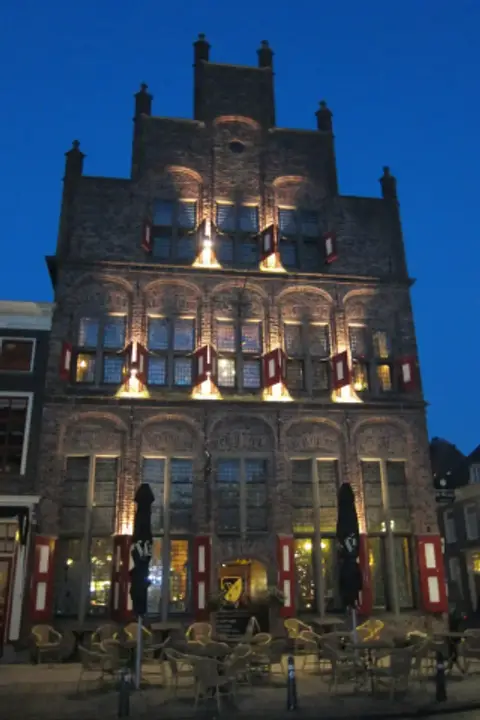
    The weigh house came into use in 1478, and the city let it with the monopoly on selling foreign beer in Doesburg, so weighing and tapping ran together from the start: Erfgoed Gelderland, the Dutch Wikipedia entry, the town's own heritage pages and the Stichting Erfgoed Nederlandse Biercultuur database all describe it as the stadsbierhuis from its opening, with city workers taking part of their wages here in beer.

    Claims 1478; first recorded 1478; building c.1478.
  4. Nijmegen, Gelderland

    The café occupies the right-hand corner of Nijmegen's cloth hall, which is first named in the city accounts of 1382 and was rebuilt between 1542 and 1545 to a design by Claes die Waele of Rhenen — the same 1542 the café gives as its founding date. The Digitale Huis pages of Regionaal Archief Nijmegen list the hall's later mixed uses, including the municipal bottelarij, say the cloth guild kept beer and wine in this

    Claims 1542; no early record found; building c.1320.
  5. Amsterdam, North Holland

    The 1585 dates a distillery, not a café, and comes from the local press: Oost Online reports that the De Druif liqueur distillery dates from 1585 and that a café is said to have been in the building from 1631, while rejecting the story that the admiral Piet Hein drank here — he was dead by then. Amsterdam750 goes further and finds that De Druif began as a drinking house only in 1863.

    Dated 1585 in the press; first recorded 1863.
  6. Amsterdam, North Holland

    The 1606 is the Amsterdam press's: Mokum Magazine states flatly that the brown café dates from 1606. Amsterdam750's review of the archives is more careful — an inn named De Oldenburger Kelder is recorded on this spot in 1641, with one indication from 1606 that drink was already sold here — so the earlier year is possible but unproven.

    Dated 1606 in the press; first recorded 1641.
  7. Amsterdam, North Holland

    The 1624 is the café's own claim, and Amsterdam750 records it as such before testing it: Café Chris says it dates from 1624 and poured beer for the men building the Westertoren. Amsterdam750 found no evidence of a drinking house at this address before the 19th century, with café use documented from 1882.

    Claims 1624; first recorded 1882.
  8. Amsterdam, North Holland

    The Dutch national monuments register describes Prinsengracht 2 as a corner house with stepped gables to the street and the side, decorated with heavy arched blocks, and dates it 1641 — a year off the 1642 the cafe gives, and near enough to hold the claim up. Vereniging Hendrick de Keyser, which has owned the house since 1918 and is the second publisher this row needed, gives the same year: built in 1641 as a shop

    Claims 1642; first recorded 1896; building c.1641.

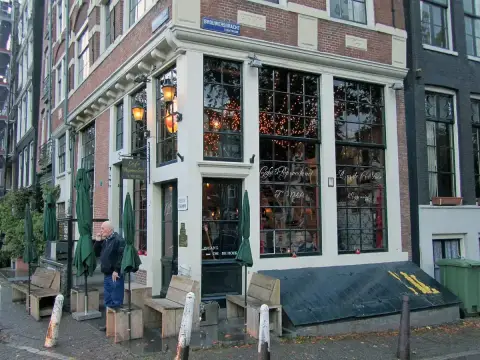
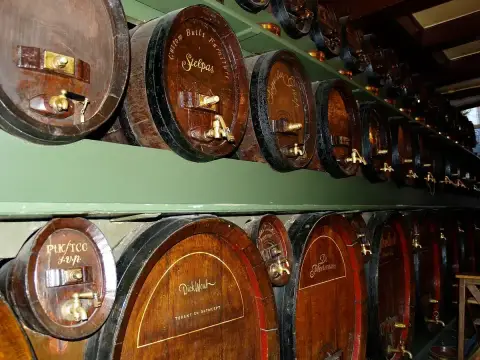
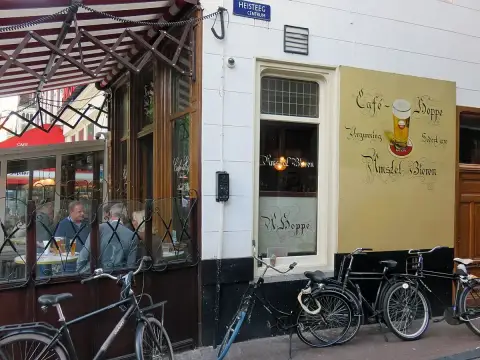
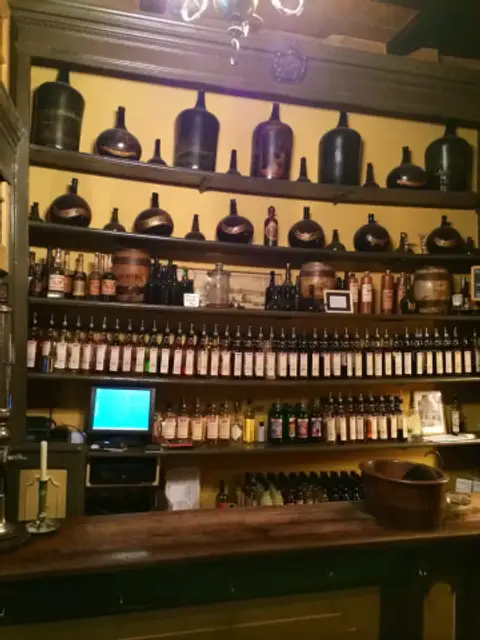
The photographs above are other people's work, used under open licences. Every photographer, licence and source page is named in the image credits.

Common questions

Which is the oldest pub in the Netherlands?
It depends what is being counted. Stadsbierhuys De Waag in Doesburg holds a Guinness listing as the country's oldest still-operating hospitality business, in a weigh house of about 1478. Café 't Rozenhoedje in Maastricht claims 1466. The oldest documented drinking house we found is De Drie Fleschjes in Amsterdam, from 1618.
Which is the oldest bar in Amsterdam?
De Drie Fleschjes on the Gravenstraat. Maarten Hell's research for Amsterdam 750 traced a drinking house on the spot to 1618, when it was called Het Sufflet. The present name appears only after 1782 and the current building dates from 1888, so the use is older than either.
Is Café Chris really from 1624?
The story that the builders of the Westerkerk collected their wages there is a good one, and there is no evidence for it — the archives show no bar at the address before 1882. Chris remains a genuinely old-fashioned Jordaan brown café, with a lavatory famously flushed from outside the cubicle.
What is a proeflokaal?
A tasting room attached to a distillery, where jenever and liqueurs are served in tulip glasses filled to the rim. Wynand Fockink, down an alley behind the Dam, has distilled on its premises since 1679 and still runs its stills behind the bar. De Drie Fleschjes keeps private casks for regulars.