The claim
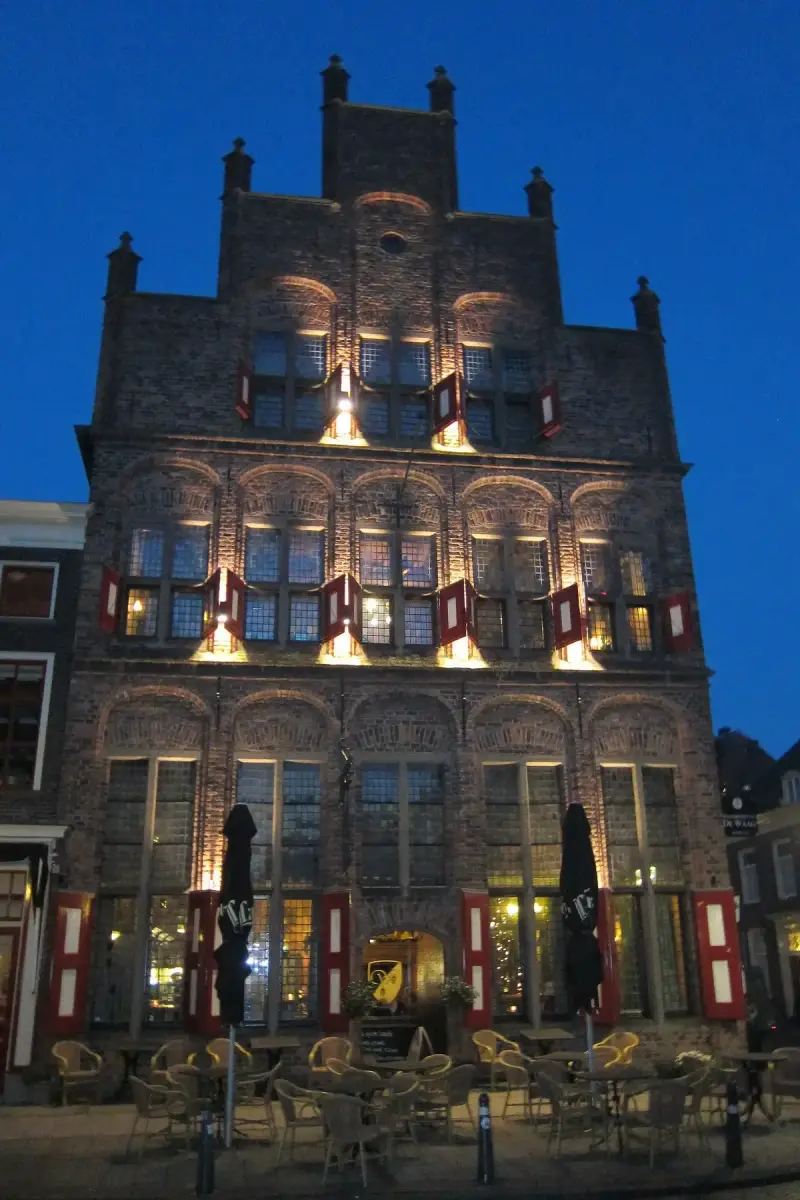
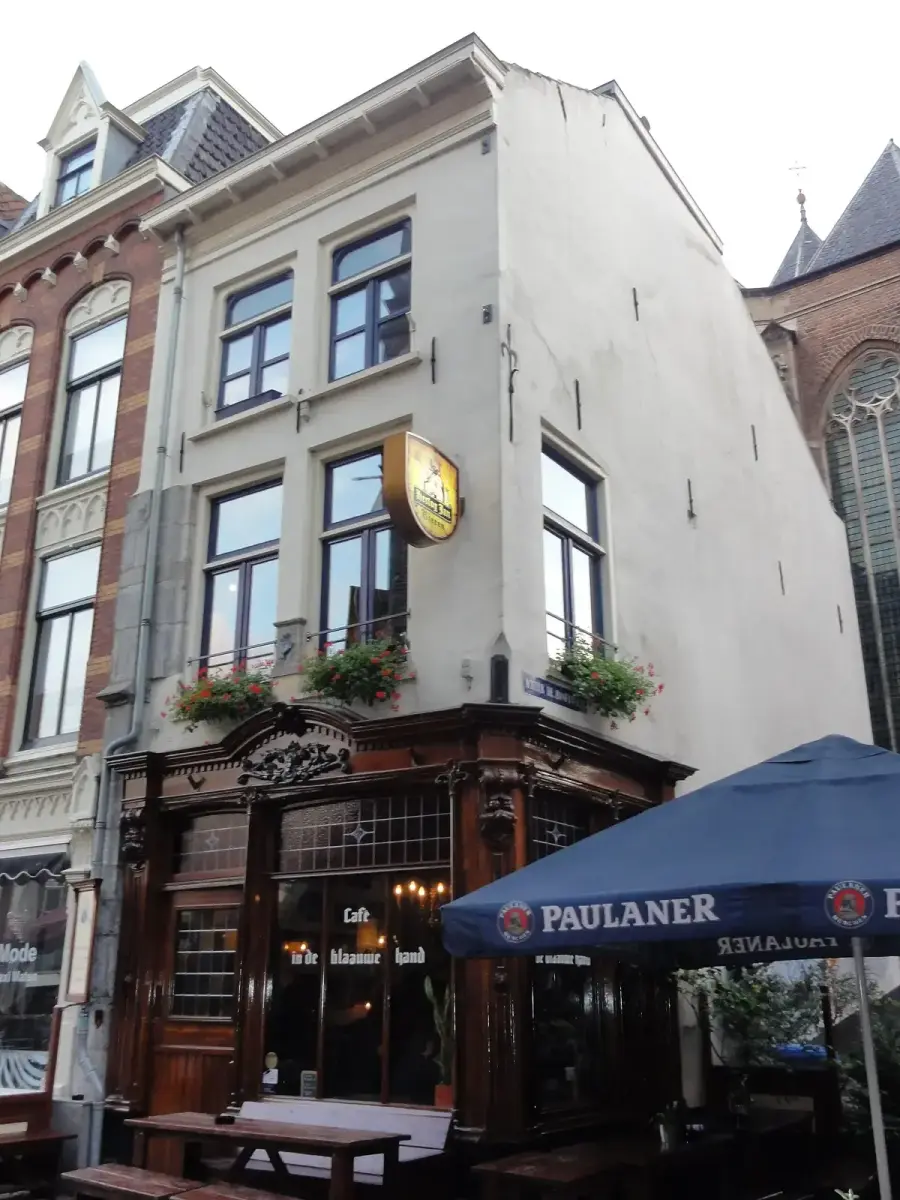
Tucked behind Nijmegen's Grote Markt beside the medieval cloth hall, this brown café has served drinkers since 1542 by its own account. Its name recalls the indigo-stained hands of the cloth dyers who once worked next door. Low beams, dark wood and a small terrace under the old church tower make it one of the city's best-loved locals.
What the records show
The café occupies the right-hand corner of Nijmegen's cloth hall, which is first named in the city accounts of 1382 and was rebuilt between 1542 and 1545 to a design by Claes die Waele of Rhenen — the same 1542 the café gives as its founding date. The Digitale Huis pages of Regionaal Archief Nijmegen list the hall's later mixed uses, including the municipal bottelarij, say the cloth guild kept beer and wine in this cellar for its feasts, and treat the dyers drinking here as tradition. Erfgoed Gelderland asserts a hospitality function from 1542 and a feast attended by Charles V in 1546, but no licence or named tapster has been published; the earliest firm evidence for the house's name is the gable stone of 1797.
| Year | What | Source |
|---|---|---|
| 1542 | Claimed founding | The pub |
| c.1320 | Present building | Building fabric |
What to look for inside
- Hospitality use recorded since 1542
- Name (1797) recalls blue-stained hands of cloth dyers
- Emperor Charles V said to have feasted on the site in 1546
Visiting
Café In de Blaauwe Hand is in Nijmegen, Netherlands, at Achter de Hoofdwacht 3, Nijmegen (beside the Grote Markt). We do not list opening times, because they change; the pub’s own site is the place to check before you set out.
Sources
- mijngelderland.nl/inhoud/verhalen/caf%C3%A9-restaurant-in-de-blaauwe-hand
- indeblaauwehand.nl/in-de-blaauwe-hand/
- www.huisvandenijmeegsegeschiedenis.nl/info/Gewandhuis_of_Lakenhal
- rijksmonumenten.nl/monument/31115/de-blaauwe-hand/nijmegen/
- monumentenregister.cultureelerfgoed.nl/monumenten/31115
Know something we don’t?Suggest a correctionLast checked Sept 2026
Run this pub? There is a badge for it
Free to put on your own site, no permission needed. It shows what the pub claims and what the records support, and it changes when the data does.
How to use it, and how to change what it says — if you have a document we have not seen, we would like to read it.