By claim, the oldest pub in Edinburgh is the Sheep Heid Inn at Duddingston, which dates itself to about 1360; Historic Environment Scotland lists an essentially eighteenth-century building. By evidence it is the King's Wark on the Shore at Leith, where an inn is documented in 1623 — almost two centuries after the 1434 the bar takes its name and its date from, which belongs to a royal arsenal rather than to a house of drink.
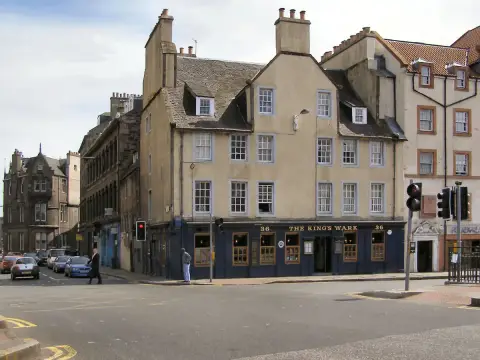
Most of Edinburgh's claims date something real, and in no case is that thing a pub. The King's Wark is the clearest example and the most useful. James I of Scotland began building the Wark, a royal arsenal and storehouse, on the Shore in 1434; the complex appears in the royal accounts through the fifteenth and sixteenth centuries, was burnt by the English army in 1544, and its tower, drawn by Slezer in 1693, has since been demolished. An inn on the site is documented in 1623, a decade after James VI granted the ground to the innkeeper Bernard Lindsay, whose name is on the street next door. That is a well-evidenced 1434 attached to the wrong kind of building. The pattern repeats around the city: the Golf Tavern's 1456 appears to reach back to traditions of golf on Bruntsfield Links rather than to any recorded alehouse; the White Hart's 1516 is a claim about cellars beneath a house built about 1740; and the Sheep Heid's 1360 comes with a snuffbox from James VI and nothing more. The Cramond Inn, out where the Almond meets the Forth, is the exception that proves the rule: its date is not the pub's claim but the listing's, Historic Environment Scotland putting the north block at about 1670, and nobody has traced when drink was first served in it. Read them together and the city's real interest is not its dates but its habit of borrowing them.
What each of these dates actually dates
The King’s Wark is where the city’s habit is easiest to see, because its
early history is unusually well recorded and belongs entirely to a royal building project. Bernard Street beside
it is named for Bernard Lindsay, the innkeeper granted the ground about a decade before the inn appears on
record in 1623 — a better founding story than 1434
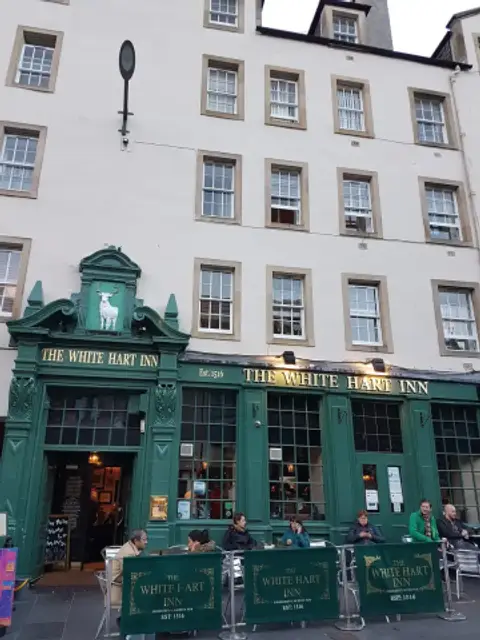
and a great deal easier to defend. The White Hart Inn does the same
manoeuvre downwards rather than backwards, placing its claim in cellars under a house of about 1740.
The Golf Tavern borrows from a sport instead of a building.
The Sheep Heid Inn is the most-cited of them and rests on tradition
alone. The Cramond Inn is the one house here whose date was set by somebody
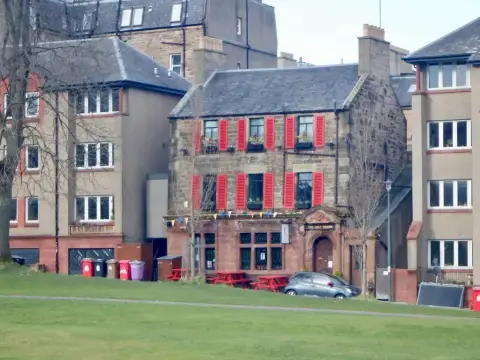
else: Historic Environment Scotland dates its crow-stepped north block to about 1670 and records the later
wings and a thorough recasting of 1959-61, which is documented fabric of the claimed age and nothing at all
about drink.
Duddingston, the Links and the Shore
These pubs sit in as many different Edinburghs, which is part of the pleasure of visiting them. Duddingston is a
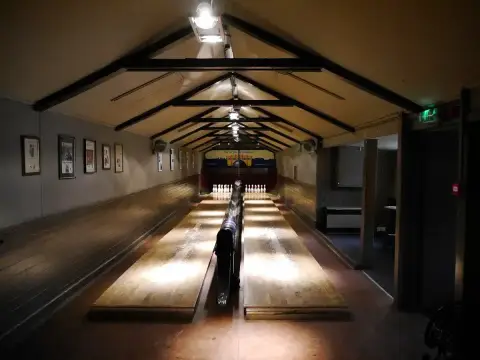
village under Arthur’s Seat, and the Sheep Heid’s courtyard and 1880s skittle alley belong to that scale. The
Golf Tavern faces open ground at Bruntsfield, one of the oldest places where golf has been played. The
Grassmarket sits under the Castle rock, and the White Hart is a compact beamed bar in the middle of it with
music most nights. Leith is a working waterfront, and the King’s Wark stands where the Water of Leith meets the
docks. Cramond is an old harbour village at the mouth of the Almond, a bus ride out and a different county of
the mind. For the country’s wider argument, including Anthony Cooke’s conclusion that nothing in Scotland proven to
have been built as an inn predates the seventeenth century, see
the oldest pubs in Scotland; the way we weigh a listing entry against a sign is on the
methodology page.
No documentary support for 1360 was found. The listed building is essentially 18th-century, and the James VI snuffbox story is tradition. Anthony Cooke's history of the Scottish pub finds no surviving purpose-built inn older than the 17th century.
The bar takes its name and its date from the King's Wark, the royal arsenal and storehouse James I of Scotland began building on the Shore in 1434. That complex is documented in the royal accounts through the 15th and 16th centuries, was burnt by the English army in 1544 and its tower, drawn by Slezer in 1693, has since been demolished. Drink enters the record in 1613: James VI's grant of the Wark to Bernard
The 1456 comes from secondary lists and seems to attach to traditions of golf on Bruntsfield Links rather than to any documented tavern; no licence, deed or directory entry for it has been traced. The national designations have now been searched around Wright's Houses: within a hundred and fifty metres they hold twenty-six listed buildings, including the tenements at 1-19 Barclay Place next door and the Barclay
Historic Environment Scotland lists 30-40 Grassmarket, which takes in the White Hart, at category B, and its statement of special interest says records of the inn go back to 1516 — without naming one. So the 1516 is not the pub's alone, but nobody who publishes it points at a document. The tenement itself is about 1740, built by James Lithgow, damaged in a Zeppelin raid in 1916 and restored in 1994-5. CAMRA's
Claims 1516; no early record found; building c.1740.
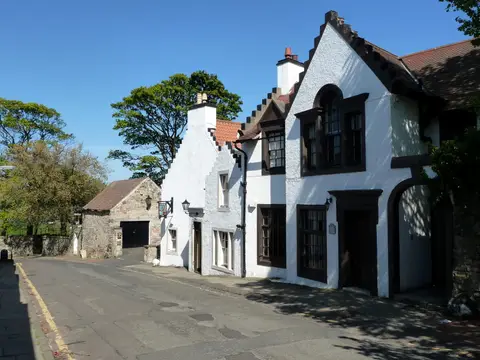
The 1670 date here is the listing's rather than the pub's. Historic Environment Scotland (LB28603, category B, designated on 14 December 1970 and part of the Cramond A group) dates the north block to about 1670 and identifies it in the sketch used for the cover of John Philip Wood's account of the parish of Cramond, published in 1794 — pitch-roofed with its gable to the street, its dormerheads visible and a walled
Dated 1670 by its listing; no early record found; building c.1670.
The photographs above are other people's work, used under open licences. Every photographer, licence and source page is named in the image credits.
Common questions
Which is the oldest pub in Edinburgh?
By claim the Sheep Heid Inn at Duddingston, which says about 1360 in a building Historic Environment Scotland dates to the eighteenth century. By evidence the King's Wark in Leith, where an inn is on record from 1623. Not one of the pubs here has a record of drinking from the year on its sign.
What was the King's Wark?
A royal arsenal and storehouse begun by James I of Scotland on Leith's Shore in 1434, documented in the royal accounts and burnt by the English in 1544. Its tower was drawn by Slezer in 1693 and has been demolished. The present corner bar takes the name and the date, not the fabric.
Is the Golf Tavern really from 1456?
The date comes from secondary lists and appears to attach to the history of golf on Bruntsfield Links, which the pub faces, rather than to a documented tavern. No building record or licence was found, so treat 1456 as legend and the golfing memorabilia inside as the point of the visit.
Which Edinburgh pub has the best documented history?
The White Hart in the Grassmarket, once you set its 1516 aside. The building dates from about 1740, Robert Burns stayed in 1791 and Dorothy and William Wordsworth in 1803, and it was damaged in a Zeppelin raid in 1916. All of that is attested; the Burke and Hare connection is tradition.
What is there to see rather than to prove?
The Sheep Heid's skittle alley, built about 1880 and reputedly the oldest surviving in Scotland, still in use in a courtyard below Arthur's Seat. Queen Elizabeth II visited the inn in 2016. The King's Wark offers Leith's waterfront and a kitchen leaning on Scottish fish and game.