Blog
The Oldest Pubs in the World
Every country with a drinking culture has a house that says it is the oldest, and the dates on the signs run from AD 560 upwards. We went through 351 of them looking for the ones where a document agrees with the sign, and the answer is not in Britain, not in Ireland, and not nearly as old as the signs would have you believe.
Published 28 September 2026
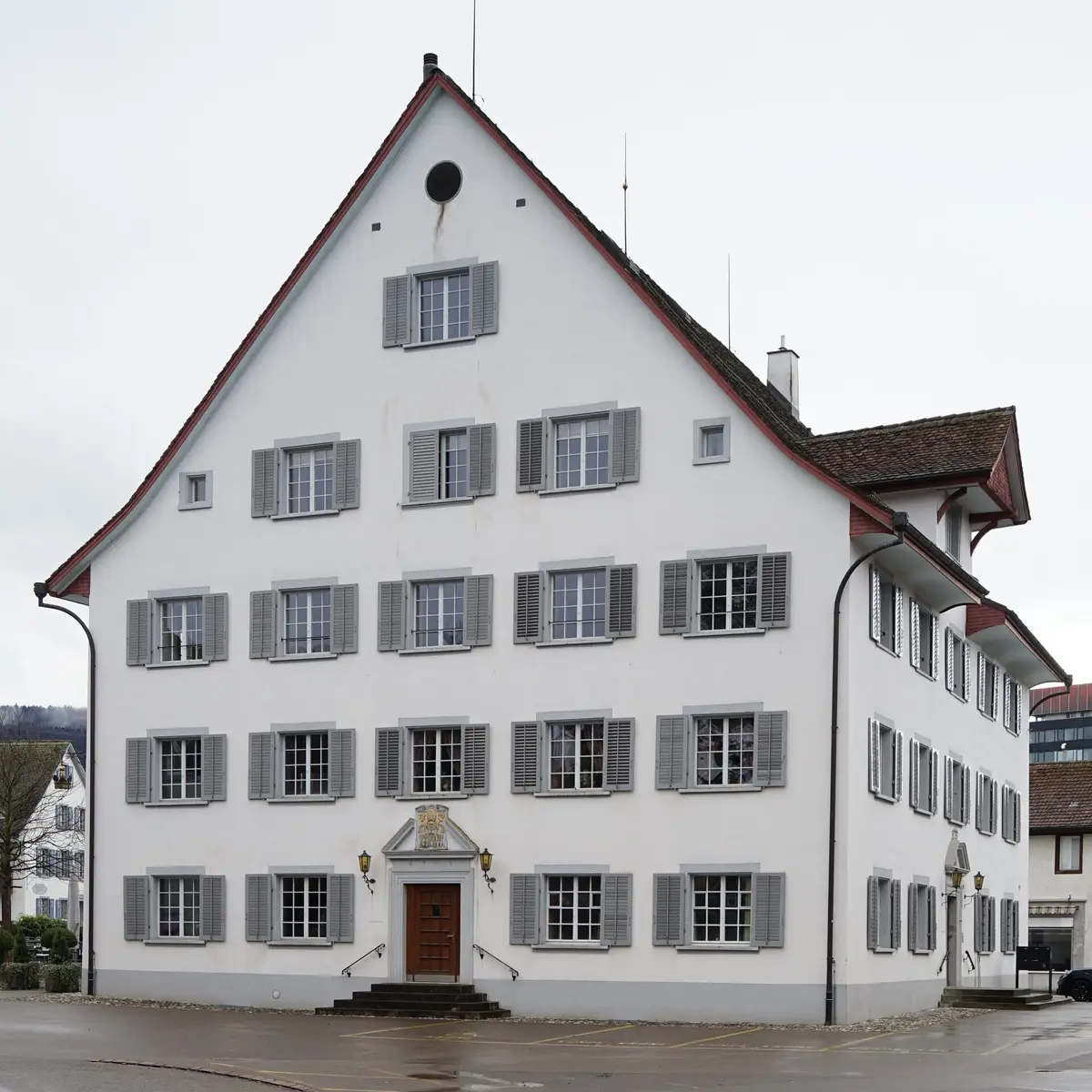 Photo: Rudolf H. Boettcher · licence

What this establishes
- Of the 351 pubs with a page on this site, the oldest one whose claimed founding date is actually supported by a dated document is Taverne zur Krone at Dietikon in Switzerland. It claims 1259 and the record is 1259 — a deed of 17 October that year, read and described by Karl Grunder in the Mitteilungen der Antiquarischen Gesellschaft in Zürich for 2007. Almost no other famous claimant on this list has its claim and its record in the same century, let alone the same year.e-periodica.ch
- Across the 164 pubs on this site that carry both a claimed founding year and a documented one, the median distance between the two is 28 years and the largest is 1,281. We counted this on 29 September 2026. The median is the useful number: most old pubs are roughly honest, and it is specifically the ones competing for the title that are not.oldpubs.com
- Ye Olde Fighting Cocks at St Albans claims AD 793. Historic England, writing about the question of England's oldest pub, notes that the 793 date first appears on an early-twentieth-century postcard. The earliest firm record of the house as an alehouse is 1756, under a different name, the Three Pigeons.heritagecalling.com
Ask which is the oldest pub in the world and you will get a confident answer, usually from a sign outside the pub. The dates on those signs are wonderful. AD 560. AD 793. AD 900. AD 953. Laid end to end they cover most of the Dark Ages, and if you took them at face value you would conclude that the first thing the post-Roman world did, before writing much down, was open a bar.
We have spent several weeks going through 351 of these houses and putting each claim next to the oldest document anybody can produce for it. The exercise turns out to be less about age than about paperwork, and the results are funnier than we expected.
The winner is Swiss, and nobody talks about it
The oldest pub on this site whose claim is actually matched by a document is Taverne zur Krone at Dietikon, outside Zürich. It says 1259. The record says 1259. The two agree because there is a deed of 17 October 1259, when the house belonged to Wettingen Abbey, and a historian has read it and written it up — Karl Grunder, in the journal of the Antiquarian Society of Zürich for 2007, which you can read yourself.
That is a strange thing to be able to say about a title everybody argues over. The house with the best paperwork in the world is not in the argument at all. It has no gift shop pressing the point, no sign shouting a number at the street, and as far as we can tell no interest in the competition. It simply has a receipt.
Behind it, at 1268, is Jaškovská krčma in Czechia, which turns up in a charter of 12 May 1268 in which Duke Vladislav of Opole renewed the rights of the Benedictines of Orlová, including a taberna at Těrlicko. That one comes with a caveat we have printed on its page rather than buried: the charter names the estate’s tavern, not a building or an owner, and an estate’s tavern is a right rather than an address.
This is the shape of the whole subject. The good evidence is dull, foreign, and about property law.
What a 1,281-year gap looks like
The famous claimants are famous because they claim early, and they claim early because there is nothing in the way.
The Old Ferry Boat Inn at Holywell in Cambridgeshire says AD 560. The earliest continuous run of named innkeepers begins in 1841. That is a gap of 1,281 years, the largest on this site, and it is the reason we record two dates for every pub instead of one. The building is seventeenth-century with an older cross-wing. It is a genuinely old house. It is not fourteen hundred years old, and no document says it is.
Ye Olde Fighting Cocks says 793 — a date which, according to Historic England, first appears on an early-twentieth-century postcard. We are fond of this detail. A postcard is not a forgery and nobody was trying to deceive anyone; somebody in about 1910 wanted to sell a picture of a nice old pub and wrote a number on it, and the number outlived them, the postcard, and the century. The first firm record of drink being sold at the house is 1756, when it was called the Three Pigeons.
Sean’s Bar in Athlone claims 900 and can be traced to 1738. The Bingley Arms at Bardsey claims 953; Historic England found a mid-eighteenth-century building with a 1738 datestone and no evidence of a tenth-century inn. We went looking for an earlier mention of drink sold at Bardsey in the surviving lists for that parish and could not find one at all — not a licensee in the 1822 trade directory, and no section for the village in the poll tax of 1379.
The honest median
Here is the number that changed how we think about this, and it is not a scandalous one.
Across the 164 pubs on this site carrying both a claimed date and a documented one, the median gap between the two is 28 years. Twenty-eight. That is not a lie; that is a house that has been there a long time, whose earliest paperwork happens to sit a generation after the date the family remembers. Most old pubs are roughly honest about their age.
The distortion is concentrated almost entirely at the top of the table, among the dozen or so houses actively competing for the title. It is a competition that rewards the one claim nobody can check, which means the winner of the popular contest will always be the house with the least evidence. That is not a moral failing of publicans. It is just what happens when you hold a contest and forget to ask for the documents.
Why the paperwork runs out where it does
There is a mechanical reason the records stop at a particular depth, and it is worth knowing before judging anybody’s sign.
England did not license alehouses systematically until the sixteenth century. There is no national register of drinking houses before then to consult, and Domesday — cited in a remarkable number of retellings — records no alehouses anywhere. So for any English pub claiming a date before about 1550, the question is not whether the claim is false but whether it is the kind of thing that could ever have been written down. Usually it is not.
The continental houses do better because they were often monastic or municipal property, and abbeys and city councils kept deeds. Wettingen Abbey wrote things down. A Saxon alehouse keeper did not. The result is that the oldest provable pubs cluster in places with good medieval archives, which tells you a great deal about archives and rather less about drinking.
So which is the oldest pub in the world?
The honest answer is that nobody can know, and that anybody who tells you otherwise is quoting a sign. What can be said is narrower and more useful: the oldest house on this site where the claim and the record agree is at Dietikon in Switzerland, from 1259; the oldest documented in Britain is The Royal Oak at Winchester, traced to 1430 against a claim of 1002; and the gap between what a pub says and what can be shown is, for most pubs, about a generation.
We have graded all 351 on that basis, and the full working is in the claims report — including the ones where our own grade is the unflattering one. If you know of a document that moves any of these dates, we would genuinely rather hear it than not: tell us what it says. We have changed our own mind in public twice this month already.
The pubs in this post
- Taverne zur Krone Dietikon
- Jaškovská krčma Těrlicko
- The Old Ferry Boat Inn Holywell
- Ye Olde Fighting Cocks St Albans
- Sean's Bar Athlone
- The Bingley Arms Bardsey
More in the blog, and every change to the data at what changed.