Blog
Three Capital Cities With No Page
Lisbon, Lima and Buenos Aires each have a page on this site that search engines are told to ignore. Not because the writing was poor — it was good enough to pass every check we have — but because every Portuguese pub we hold is in Lisbon, every Peruvian one in Lima and every Argentine one in Buenos Aires, so the city page and the country page are the same page wearing two addresses.
Published 26 September 2026
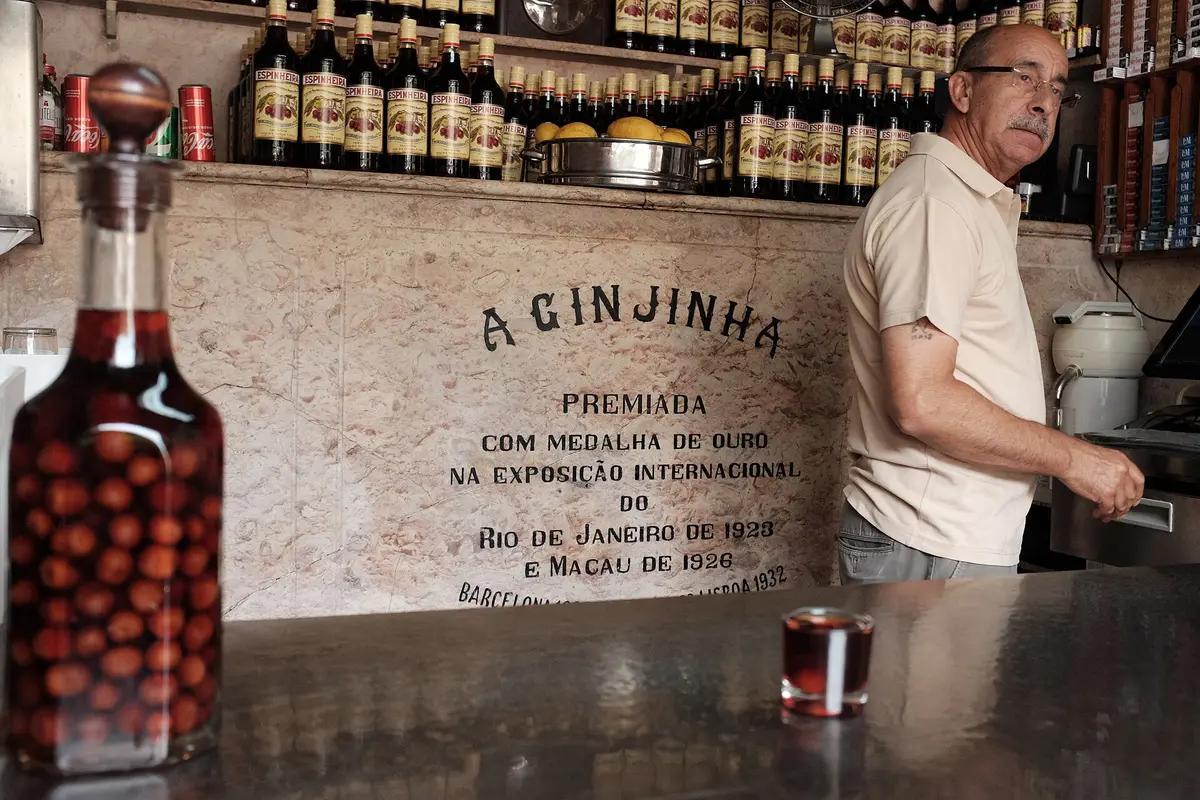 Photo: tomislav medak · licence

What this establishes
- The three country regions and the three city regions on this site hold identical lists of pubs, not merely similar ones. Portugal and Lisbon both hold Cervejaria Trindade, A Ginjinha and Ginjinha Sem Rival; Peru and Lima both hold Antigua Taberna Queirolo, Bar Cordano and Piano Bar Múnich; Argentina and Buenos Aires both hold Bar El Federal, Los 36 Billares and Bar Británico. We checked the six lists against each other on 29 September 2026 and they match entry for entry.oldpubs.com
- Our own similarity check passed the three withdrawn city pages. It compares what every indexable page says once the shared furniture is stripped out, and it put the three drafts at under two per cent alike — because the prose really was different. The duplication was in what the pages were about, and a text-overlap measure cannot see that.oldpubs.com
- The three city pages were written once before, on 17 September 2026, and withdrawn the same day. They were written because one of our own counts reported them as "regions awaiting an intro" — a measurement that asked whether an indexable region was missing from the sitemap and could not tell a page held back on purpose from one nobody had got round to. The count was read as a to-do list.oldpubs.com
There is a page on this site at /oldest-pubs/portugal/lisbon/. It builds, it works, it is linked
from the country page and it appears on the map. It also carries an instruction telling search
engines not to index it, and it is deliberately missing the introduction that every indexed region
page here carries. The same is true of Lima and of Buenos Aires.
This is not an oversight and it is not a queue we have not reached yet. It is a decision, taken twice, and the second time we took it we built something to stop us taking it a third time.
Why a well-written page can still be the wrong page
The reason is arithmetic rather than editorial. Every Portuguese pub this site holds is in Lisbon. There are three of them — A Ginjinha, Cervejaria Trindade and Ginjinha Sem Rival — and no fourth house anywhere else in Portugal. So the region we call Portugal and the region we call Lisbon contain exactly the same three pubs. Not overlapping lists. The same list.
Peru is the same shape: Antigua Taberna Queirolo, Bar Cordano and Piano Bar Múnich, all three in Lima. Argentina likewise, with Bar Británico, Bar El Federal and Los 36 Billares, all three in Buenos Aires. We compared the six lists entry by entry this week and they match exactly.
A region page here is built out of its members. It opens with a short answer naming the oldest claim, then the contenders, then a map frame drawn around them, then the box comparing claimed dates against documented ones. Give two pages the same members and you get two pages with the same short answer, the same contenders, the same map frame and the same box. The town’s name changes in the heading. Nothing else does.
That is one entity with two addresses, and putting both in a sitemap is asking to be indexed twice for the same thing.
The part that surprised us
When the three pages were written in September, they went through every check this site runs and passed. That includes the one built specifically to catch two pages doing one page’s job: it strips out the shared furniture — the navigation, the footer, the boilerplate — and measures what is left of each page against its nearest neighbour. It put the three city drafts at under two per cent alike.
Which was correct. The prose genuinely was different. Somebody had written three distinct essays about three distinct cities, with different history in each, and a tool that measures overlapping words found almost none.
The duplication was never in the words. It was in the subject. Three pages can share no phrasing at all and still be about the same three pubs, and no text-overlap measure will ever see that, because there is nothing textual to see. This is the most useful thing we learned from the episode: a check passing is evidence about the thing it measures and silence about everything else.
Why we bothered to build a guard
The honest part of this story is that we had already decided it, and then did it anyway.
The decision was taken on 12 September, once for each city, with the reasoning written down. On 17 September all three intros were written and the pages went into the sitemap. Not because anybody overruled the decision — because one of our own counts described the three as regions awaiting an introduction. That count asked a narrow question: is there an indexable region that is not in the sitemap? All three were. The answer was accurate and the conclusion drawn from it was wrong, because the count could not tell a page we were holding back from a page nobody had written yet.
A number that cannot distinguish a decision from a gap will eventually be read as a to-do list. Ours was, five days later.
So the intros were withdrawn, and two things changed. The count now separates the two cases and names them differently. And there is now a test that fails the build if one of those three cities gains an introduction file, or if both halves of any such twin reach the sitemap. It was checked the only way worth checking a guard: by writing the Lisbon file back and watching the build go red.
The test is not written around those three cities by name. It compares every pair of indexable regions on the site and objects to any two holding identical members, which means it will catch the fourth case before we meet it. It also asserts that such pairs still exist — so if the day comes when none do, it fails loudly rather than sitting there guarding nothing.
What we get out of refusing
Google’s own spam policies define scaled content abuse as “when many pages are generated for the primary purpose of manipulating search rankings and not helping users”. Three pages is not scaled anything. But the habit is the thing worth refusing, because the habit is what scales: a site that will publish one duplicate for the sake of a heading will publish a thousand, and a database of pubs is exactly the kind of site that can generate a thousand without noticing.
Which is the oldest bar in Lisbon? That question still has an answer here. It sits on the Portugal page with its name on it, and that page’s first sentence says plainly that for this country the city question and the country question are the same question. That seemed better than three pages pretending the three houses are spread across Portugal.
Each city earns its index the day its country gains a pub outside the capital. At that moment the member lists stop matching, the guard stands down by itself, and the page publishes with the introduction already drafted. Porto is the obvious next piece of research for Portugal; Arequipa or Cusco for Peru; Rosario or Córdoba for Argentina. If you know of an old house in any of them, we would like to hear about it — tell us what the records say.
The pubs in this post
- A Ginjinha Lisbon
- Bar Británico Buenos Aires
- Antigua Taberna Queirolo Lima (Pueblo Libre)
More in the blog, and every change to the data at what changed.