Blog
The Bingley Arms: What the Directories Say
A claim to AD 953 cannot be tested against a licensing record, because England has none that early. So we went at it from the other end and read the lists that do survive for Bardsey: a trade directory of 1822, which names a publican in two other places in the same parish and none in the village, and a poll tax of 1379 that does not cover the village at all.
Published 25 September 2026
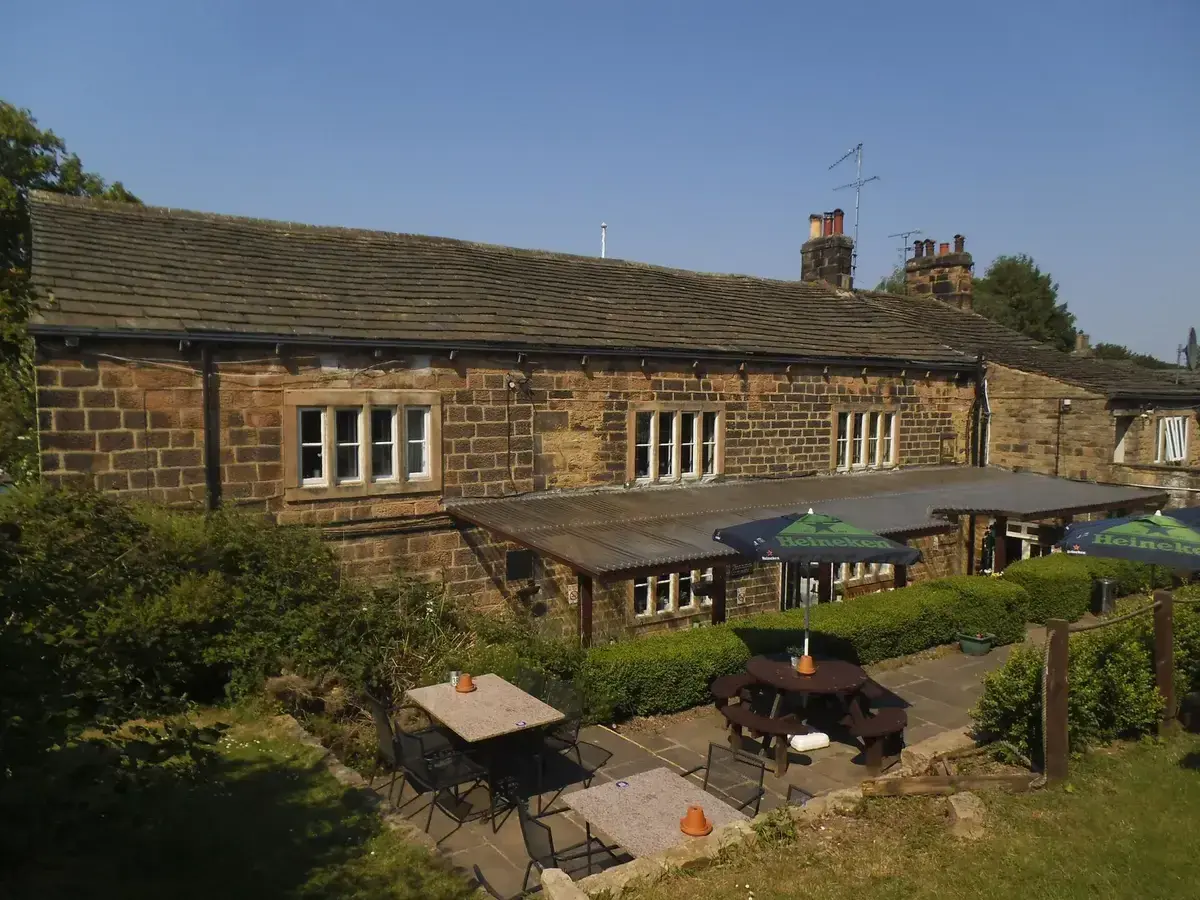 Photo: Stephen Craven · licence

What this establishes
- In Baines's directory of the county of York for 1822 the compiler named a victualler in two of the three places he listed in Bardsey parish — Richard Ellis at the Fox's Arms in Rigton and John Hudson at the Chequer Inn at Wike — and listed eleven trades at Bardsey itself without an innkeeper or victualler among them.blunham.com
- The poll tax of 1379 as printed for Bardsey parish covers two townships only: East Rigton, whose sum of 20s 8d is sixty-two payments of fourpence, and Wothersome, which is one entry, Thomas de Berlay esquire and his wife at 6s 8d. There is no section for the village of Bardsey, so the earliest name-by-name list of this parish does not reach the house at all.blunham.com
- The earliest year this site records for the Bingley Arms, 1738, is the datestone over its original blocked doorway and not a record of drink. No year for drink sold at the house has been traced by us at all, which is why the row is graded C on tradition rather than on a document.oldpubs.com
The Bingley Arms at Bardsey, eight miles from Leeds, dates itself to AD 953. There is no way to test that against a licence, because England has no licensing records from anywhere near that date: alehouses were licensed from the sixteenth century, and the Domesday survey of 1086 — cited in a good many retellings of this story — records no alehouses anywhere. So the question we could actually put to the archives was a narrower one. When does anybody first write down that drink was sold at Bardsey? We went looking, and the answer is that we could not find a year at all.
This post is about the lists we read on the way, because the way a claim like this gets settled is rarely a single document that says yes or no. It is a set of records that ought to mention a pub if one was there, and what they do with the silence. The verdict itself is on our article about the 953 claim; what follows is the working.
The obvious record does not exist, so we went sideways
Two kinds of paper could have answered this directly. Alehouse recognizances — the sureties a licensee entered into at quarter sessions — survive in quantity for the West Riding from the seventeenth and eighteenth centuries, and a manorial or estate rental naming an alehouse would do the same job earlier. Neither has been produced for this house by anybody, ourselves included, and neither is published online in a form we could search from here. That is worth saying plainly rather than implying we exhausted the archive: what we searched was what is transcribed and open.
What is transcribed and open, for a small Yorkshire parish, is mostly two things: commercial directories from the 1820s onwards, and the printed taxation lists the Yorkshire antiquarian societies published in the nineteenth century. Both turn out to say something.
1822: a compiler who did record public houses here
Edward Baines’s History, Directory and Gazetteer of the County of York came out in 1822 and its trade lists are transcribed for GENUKI. We read the Bardsey pages in full. Eleven trades are listed at Bardsey: a tallow chandler, three shopkeepers, a boot and shoe maker, the schoolmaster, two corn millers, a blacksmith, a tea dealer, and a draper and tailor. No innkeeper. No victualler. No public house of any name.
The useful part is what the same compiler did a few lines further down. At Rigton, with three trades listed, he recorded “Ellis Richard, boot & shoe maker, & victualler, Fox’s Arms”. At Wike — which the gazetteers put partly in this parish and mostly in Harewood — he recorded “Hudson John, vict. Chequer Inn” at the head of five trades. So in the three places he listed under Bardsey parish, he named a public house twice, with the keeper’s name and the sign, and at Bardsey he named none.
That is a stronger silence than a bare absence, and it is still not a disproof. A directory was a commercial subscription list; houses were missed, especially small ones, and a village innkeeper who farmed as well might be entered as a farmer. It is quite possible for a pub to have been trading at Bardsey in 1822 and not be in Baines. What the entry does establish is that the earliest year anybody has produced for drink being sold at this address is later than the fabric of the building — and the building, on the register’s own reading, is Georgian.
1379: the deepest list does not reach the village
We then went as far back as the printed record goes for this parish, which is the poll tax of 1379, published from the Yorkshire Archaeological and Topographical Journal and transcribed on the same site. A poll tax list is a good test for a medieval trade, because the collectors wrote down names with bynames attached — Milner, Marschall, ffleshewer, Talour — and a taverner or a brewster is the sort of thing it catches.
Under Skyrack wapentake, Bardsey parish, the printed roll holds two townships. East Rigton runs to a long column of taxpayers at fourpence each, and the sum at the foot, 20s 8d, is sixty-two payments of that fourpence. Wothersome is a single line: Thomas de Berlay, esquire, and his wife, at 6s 8d. There is no section for Bardsey. The village with the house that advertises a thousand years of trade is simply not in the earliest name-by-name list its parish has.
That is a fact about the record and not about the pub, and it is the most useful thing we found. It explains why an argument about this house has to be made from stone rather than from paper: the paper for Bardsey, in the centuries that matter, either was never made or has not survived and been printed.
What we rejected, and why
Three props came up repeatedly while we read and none of them held. The Domesday citation fails on what Domesday is: it is a survey of land and its value, not of trades, and it lists no alehouses in any county. Guinness World Records, named in many articles as having recognised this pub, no longer maintains a category for the oldest pub, so the claim has no adjudicator behind it — which is nobody’s fault and applies to several houses on this site. And the priest-hole story, which is the part of the legend people remember, is a century and a half out of step with the building: priests were hidden in English houses in the decades either side of 1600, and the register reads this one as mid-eighteenth-century, with a datestone of 1738 over the original, now blocked, doorway.
The buildings archaeologist James Wright, who examined the claim in 2023, could not trace the origin of the figure 953 either, and offered the likeliest explanation: All Hallows church up the lane has genuinely Anglo-Saxon fabric in its tower, dated to roughly 850 to 950. A date belonging to the building next door needs no bad faith from anyone to end up on a pub sign.
What would change the grade
One document: a quarter sessions recognizance, a manorial rental, a deed, a will or an inventory naming an alehouse, inn or victualler at Bardsey before 1738. The West Yorkshire Archive Service holds the West Riding sessions papers, and a searcher in Wakefield with an afternoon to spend is much closer to that than we are. Send it and the grade moves in the same week, with the change logged on corrections.
Meanwhile the honest description of the Bingley Arms is a good Georgian village inn beside an Anglo-Saxon church tower, on a lane that runs up from the beck, with fireplaces you can sit inside. That is a real thing to be, and the house would lose nothing by saying so.
The pubs in this post
- The Bingley Arms Bardsey
More in the blog, and every change to the data at what changed.