
The claim
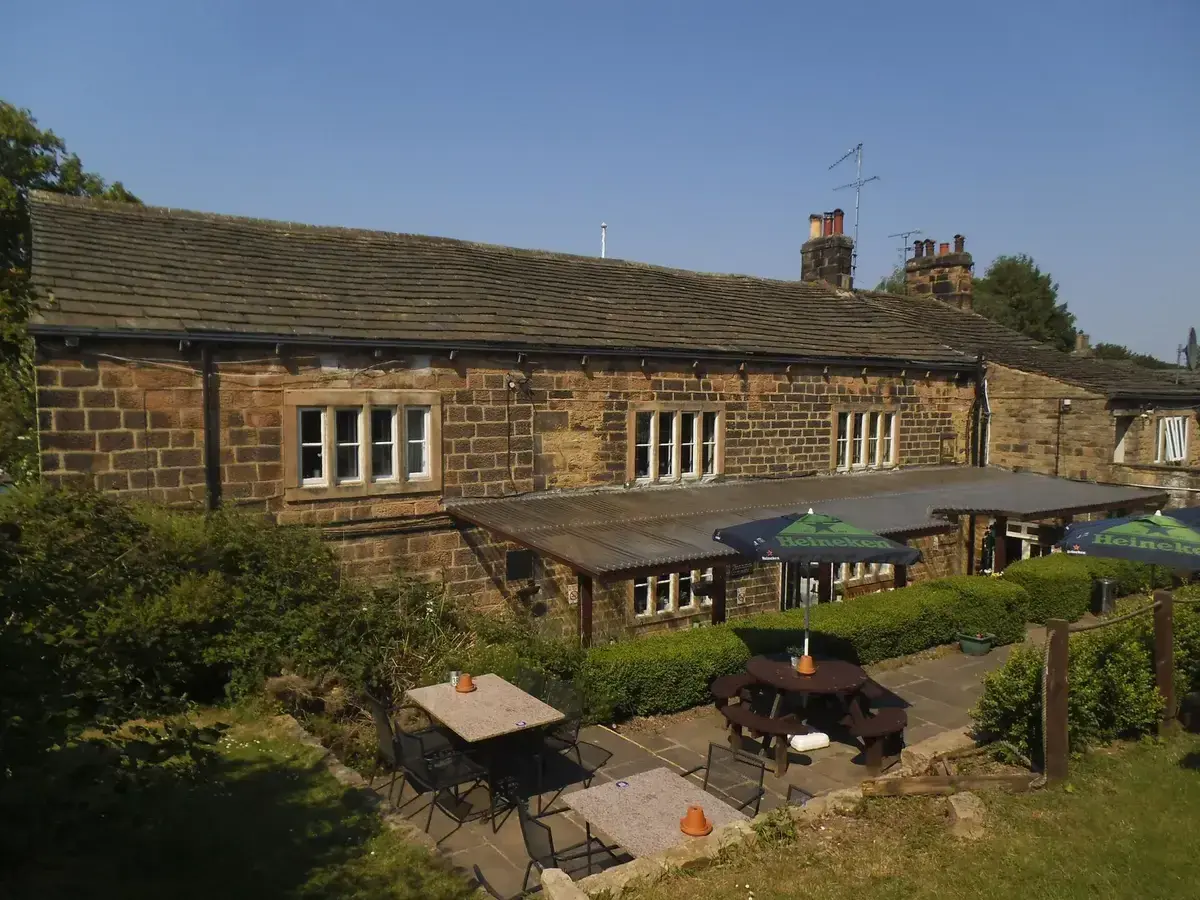
Church Lane in Bardsey runs uphill from the beck to a Saxon church tower, and most of the way up it there is a long gritstone house with mullioned windows, gold lettering and a painted coat of arms on its sign. The Bingley Arms has been telling visitors for decades that ale has been sold on this spot since AD 953. Its own website puts the figure as more than a thousand years of trade, from a time before England had a single king.
The fuller version of the story, which reaches the press in one form or another every couple of years, has the house trading first as the Priest’s Inn, brewing begun by a Leeds man called Samson Ellis in the 900s, monks lodged on their way between religious houses, priests hidden in the chimney during the years when that was dangerous, and the name changed to the Bingley Arms around 1780 when the Bingley family took the place on. Almost all of it is told without a document attached, and the Yorkshire papers that repeat it usually say so in a line near the bottom.
What is not in doubt is that this is a lovely building to drink in. The fireplaces are big enough to sit inside, there is a Dutch oven in the lounge, the garden runs down towards a yew older than anything built around it, and the church of All Hallows next door has genuinely Anglo-Saxon fabric in its tower. The setting does a great deal of the arguing on the pub’s behalf, which is exactly why the claim has travelled so far.
What the records show
There is no record of anyone selling drink here in the tenth century, and the reason is structural rather than local: England has almost no records of that kind from that period. Alehouses were licensed from the sixteenth century onwards, and the Domesday survey of 1086 — regularly cited in retellings as mentioning the Bingley Arms — records no alehouses anywhere at all. Historic England’s own account of the oldest-inn question, published in December 2022, says plainly that no evidence supports an eleventh-century date for this house, let alone a tenth-century one.
We went looking for the earliest trade record ourselves and found a blank with some weight in it. Baines’s History, Directory and Gazetteer of the County of York of 1822, transcribed for GENUKI, lists eleven trades at Bardsey: a tallow chandler, three shopkeepers, a boot and shoe maker, the schoolmaster, two corn millers, a blacksmith, a tea dealer and a draper. It names no innkeeper and no victualler. Neighbouring Rigton, with three trades listed, has one — Richard Ellis, boot and shoe maker and victualler, at the Fox’s Arms — so the compiler was recording publicans where he found them. Directories miss houses, and one silence is not a disproof. But it does mean that the earliest year anybody has produced for drink being sold at the Bingley Arms is later than the building, and the building is Georgian.
The building, dated
The house is listed Grade II. The register describes stone with quoins, a stone slate roof, two storeys with a basement at the rear, four bays and an added bay on the left, four-light mullioned windows, sashes and a stair window to the rear, and — above the original, now blocked, doorway with its false keystone — a datestone. The initials and the year on it read S M 1738.
Historic England’s blog is more direct than the list entry: the Bingley Arms is a good example of mid-eighteenth-century West Yorkshire vernacular building, and that is consistent with the stone over the door. The buildings archaeologist James Wright, who examined the claim in 2023, adds the regional point that makes the date hard to move. Stone was rarely used for ordinary domestic building in West Yorkshire before the eighteenth century; timber framing was the norm. The sash windows, the beam stops, the doorways and the fireplaces all belong to the eighteenth and nineteenth centuries. And across the whole of England, only a few hundred buildings retain any pre-Norman fabric, every one of them a church.
That has a consequence for the priest-hole story, which is the part of the legend people remember. Priests were hidden in English houses in the decades either side of 1600. A house of 1738 is a century and a half too late for it. Something of the kind may well have happened in Bardsey, in a building that no longer stands; it cannot have happened in this one.
Where 953 might have come from
Here the trail goes cold, and honestly so. Wright could not identify the origin of the figure, and neither can we. He offers one reasonable suggestion: All Hallows church, thirty seconds’ walk up the lane, is Grade I listed and its tower is dated to roughly 850 to 950. A date belonging to the building next door, repeated often enough, is exactly the sort of thing that ends up on a pub sign, and the drift from “a tenth-century church” to “a tenth-century house beside the church” needs no bad faith from anyone.
Two other props are worth checking because they are so often quoted. The first is Guinness World Records, cited in a good many articles as having recognised the pub. Guinness no longer maintains a category for the oldest pub, which means the claim now has no adjudicator behind it — a point that applies to several houses and is nobody’s fault. The second is the weight of repetition itself. The Yorkshire Evening Post ran a piece in 2005 on invented pub histories, and the Bingley Arms was among the houses it discussed. The claim has been questioned locally for more than twenty years and has kept going regardless, which tells you something about how these dates travel.
So how old is the Bingley Arms?
On the evidence, it is a mid-eighteenth-century village inn, built or rebuilt around 1738, in a village whose church is genuinely ancient. That is a real and rather good answer. It also puts the house in company it is usually set against rather than beside: Ye Olde Fighting Cocks at St Albans advertises 793 and is first recorded selling beer in the nineteenth century, the Porch House advertises 947 against a late-medieval frame, and Ye Olde Trip to Jerusalem advertises 1189 against a first record of 1751. The pattern is the same every time: the building is genuinely old, the trading date is later than the sign, and the sign is later still.
Where a documented answer does exist it looks quite different. Historic England counts about a dozen purpose-built medieval inns still trading in England, and the clearest of them is the George Inn at Norton St Philip, whose upper timbers were tree-ring dated to 1430–32 and whose builders and purpose are both on record. Our methodology explains why a datestone outranks a tradition and why this house grades C, how historians date an old pub sets out the tests, and you can see where Bardsey sits among West Yorkshire’s old pubs and in the top 100 by earliest record.
The 953 is not a lie anybody told. It is a date without an address, and the house is old enough without it.
Sources
- historicengland.org.uk/listing/the-list/list-entry/1313185
- heritagecalling.com/2022/12/22/what-is-the-oldest-pub-or-inn-in-england/
- triskeleheritage.triskelepublishing.com/2023/07/02/mediaeval-mythbusting-blog-23-the-bingley-arms/
- en.wikipedia.org/wiki/Listed_buildings_in_Bardsey_cum_Rigton
- bingleyarms.com/index
- en.wikipedia.org/wiki/The_Bingley_Arms
- blunham.com/big/eng/YKS/WRY/Bardsey/Bardsey22Dry.html
Found something wrong?Suggest a correction