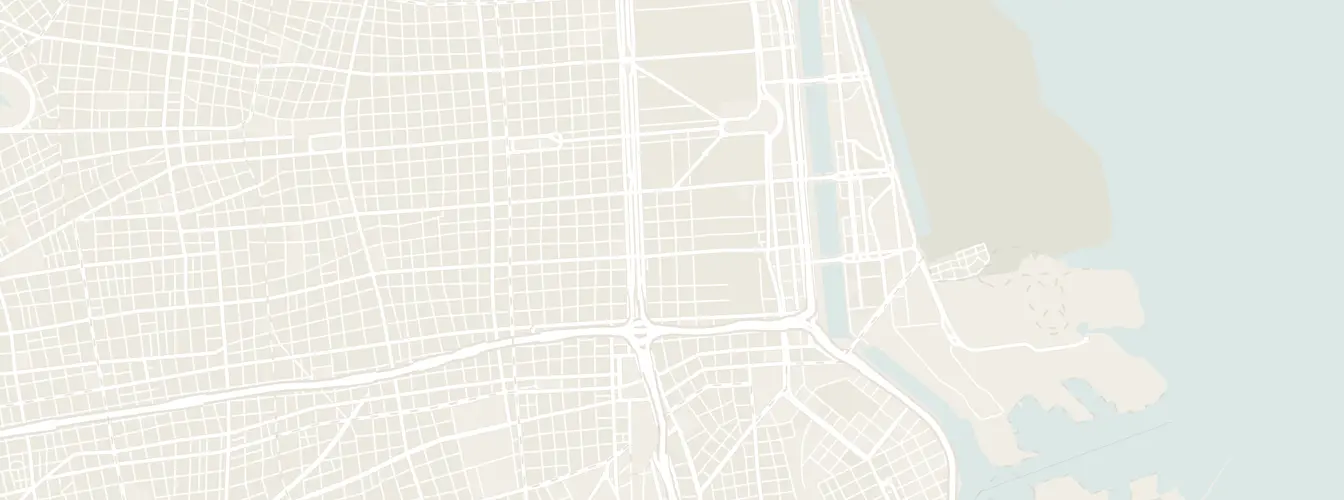
The Buenos Aires historic pub walk is a self-guided route of 3 km between 3 old pubs, about 40 min walking, with a GPX file to follow. Bar El Federal makes the oldest claim on it, 1864, and no stop on the walk yet has a document from at or near the date it claims.
The distance is the walked street route, not the straight line. These are history walks, not a drinking challenge: take it slowly, drink water between stops, and leave a pub out if the day is getting long.
Buenos Aires: three bares notables from Parque Lezama to Avenida de Mayo. Three kilometres north from Parque Lezama to Avenida de Mayo, through San Telmo, past three bars the city itself keeps a list of. The city protects its old cafés and bars as an official category — bares notables, created by its Law 35 of 1998 — and all three are in its guide to them. What none of the three can offer is a document: every year on this walk comes from the city, the press or the house, and not one from an archive.
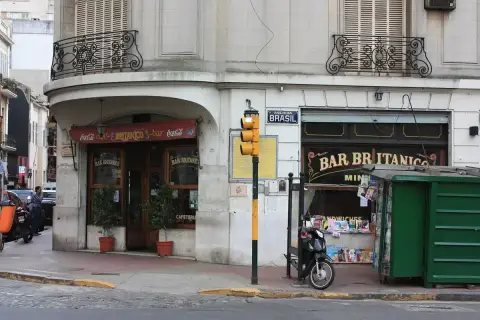
Brasil and Defensa, San Telmo, Buenos Aires (opposite Parque Lezama)
A wood-panelled corner bar facing Parque Lezama in San Telmo, named Bar Británico in 1928 on a corner that had earlier been the pulpería La Cosechera. It has survived an eviction in 2006 and a further closure in 2014, reopening each time under new management. Its windows look across to the park, and it remains a neighbourhood favourite for coffee, beer and long conversations.
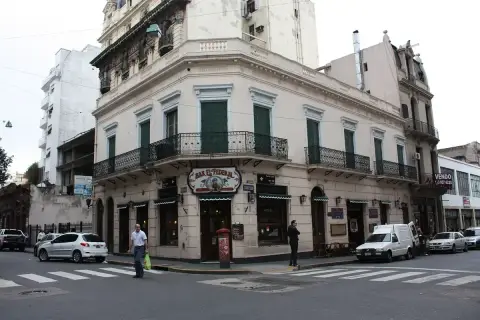
Carlos Calvo 599 (corner of Perú), San Telmo, Buenos Aires
A classic San Telmo corner bar founded in 1864 as a neighbourhood almacén, one of Buenos Aires' officially recognised bares notables. It later moved into its present Italianate corner building, whose early-1900s interior survives largely intact, and it has served as a set for period films. It remains a meeting place for locals and visitors exploring the historic quarter.
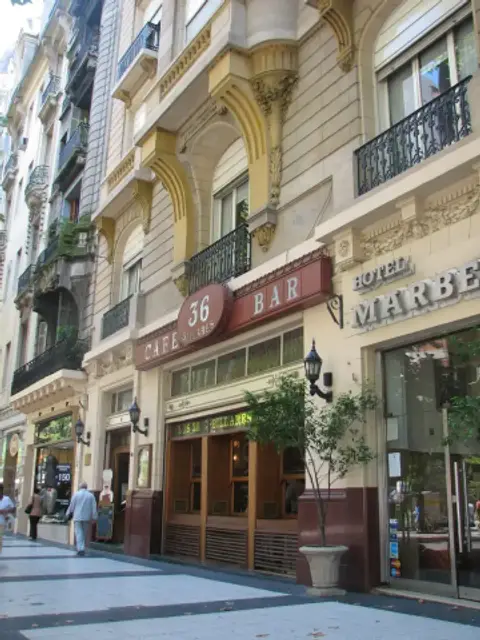
A bar and billiard hall on Avenida de Mayo, in the ground floor and basement of a 1914 apartment block. Eight billiard tables more than a century old were restored in 2014 and nine pool tables added in 2018, and there is a school in the back room where porteños learn to play. Coffee, wine and beer at the counter, pizza and empanadas from the kitchen, and the tables in use until the small hours.
Claims 1894; no early record found; building c.1914.
San Telmo is the part of Buenos Aires where the nineteenth-century city is still legible, and these
three corners are the reason to walk it slowly.
Bar Británico faces Parque Lezama across Brasil and Defensa, a
wood-panelled room on the ground floor of a five-storey block. The city’s guide to its notable bars
says it opened under this name in 1928, and that the corner had earlier held a pulpería called La
Cosechera — a pulpería being the counter-and-store that did the drinking trade in the old city. It has
had a hard century: evicted in June 2006, reopened in February 2007, closed in August 2014 and open
again by November of the same year, each time under new management.
Straight up Defensa and one block west, Bar El Federal holds the
earliest year on the walk, and it is the press’s year rather than the bar’s — the house publishes
nothing a reader can open. La Nación has El Federal born as a pulpería in 1864 on two dirt streets at
the corner of Perú and Carlos Calvo, and Perfil, marking 160 years in 2024, follows it from pulpería to
almacén de ramos generales and then into the bar it now is. A pulpería sold drink across a counter,
which is why we treat the year as a drinking-house date rather than a shop’s, and why this is the only
grade B of the three. The city declared it a Sitio de Interés Cultural in 2004. The Italianate corner
building it ended up in is late nineteenth-century and the interior early twentieth.
North on Perú to Avenida de Mayo for Los 36 Billares, which
prints 1894 at the head of its counter menu — the year the avenue was being cut through the old town.
The fabric is younger than the claim by twenty years: the rooms are the ground floor and basement of a
block raised in 1914 for the La Franco Argentina insurance company to designs by Tiphaine and Colmegna,
so whatever opened in 1894 did not open here. It carries the statutory protection the city legislature
created by its Law 35 of 1998, and its parcel is catalogued in the city’s register of historic
protection areas — an entry that settles the address, which has been printed three ways, and fixes no
date at all. Eight billiard tables more than a century old were restored in 2014, and there is a school
in the back room.