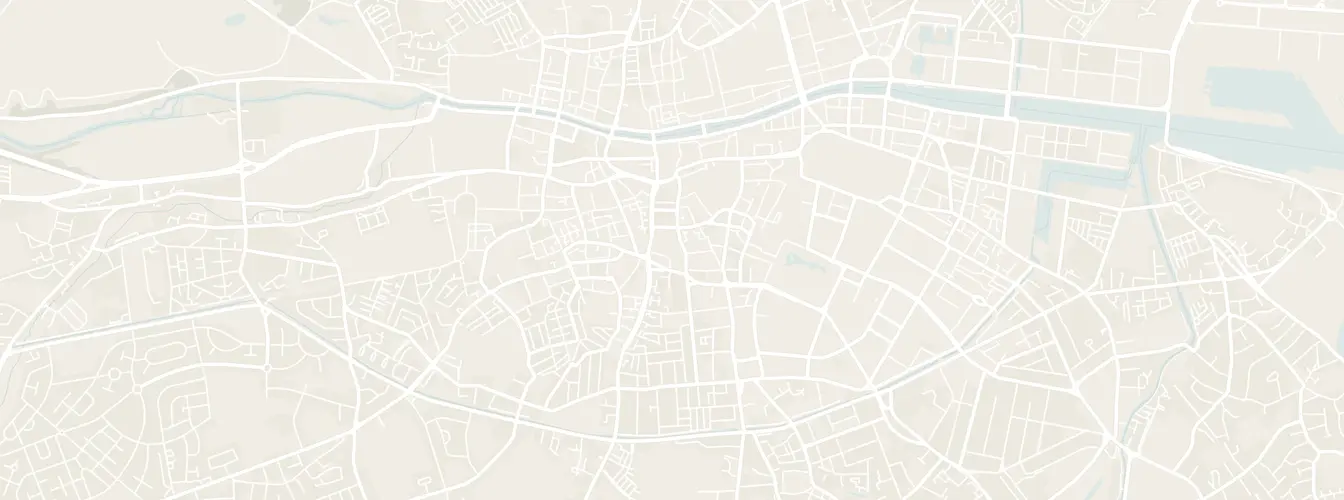
The Dublin historic pub walk is a self-guided route of 2.49 km between 3 old pubs, about 33 min walking, with a GPX file to follow. The Brazen Head makes the oldest claim on it, 1198, and it holds the oldest record too, from 1613.
The distance is the walked street route, not the straight line. These are history walks, not a drinking challenge: take it slowly, drink water between stops, and leave a pub out if the day is getting long.
Dublin’s oldest pubs, Bridge Street to Camden Street. Three houses between Bridge Street and the top of Camden Street, claiming 1198, 1696 and the seventeenth century. Every building on the route is younger than the claim made inside it, and the earliest documents anyone can point at are dated 1613, 1862 and 1871. A kilometre east along the Liffey, then a longer leg south out of the old city.
Beside the Liffey near Christ Church, the Brazen Head is Dublin's most storied tavern. The 1198 date is legend, but a property of that name is recorded here from 1613, and the present coaching inn dates from the 1750s. Its crowded rooms recall United Irishmen and Robert Emmet, and free traditional music sessions and a courtyard restaurant keep it busy.
28-29 Essex Street East, Temple Bar, Dublin 2, D02 XH60
A corner house in Temple Bar where Essex Street East meets Eustace Street, with sash windows over a wraparound timber front and rooms to let above. It traded as Farrington's for years before the owners went back to the older name, a nod to the wooden Viking figure said to have stood on this corner. Whiskey and craft beer at the counter, Irish cooking from late morning, music most nights.
Claims 1696; first recorded 1862; building c.1900.
A red-brick corner house at the top of Camden Street, ornamented with shallow pilasters and a carved timber pubfront, with a galleried room upstairs. Sheridan Le Fanu set a scene in an older house of the same name here in 1845, James Clarence Mangan and Oliver St John Gogarty drank in it, and Joyce mentions it in Ulysses. It keeps long hours, shows sport and serves food from noon.
Claims 1600; first recorded 1871; building c.1871.
Dublin’s three oldest claims sit at three different distances from their evidence, and the walk
starts with the widest gap of the three.
The Brazen Head claims 1198 and nothing supports it. What is
documented is a property called the Brazen Head in 1613, held by Richard Fagan; an ale licence
in 1661; and use as an inn by 1668. John Thomas Gilbert, writing his History of the City of
Dublin from the city’s own records in the 1850s, gives the same date and nothing earlier — an
inn located from 1668 in a recess at the rear of the western side of Bridge Street, where it
still exists — and records that the United Irishmen met in it, Oliver Bond laying his plan for
seizing the capital before the society there in February 1797. The building around all this was
completed about 1754.
The Norseman gives 1696 as the year the premises was first
licensed and tells of a Wooden Man Tavern on the corner from the 1500s, neither of them traced
to a record. The National Inventory of Architectural Heritage dates the standing house to about
1900 and supplies the earliest document there is: mid-nineteenth-century maps show two buildings
on the site, and Thom’s Directory of 1862 has them held by a single tenant as a vintner’s. The
same survey notes that Essex Street was opened in 1674 and divided into east and west in the
1760s, which is worth weighing against a tavern at this address in the 1500s.
The Bleeding Horse reaches back to the seventeenth century,
when the top of Camden Street was St Kevin’s Port — a real name, which the street kept until it
was renamed for the first Earl Camden in 1778. The inventory dates the fabric 1865-75 and
records the house as rebuilt in 1871 for Andrew Wren to R. J. Stirling’s designs, on the site of
an earlier inn that it does not date. Sheridan Le Fanu had already called it the genuine old
Bleeding Horse in a novel of 1845, which is suggestive and is not a record.