The claim
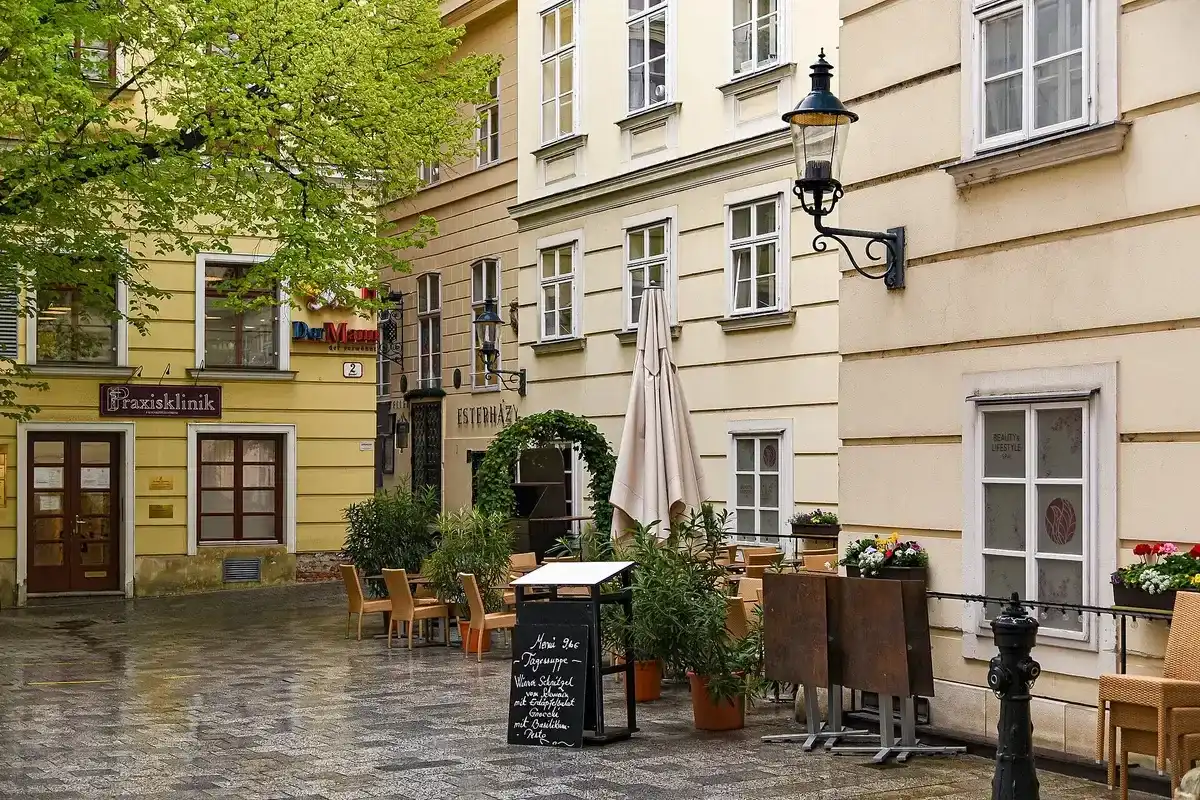
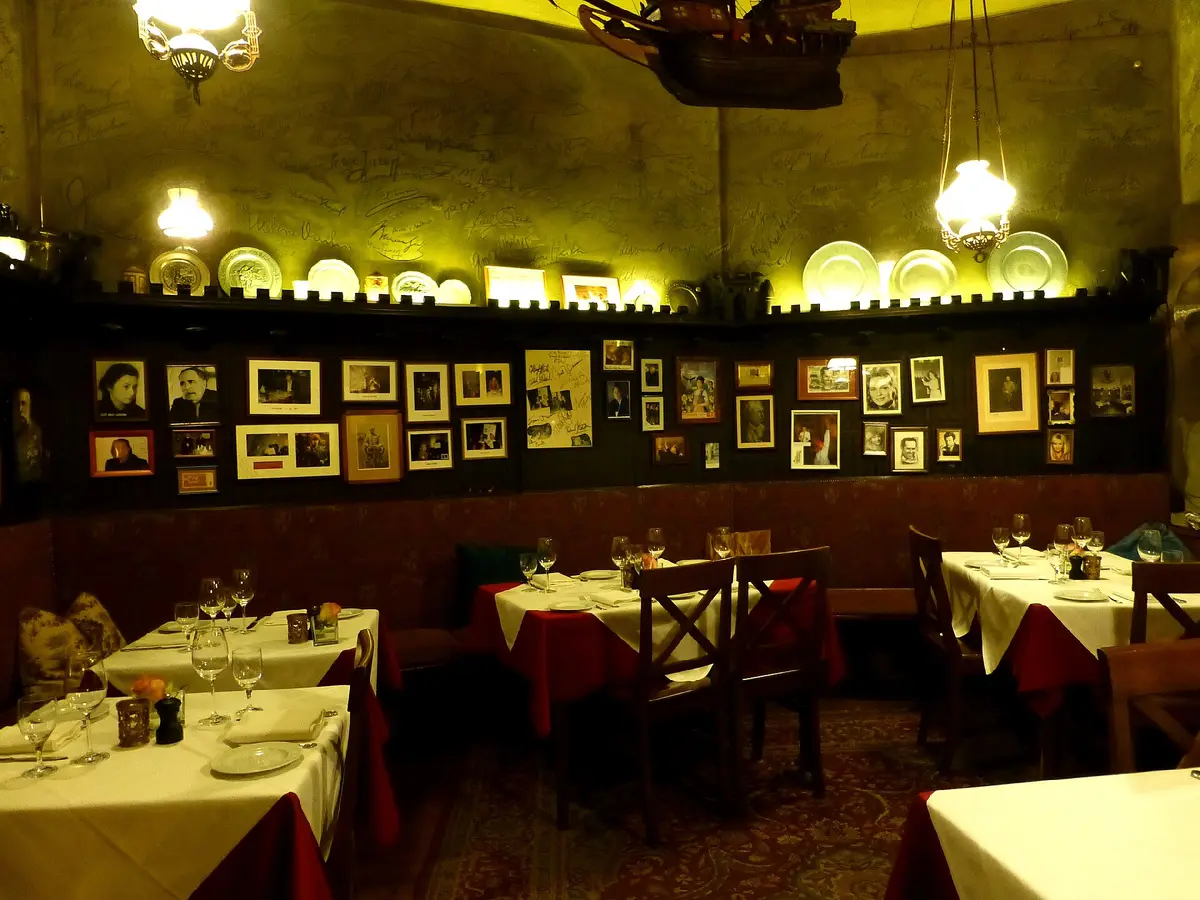
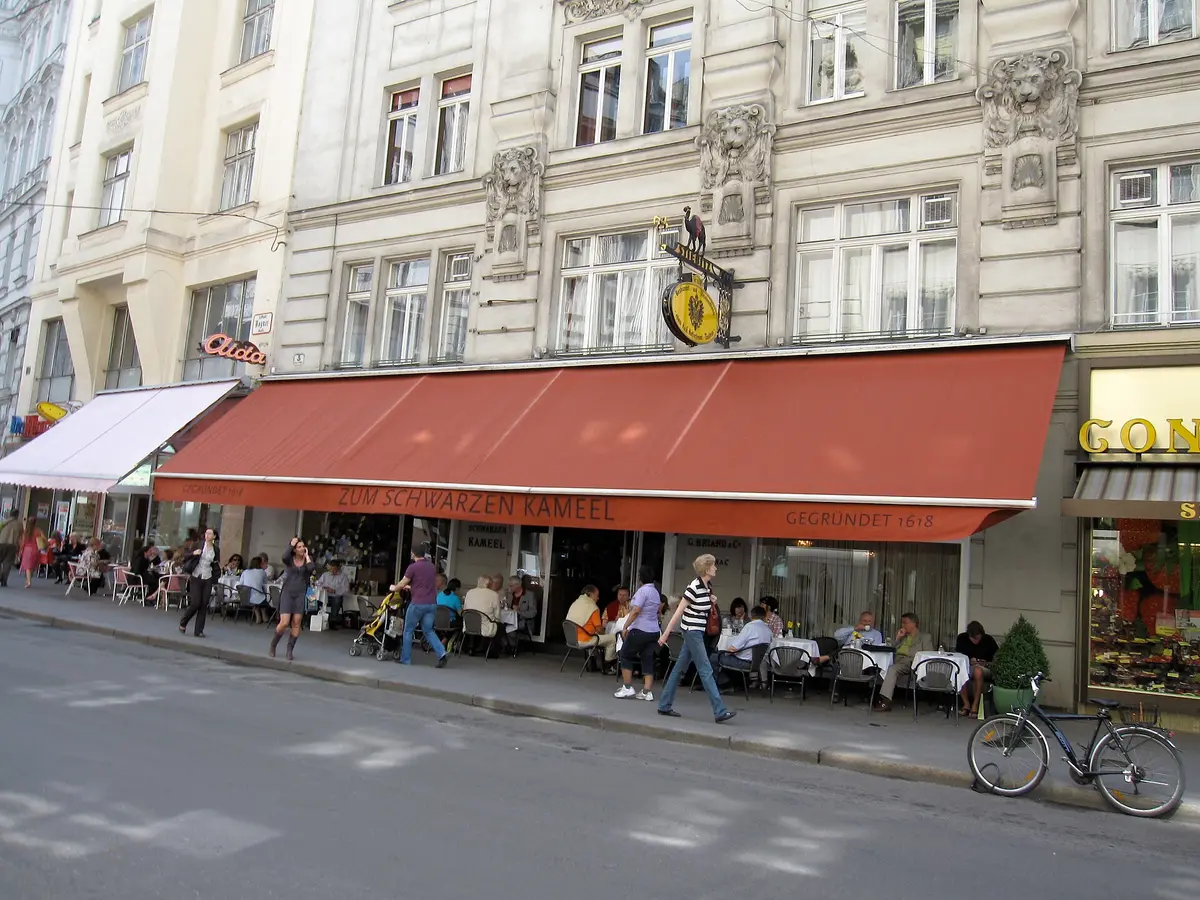
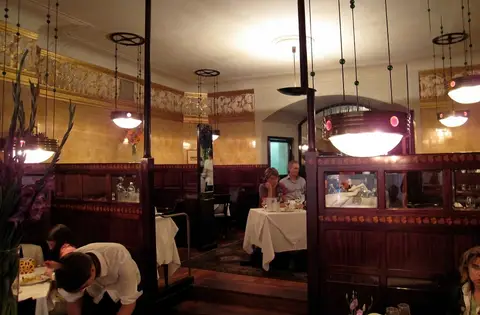
A delicatessen with a bar and a brasserie beside it, on a lane behind the Graben. The rooms are Jugendstil of 1901, all dark wood and tiling, and the counter serves wine, coffee and open sandwiches from eight in the morning. The business dates itself to 1618, when a merchant named Cameel bought the house and gave the shop his own name; the wine room came two hundred years after that.
What the records show
The house dates itself to 1618 on its own pages, and what 1618 dates is a shop: Johann Baptist Cameel, a merchant who had come to Vienna from Brno, bought a house already standing in the Bognergasse and set up a spice and grocery business, which he named after himself. The City of Vienna's historical encyclopedia puts that a year later, in 1619, and it is worth knowing that the round anniversary the firm kept in 2018 rests on the earlier of the two. Both accounts agree about what came next, which is the part that matters here: the shop was extended into a wine room in the nineteenth century, after the former bookkeeper Joseph Stiebitz took the business over from Jacob Partel in 1818, and it became known to Viennese society as a place to breakfast. The Viennese press bears that out and puts a date on it. The Fremden-Blatt of 19 December 1852 and of 2 January 1853, in the Austrian National Library's newspaper archive, carries the firm's own advertisement under the heading Spezerei- und Wein-Handlung, Stadt, Bognergasse, zum schwarzen Kameel — a spice and wine business, that is, and a business selling wine over a counter rather than a room to drink it in. Nothing in the archive shows a public drinking room at the sign, which is consistent with what both histories say and is why no year is entered here as the start of drink-led trade. Beethoven and the painter Ferdinand Georg Waldmüller were customers; Waldmüller drew the camel the firm still uses, and the house was appointed a purveyor to the imperial court in 1825. So the counter you can drink at is two centuries younger than the year over the door, which is why the house keeps its page and its pin and stays out of the ranking. The rooms themselves are younger still: the building was put up new in 1901 and fitted out in the Viennese Jugendstil by Portois & Fix. That you can drink here without eating is settled by the house itself, which says the ground-floor bar pours wine, cocktails and coffee from eight in the morning until midnight and takes no reservations.
| Year | What | Source |
|---|---|---|
| 1618 | Claimed founding | The pub |
| c.1901 | Present building | https://de.wikipedia.org/wiki/Zum_Schwarzen_Kameel |
What to look for inside
- Named for Johann Baptist Cameel, the spice merchant who bought the house
- Jugendstil rooms of 1901 by Portois & Fix
- Ferdinand Georg Waldmüller, a customer, drew the camel the firm still uses
- Purveyor to the imperial court from 1825
Visiting
Zum Schwarzen Kameel is in Vienna, Austria, at Bognergasse 5, Innere Stadt, 1010 Vienna. We do not list opening times, because they change; the pub’s own site is the place to check before you set out.
Sources
- schwarzeskameel.at/
- www.geschichtewiki.wien.gv.at/Zum_schwarzen_Kameel
- de.wikipedia.org/wiki/Zum_Schwarzen_Kameel
- www.openstreetmap.org/node/549357085
- anno.onb.ac.at/cgi-content/anno?aid=fdb&datum=18521219&seite=14
Know something we don’t?Suggest a correctionLast checked Sept 2026
Run this pub? There is a badge for it
Free to put on your own site, no permission needed. It shows what the pub claims and what the records support, and it changes when the data does.
How to use it, and how to change what it says — if you have a document we have not seen, we would like to read it.