The claim
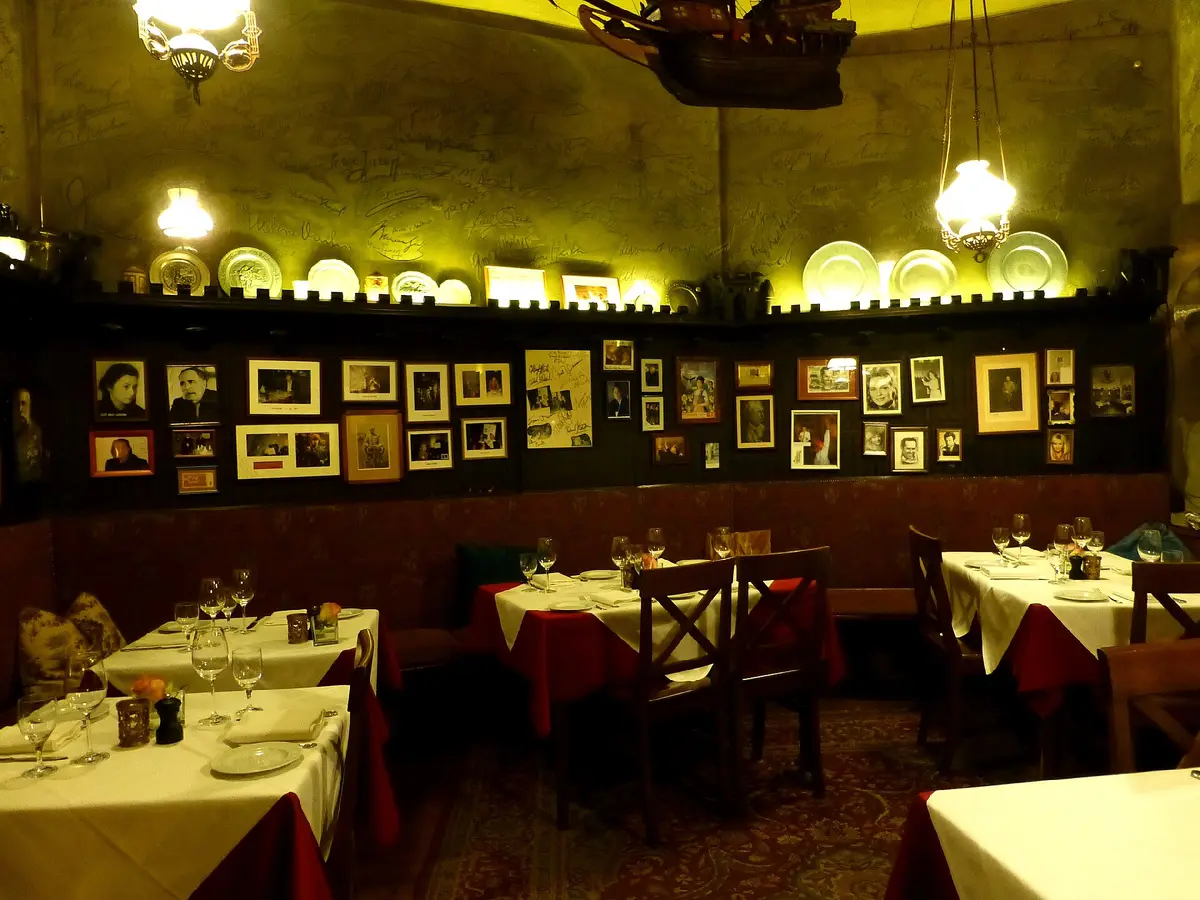
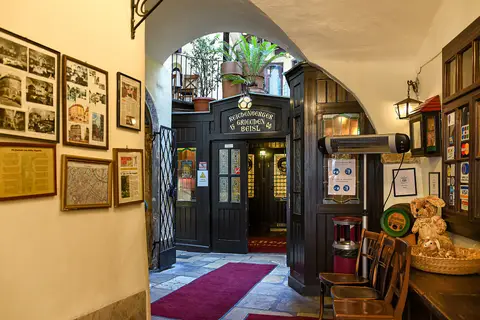
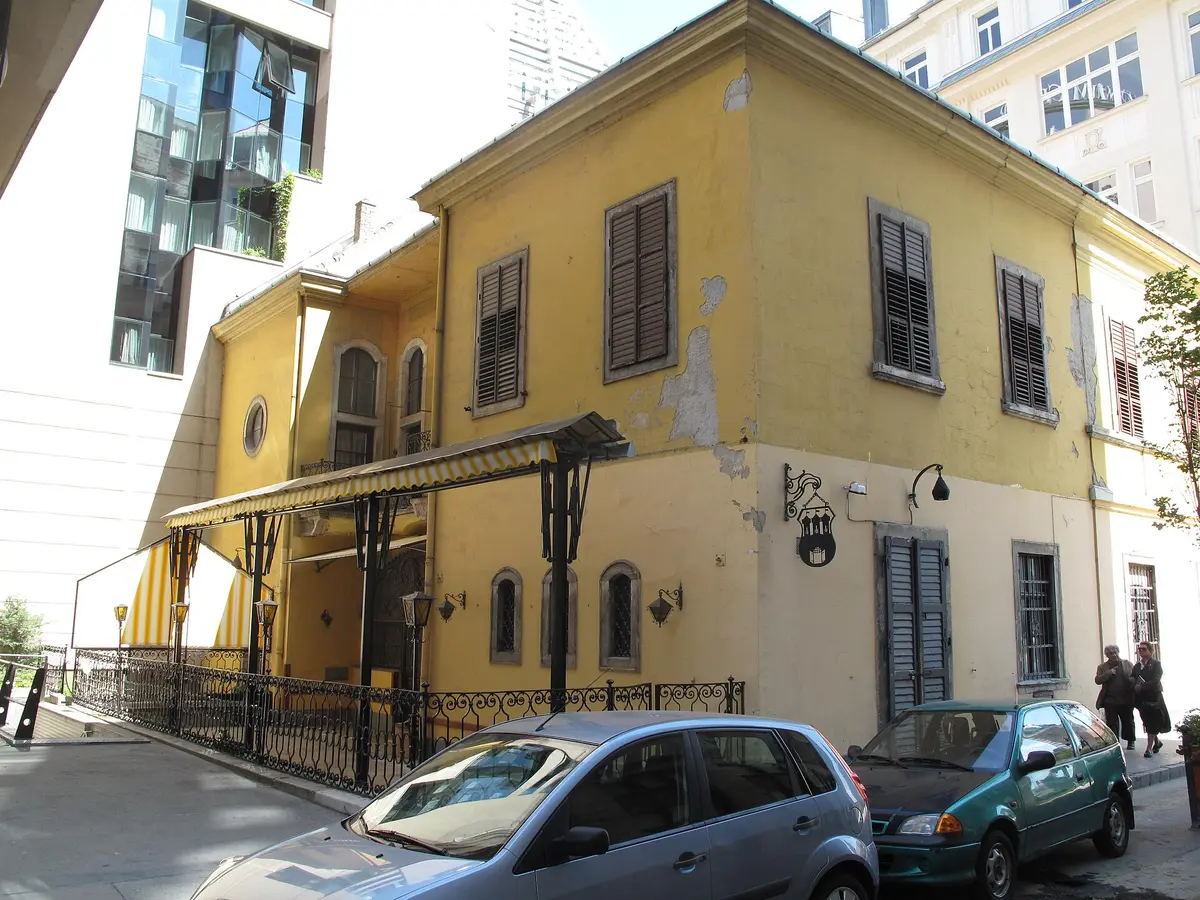
A corner house at the foot of the Griechengasse in Vienna, first recorded in 1350, where a beisl is named in the records from 1447. A restaurant now, and a beisl then. It takes its name from the Greek merchants who settled the street, keeps a room of signatures from Bismarck to Schiele, and another for the balladeer Augustin, who is said to have fallen into a plague pit drunk and climbed out alive.
What the records show
One of the few houses on this site whose record is older than its claim. The Griechenbeisl says on its own pages that it has been serving guests for 550 years, which puts its founding around 1476; German Wikipedia gives the first documentary mention of the Griechenbeisl as 1447, and the building on the corner as first recorded in 1350. The City of Vienna's own historical encyclopaedia, read on 17 September 2026, is the second publisher and is careful about what it will say: drawing on Felix Czeike's Historisches Lexikon Wien, it describes a late Gothic dwelling house on a deep plot, with a late Gothic oriel and a Baroque front put on in 1709, holding a historic public room, and it records the house name Zum roten Dachel and the trade name Reichenbergerbeisl from the Bohemian cloth merchants who drank here. It dates neither the first mention of the beisl nor the corner house, so the 1447 and the 1350 still rest on the encyclopaedia alone; what it does confirm is a house of late Gothic date, which is the fabric the grade B stands on. The name Griechenbeisl came in during the eighteenth century, when Greek and Levantine merchants settled on the Fleischmarkt — it is from the merchants and not from Greek food. The house today serves Viennese cooking and trades as a restaurant, which is why it is here as a gasthaus rather than excluded: it calls itself a Gasthaus and a Beisl, and a Beisl is a tavern. The first test a house has to pass here — whether the public can be served a drink without ordering a meal — is not answered by any source we have traced; its own menu page lists food only. We have left that open rather than assume it either way.
| Year | What | Source |
|---|---|---|
| 1476 | Claimed founding | The pub |
| c.1350 | Present building | https://de.wikipedia.org/wiki/Griechenbeisl |
| 1447 | First record of a drinking house here | Wikipedia |
What to look for inside
- The Augustin room, for the balladeer who is said to have fallen into a plague pit drunk and climbed out alive
- A guest book of signatures on the wall of the Mark Twain room, from Bismarck to Egon Schiele
Visiting
Griechenbeisl is in Vienna, Austria, at Fleischmarkt 11, Innere Stadt, 1010 Vienna. We do not list opening times, because they change; the pub’s own site is the place to check before you set out.
Sources
- de.wikipedia.org/wiki/Griechenbeisl
- www.griechenbeisl.at/our-story/
- www.geschichtewiki.wien.gv.at/Griechenbeisl
Know something we don’t?Suggest a correctionLast checked Sept 2026
Run this pub? There is a badge for it
Free to put on your own site, no permission needed. It shows what the pub claims and what the records support, and it changes when the data does.
How to use it, and how to change what it says — if you have a document we have not seen, we would like to read it.
.jpg)
.jpg)