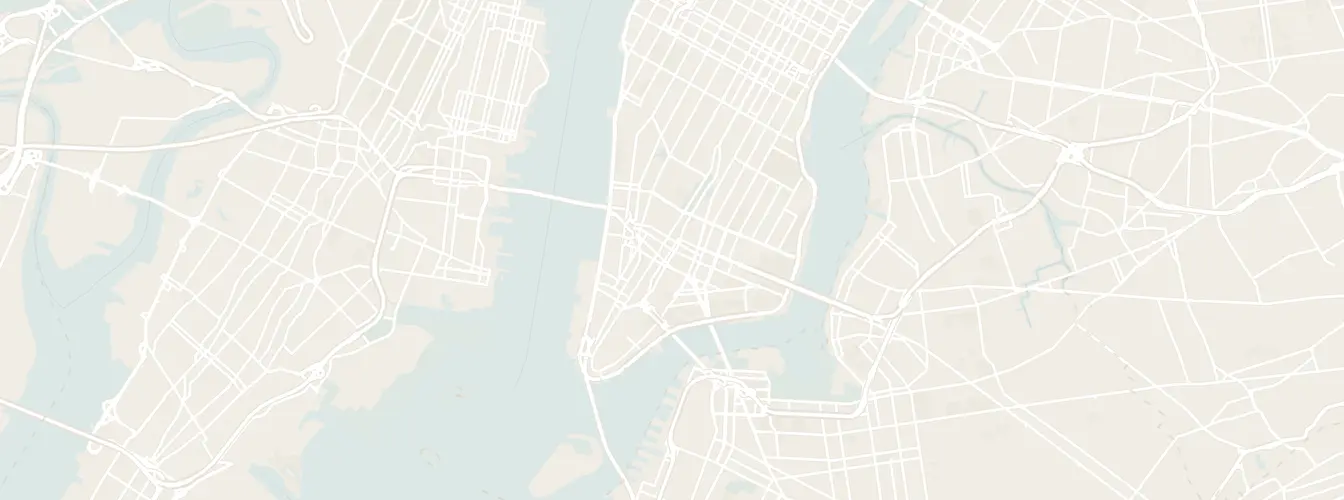
The New York City historic pub walk is a self-guided route of 7.6 km between 4 old pubs, about 1 h 32 min walking, with a GPX file to follow. Fraunces Tavern makes the oldest claim on it, 1762, and it holds the oldest record too, from 1762.
Distances are walking estimates, 1.3 × the straight line at 5 km/h. These are history walks, not a drinking challenge: take it slowly, drink water between stops, and leave a pub out if the day is getting long.
New York City’s oldest bars. Four bars in four different New Yorks: a house of 1719 turned into a tavern in 1762, an East Village tenement of the 1860s, a Gramercy corner built as a store with rooms over in 1846–47, and a West Village bar opened in 1880 for men off the Hudson piers. They are a long way apart, which is the point.
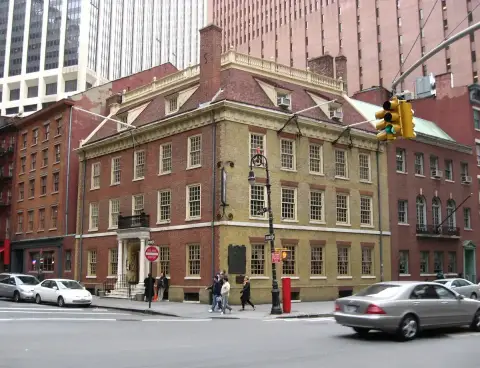
A brick Georgian landmark at Pearl and Broad Streets where Samuel Fraunces opened the Queen's Head in 1762. George Washington bade farewell to his officers in the Long Room upstairs in 1783. Rebuilt in the early 1900s, it now combines a museum with several bars, including a whiskey bar, and busy dining rooms.
Claims 1762; first recorded 1762; building c.1719.
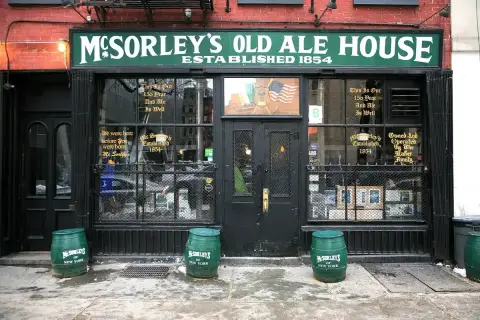
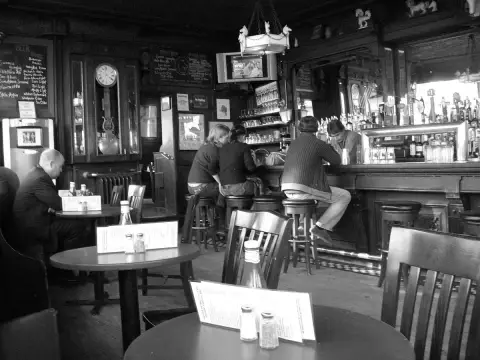
An East Village ale house of sawdust floors, pot-bellied stove and walls crowded with yellowed memorabilia, where you order light or dark house ale. It claims 1854, though records point to the early 1860s. Women were barred until a 1970 lawsuit. Houdini's handcuffs hang by the bar, and nothing has been taken down since 1910.
Claims 1854; first recorded 1862; building c.1858.
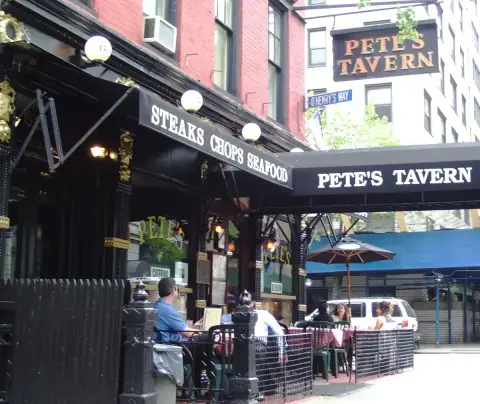
A corner tavern at Irving Place and 18th Street that claims to be New York's oldest continuously operating bar and restaurant. The city's landmarks record dates the brick building to 1846-47 and describes it as a store with apartments. It kept pouring through Prohibition behind a fake flower shop. O. Henry lived nearby and wrote it into a story, though the famous booth is legend.
Claims 1864; no early record found; building c.1829.
A West Village corner tavern opened in 1880 for Hudson River dockworkers that became a literary haunt in the 1950s. Dylan Thomas drank here shortly before his death in 1953, and James Baldwin, Jack Kerouac and Norman Mailer followed. Renovated after a 2019 sale, it still serves pub food, beer and cocktails on its Hudson Street corner.
Claims 1880; no early record found.
The photographs above are other people's work, used under open licences, or in the public domain. Every photographer, licence and source page is named in the image credits.
Every one of these four corners sits inside a line some preservation body has drawn, and on this
walk those records are the more interesting reading: they describe buildings rather than repeat
dates. New York’s Landmarks Preservation Commission has Fraunces Tavern at 54 Pearl
Street built in 1719 as a free-standing single-family house and converted to a tavern by Samuel
Fraunces in 1762, with the whole first storey taken out in July 1890 to drop the floor to street
level. That is a house older than the trade inside it, with its ground floor cut down in 1890 to
meet the pavement.
McSorley’s sits in a brick tenement of about 1865
put up for John Wroughton Mitchell, inside the East Village and Lower East Side historic district
designated in 2012. Pete’s Tavern holds a corner built in
1846–47 for C. Witscher as a store with apartments above, in the Gramercy Park historic district.
The White Horse has no entry of its own in the federal
register at all; 567 Hudson Street simply falls inside the Greenwich Village historic district,
listed on 18 June 1979.
That last one is worth understanding before you stand outside it. A district listing dates no
individual building and tests nobody’s claim, but it does stop the corner being demolished or
refronted — which is a large part of why a bar built for longshoremen still reads as one from
across the street. The dates themselves are argued out at
the oldest bar in America and
the oldest bars in New York City.