9 pubs checked · updated 18 September 2026

The oldest pub in Kent

The short answer

Oldest claim

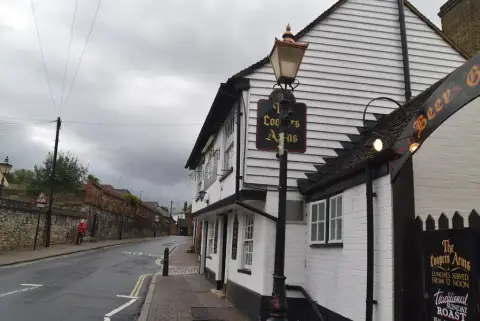
The Coopers Arms

Says 1189. No document from that date has been found.

Grade C · Tradition

Oldest proof

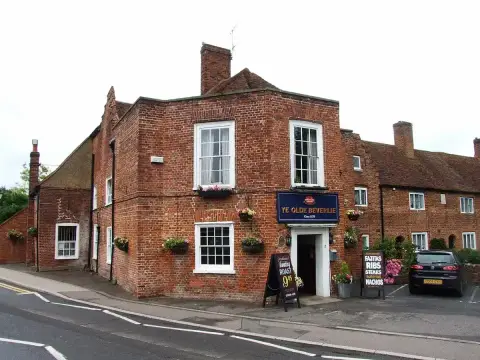
Ye Olde Beverlie

On record from 1740; the building is dated to about 1570.

Grade B · Building dated

By claim, the oldest pub in Kent is the George at Cranbrook, which its operator dates to about 1300 and links by tradition to royal visits by Edward I in 1299 and Elizabeth I in 1573. By evidence it is Ye Olde Beverlie in Canterbury, built in 1570 by Sir Roger Manwood beside his almshouses and recorded in use as an inn from 1740, when it was known simply as "the Hospital".

Kent's old pubs are shaped by three things: the pilgrim road to Canterbury, the cloth towns of the Weald, and the timber-framed hall house. The Wealden hall — a tall open hall with jettied bays at either end, built for prosperous clothiers and yeomen in the fourteenth and fifteenth centuries — is the county's great architectural export, and Kent has more of them than anywhere. The complication is that they were built as houses, not inns, and several became pubs only recently. That is the pattern to watch here: the oldest building in a Kentish town is very often the pub, and the pub is very often young. Around them sit the weatherboarded roadside inns of the Weald, tile-hung and rambling, and the market-town coaching inns that also served as courtrooms and assembly halls. The George at Cranbrook housed the town's magistrates until 1859, which tells you more about what a Kentish inn was for than any founding date does.

The pilgrim road and the Weald

The Angel at Addington faces a green below the North Downs, close enough to the Pilgrims’ Way that travellers to Canterbury would have passed the door; it is described as fourteenth century and as the oldest building in the village. The Three Chimneys at Biddenden is the classic Wealden roadside pub, weatherboarded, low and full of corners. The George at Cranbrook is the market-town inn: refurbished, with bedrooms and a garden terrace, and now the town’s remaining pub, in a cloth town that was once one of the richest places in England.

Canterbury’s two contenders

The city produces the neatest illustration on this site of the difference between an old building and an old pub. The Parrot has the fabric — a fourteenth-century hall with heavy beams, flagstones and three open fires, in the St Radigunds quarter — and has been a pub only since 1987. Ye Olde Beverlie has the paperwork: built in 1570 alongside Sir Roger Manwood’s almshouses, an inn since at least 1740, renamed the Beverly in 1839 and given its present spelling in the 1950s. Its walled garden is reputed to be where the Kentish game of bat and trap began, and an annual meeting is still held there in December to help the parish’s elderly. For the national comparison see the oldest pubs in England; the spelling on one of these signs is explained in what “Ye Olde” actually means.

Kent

OpenFreeMap · © OpenMapTiles · Data © OpenStreetMap contributors

Open the full map

The contenders, oldest claim first

Order the contenders
  1. Rochester, Kent

    The Coopers Arms tells its own story carefully: built in the reign of Richard I, left derelict after the dissolution of the monasteries, and opened as an inn in 1543. Historic England is less generous, listing a timber-framed house of C17 or earlier with later alterations, and no 12th-century fabric is described. Nothing was found to document either 1189 or 1543. The pub stands beside the cathedral precinct, and the
    Claims 1189; no early record found.
  2. Speldhurst, Kent

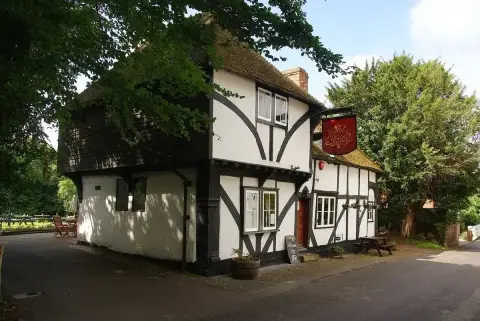
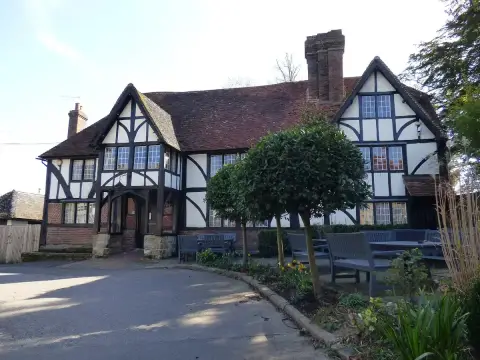
    The pub's own site calls it a 13th-century country public house and gives no year; the 1212 comes from CAMRA, whose entry describes a former medieval hall dating back to 1212, and from the Dover Kent Archives. Historic England describes something later and clearer: a late-medieval house, probably late C15, remodelled in the late C16 or early C17, its exposed framing and sandstone footings earning a Grade II*

    Dated 1212 by CAMRA; no early record found.
  3. The George

    Grade C

    Cranbrook, Kent

    The operator dates the inn to around 1300, and local tradition says Edward I visited in 1299 and Elizabeth I in 1573; these visits are not tied to documented use of this building as an inn, which also housed the town's magistrates' court until 1859.

    Claims 1300; no early record found.
  4. Westbere, Kent

    The Yew Tree gives 1348, the plague year, and CAMRA repeats a 14th-century date. Historic England reads the fabric as probably C15 in its easternmost part, with a moulded dragon post, diagonal ground-floor braces, a jettied window bay and an original arched doorcase — good late-medieval carpentry, but not 1348, and the listing says nothing about drinking. No licence or record from the 14th century was traced, so the

    Claims 1348; no early record found.
  5. The Angel Inn

    Grade C

    Addington, Kent

    The 1350 is KentOnline's, in a 2021 survey of Kent's oldest pubs, which says the Angel was a hostelry as long ago as 1350 without naming a record. The pub's own site and CAMRA's Kent branch both say only that the building is 14th-century and the oldest in the village. No documentary evidence of early use as an inn has been published.

    Dated 1350 in the press; no early record found.
  6. The Parrot

    Grade C

    Canterbury, Kent

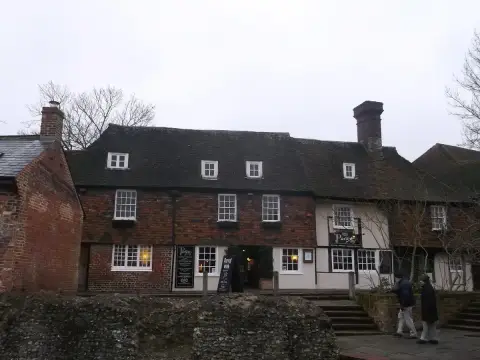
    The c.1370 is a local heritage blog's dating of the building, a Wealden hall known as St Radigund's Hall, said to have been built on Roman foundations and restored after narrowly escaping demolition in the 1930s; CAMRA calls it a 14th-century gem and the oldest building in Canterbury but names no year, and the pub's own site gives no date at all. CAMRA records that it only became a pub in 1987, so there is no

    Locally dated 1370; first recorded 1987.
  7. Lamberhurst, Kent

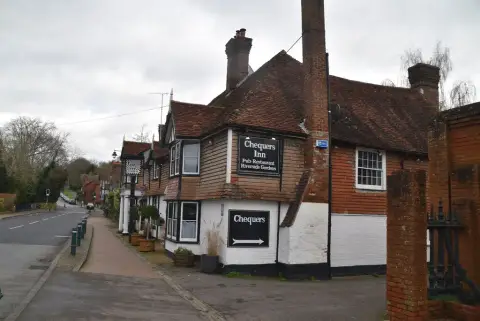
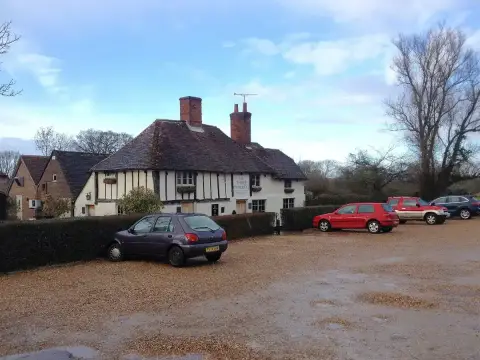
    The Chequers calls itself one of the oldest 15th-century village inns in Kent. Historic England describes a hall house of C16 or earlier date, much extended in the early C18 and again in the early C19, tile-hung above painted brick with a five-bay front of casements. Its listed outbuildings — a stable block and an outhouse — were added to the list in 1989. Nothing was found to place drinking here in the 15th

    Claims 1400; no early record found.
  8. Biddenden, Kent

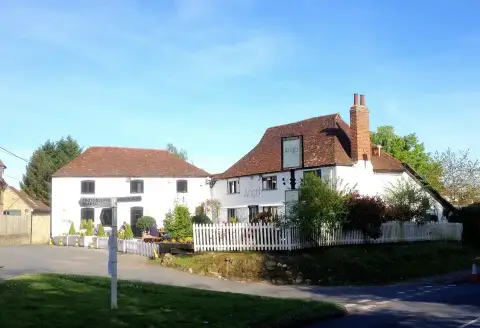
    The claim is the pub's own: its history page says the building dates from circa 1420 and the home page gives it 600 years. Historic England lists the house Grade II and describes it as a cottage, now a public house: 16th-century, timber-framed and roughcast, with 18th-century alterations and extensions and a 20th-century range at the rear. That puts the walls a century later than the 15th-century date CAMRA gives

    Claims 1420; no early record found.

The photographs above are other people's work, used under open licences. Every photographer, licence and source page is named in the image credits.

Common questions

Which is the oldest pub in Kent?
The George at Cranbrook claims the earliest date, around 1300, without a document tying that year to the building. Ye Olde Beverlie in Canterbury has the best-supported combination: a brick house credibly dated to 1570 and recorded as an inn from 1740.
Is the Parrot the oldest pub in Canterbury?
It is in the oldest building. The Parrot occupies St Radigund's Hall, a fourteenth-century Wealden hall house that narrowly escaped demolition in the 1930s, but CAMRA records that it only became a pub in 1987. So there is no medieval drinking history there, only medieval carpentry.
What is a Wealden hall house?
A timber-framed house of the fourteenth and fifteenth centuries with a tall open hall in the middle and jettied bays at each end, built for clothiers and yeoman farmers across Kent and Sussex. Several have ended up as pubs, which is why Kent's oldest pub buildings often postdate their claimed founding dates.
Which Kent pub still serves beer straight from the cask?
The Three Chimneys outside Biddenden, a rambling fifteenth-century weatherboarded pub of small rooms, where beer is dispensed from stillage at ground level behind the bar. Its house ale is brewed by Goacher's, and the simple matchboarded original drinking room contrasts with a later restaurant and conservatory.