The claim
Zum Franziskaner stands on Skeppsbron, the quay along the eastern edge of the old town, and has been on this corner since about 1910. The old beer hall is the dining room now, under Art Nouveau panelling and stucco of that year. It takes no bookings at all. Two bars pour German and Swedish beer from small breweries, including Franconian casks tapped and left to run without gas.
What the records show
A founding in 1421 by Franciscan friars, licensed by Erik of Pomerania to charge for food and drink, is printed by several Stockholm guides and is the reason this house turns up on lists of the oldest restaurants in the world. Nothing supports it. The Hidden North's survey of Stockholm's historic restaurants says flatly that the fifteenth-century origin has no historical backing and gives 1889 as the opening year, and the house's own site makes no claim at all beyond being one of Stockholm's oldest restaurants. Visit Stockholm, the city's tourist board, has it opening in 1889 and standing at its present address in the old town since 1910. Scan Magazine, interviewing the owner Sten Isacsson in March 2023, says the same and adds what happened in between: the house opened in 1889 in a building put up about 1620, when Skeppsbron first served as Stockholm's quay; that building was demolished, and the restaurant moved back to the site about 1910. So the beer hall on this corner is a hundred and sixteen years old rather than six hundred, and the 1889 belongs to an earlier building on this same corner rather than to these rooms — which is why the grade is C and the record on these premises reads 1910. Two of the three sources put the house here throughout: The Hidden North says it has operated in the same location ever since, and Scan Magazine has the building of about 1620 demolished and the restaurant moving back to the site about 1910. Only Visit Stockholm's “at its current Old Town address since 1910” reads as though the business had been elsewhere, and it says so by implication rather than outright. The Art Nouveau panelling and stucco of that year survive in the old beer hall, which is the dining room now. A drink without a meal is the house's own arrangement: it takes no bookings whatever, works first come first served, and keeps two bars, the back-pocket bar and the Lilla Zum, where it says you can slip in for a beer or a glass of wine and will not be served the full menu. The bar there was rebuilt in January 2020. Franconian casks are tapped and left to run without added gas. Published hours are four in the afternoon until eleven or midnight, three o'clock at weekends. The doors were checked on 9 October 2026: the house's own site publishes its hours, and its events page already names the dates of the Franconian fasting festival for 2027, starting on Ash Wednesday, 10 February.
| Year | What | Source |
|---|---|---|
| 1889 | Claimed founding | The press |
| c.1910 | Present building | The restaurant's own dating of its panelling and stucco |
| 1910 | First record of a drinking house here | Visit Stockholm and Scan Magazine, on the move of 1910 |
What to look for inside
- A founding of 1421 by German friars circulates and is unsupported
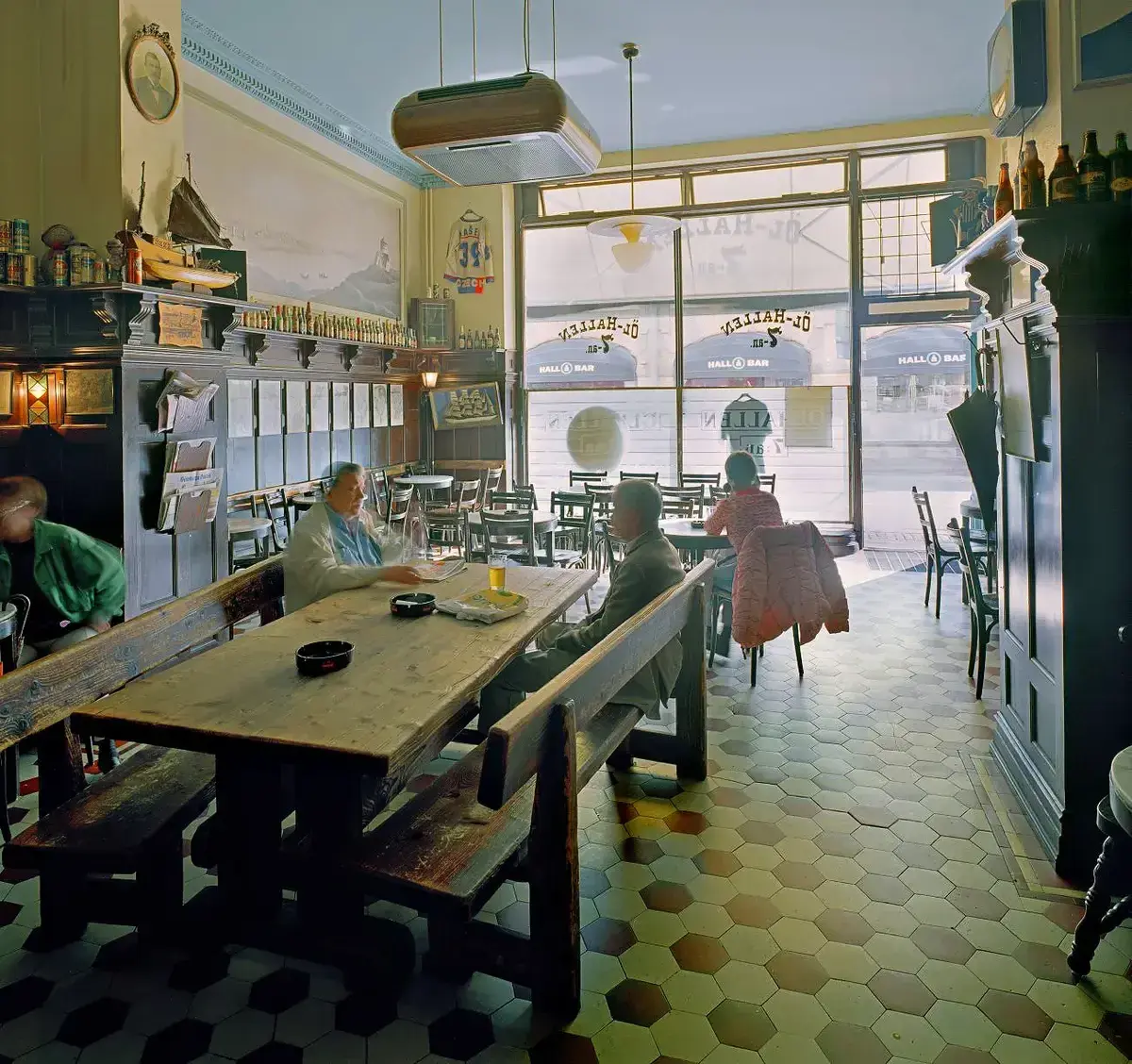
- Art Nouveau beer-hall interior of 1910
- Takes no bookings at all, at either of its two bars
Visiting
Zum Franziskaner is in Stockholm, Sweden, at Skeppsbron 44, 111 30 Stockholm. We do not list opening times, because they change; the pub’s own site is the place to check before you set out.
Sources
- zumen.se/
- zumen.se/bakfickan.html
- zumen.se/contact-2.html
- www.visitstockholm.com/o/zum-franziskaner/
- scanmagazine.co.uk/zum-franziskaner-stockholms-timeless-beer-hall/
- thehiddennorth.com/stockholms-most-historic-restaurants-bars/
- www.openstreetmap.org/node/418322632
Know something we don’t?Suggest a correctionLast checked Oct 2026
Run this pub? There is a badge for it
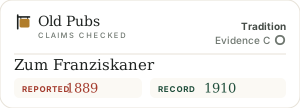
Free to put on your own site, no permission needed. It shows what the pub claims and what the records support, and it changes when the data does.
How to use it, and how to change what it says — if you have a document we have not seen, we would like to read it.