The claim
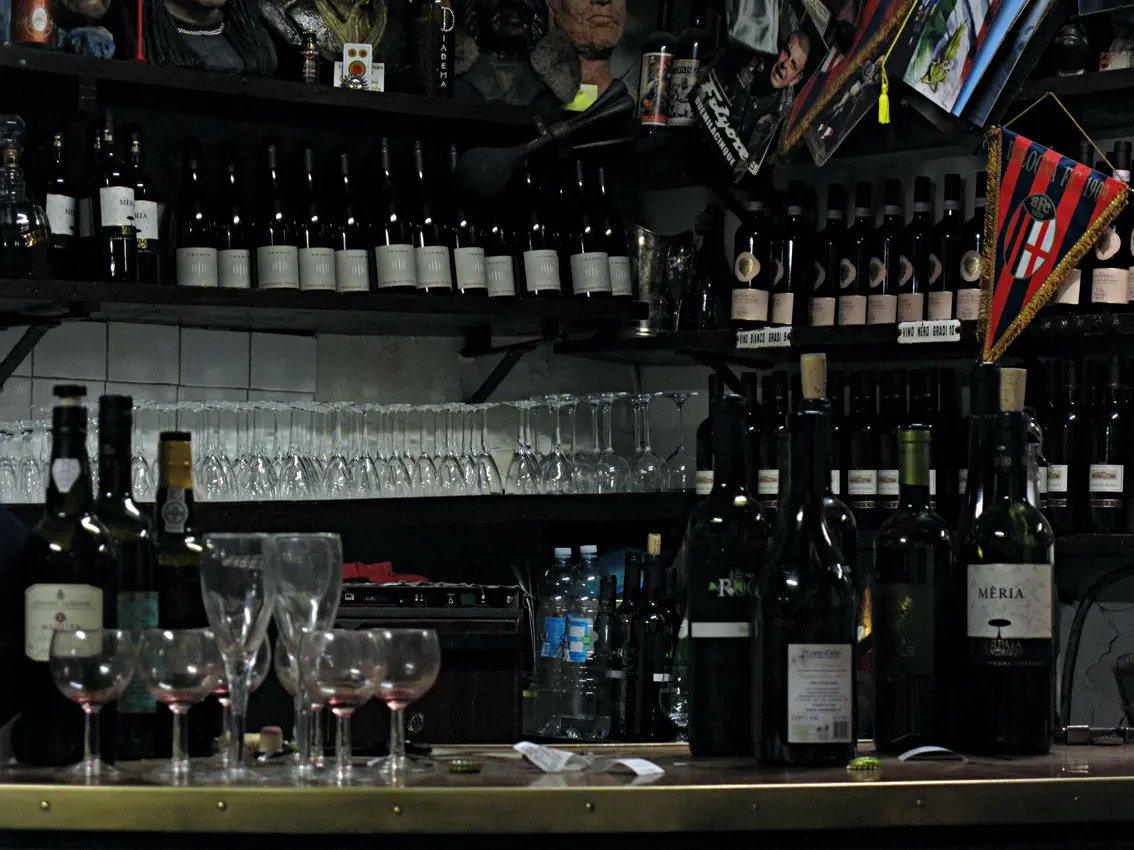
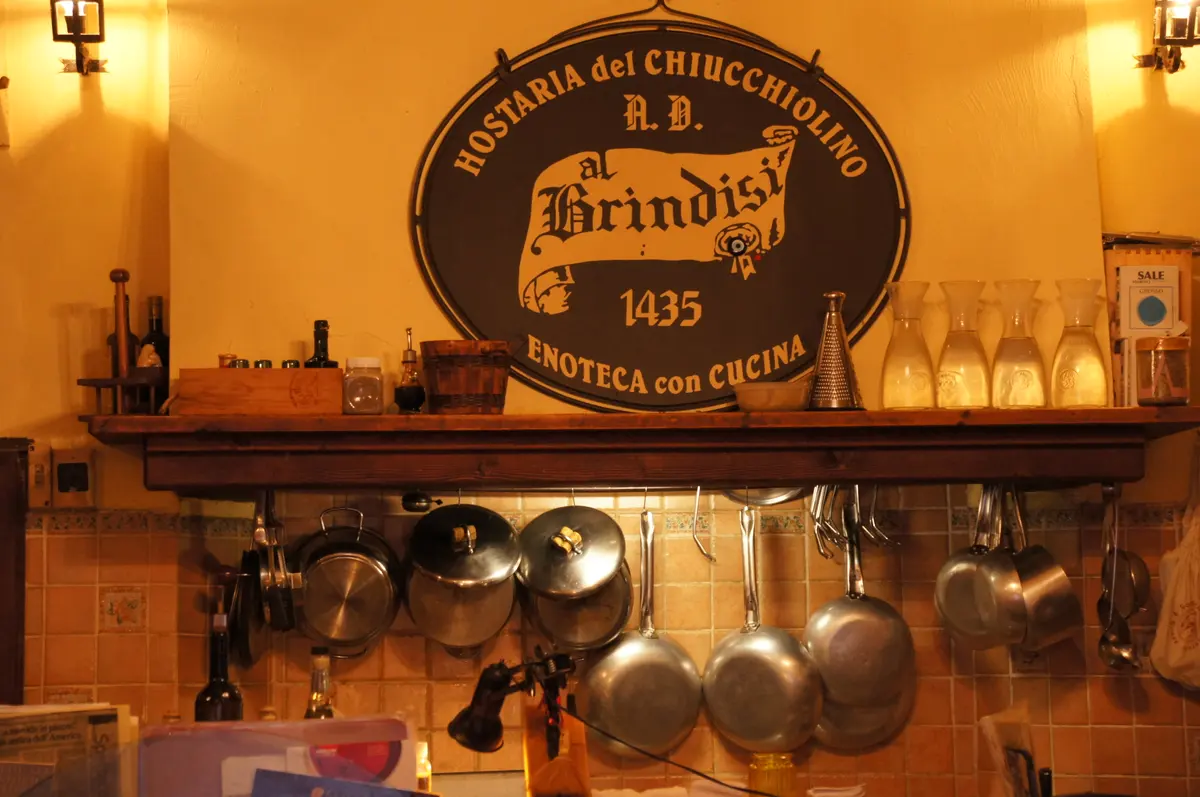
A wine room beside Ferrara's cathedral, in the lane that used to be Via Gorgadello, signing itself Enoteca al Brindisi and, before that, Hostaria del Chiucchiolino — the tipsy man's inn. Wine is poured by the glass from a cellar the house says runs to six hundred labels, with cured meats, Ferrarese bread and salama da sugo to eat beside it. Guinness listed it from 1984 to 2002 as the world's oldest osteria; the 1435 behind that has never been sourced.
What the records show
The 1435 is lettered across the enoteca's own front page — "Enoteca al 'Brindisi' già Hostaria del Chiucchiolino, a.d.1435" — and its origin is a Guinness Book of Records entry, which the house reprints on the page where it collects its press: from the 1984 edition to the 2002 one Guinness called this the oldest osteria in the world and said the first written record of it dates from 1435, when the osteria was already famous. Guinness names no such record and neither does anybody since. A Ferrarese history of the house in the Storie di Pianura series of historic shops credits the local writer Gianni Pazzi with fixing the year on Ferrara's statutes of 1435 against watering and mismeasuring wine, which regulate a trade across a city rather than these premises, and dates the tavern's fame to the following century. MuseoFerrara, the city council's own record of Ferrara place by place, repeats 1435 as the opening year and names no document for it either; what it sets out instead is literary. Ariosto puts the Gorgadello in his second Satire, among the places where Moschino and fra Gualengo eat fat capons, and in La Lena, first performed in the Castello Estense in 1528, where Corbolo speaks of men coming out of Gorgadello drunk. Ercole Bentivoglio, in Satires printed in 1540, names the Gorgadello and the Chiucchiolino in the same line — the nickname the house still trades under. All of that names the street, which used to be Via Gorgadello, rather than these premises, so no year is recorded here as documented, and the grade is C. Two other things are worth setting against the claims. Girolamo Melchiorri's study of Ferrara's street names says the street itself was only formed after the new cathedral of 1135, when the drainage ditch beside the new quarter north of it became a road — so the enoteca's English statement that it was "certainly already open in the year 1100" for the men building the cathedral puts a tavern in a street that did not yet exist. And a published history of the street, following Melchiorri and Lucio Scardino, dates an osteria famous for its wine in this lane from the sixteenth century, which is a century later than the year on the sign.
What to look for inside
- Guinness listed it from 1984 to 2002 as the world's oldest osteria
- Ariosto sent characters home drunk from the Gorgadello in La Lena, performed in 1528
- Ercole Bentivoglio names the Gorgadello and the Chiucchiolino in Satires printed in 1540
- The street was only formed after the cathedral of 1135
- Renamed Al Brindisi in 1970, after spells as the Osteria del Toscano, Da Cielo and Dal Moro
Visiting
Al Brindisi is in Ferrara, Italy, at Via Guglielmo degli Adelardi 11, 44121 Ferrara. We do not list opening times, because they change; the pub’s own site is the place to check before you set out.
Sources
- www.albrindisi.net/
- www.albrindisi.net/dicono-di-noi.html
- www.estense.com/?p=159129
- www.italia.it/en/emilia-romagna/ferrara/antica-enoteca-al-brindisi
- www.storiedipianura.it/territorio-e-cultura/botteghe-storiche/531-la-dove-ferrara-alza-il-bicchiere-storia-dellenoteca-al-brindisi.html
- www.lucianopignataro.it/a/ferrara-enoteca-al-brindisi-gia-hostaria-del-chiucchiolino-a-d-1435/31557/
- www.openstreetmap.org/node/1249699754
- www.museoferrara.it/view/s/24cd010e83f84e5299a4127b94ca718c
- it.wikipedia.org/wiki/Via_Guglielmo_degli_Adelardi
Know something we don’t?Suggest a correctionLast checked Sept 2026
Run this pub? There is a badge for it
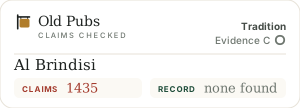
Free to put on your own site, no permission needed. It shows what the pub claims and what the records support, and it changes when the data does.
How to use it, and how to change what it says — if you have a document we have not seen, we would like to read it.