9 pubs checked · updated 18 September 2026

The oldest pub in Cornwall

The short answer

Oldest claim

The Bush Inn

Says AD 950. No document from that date has been found.

Grade C · Tradition

By claim, the oldest pub in Cornwall is the Bush Inn at Morwenstow on the north coast, which cites hospitality on its site from around AD 950. No Cornish pub on this page has produced a document or a scientific date from anywhere near the year it claims, so there is no oldest-by-evidence answer here yet. The nearest thing to hard information runs the other way: CAMRA's heritage survey dates the Grade II listed Tinners Arms at Zennor, which says it was built in 1271, to the early eighteenth century.

Cornwall has nine old pubs on this page and not one documentary record among them, which makes it the most purely traditional county in the collection. There are reasons beyond carelessness. The Cornish building stock is cob, granite and slate, repeatedly patched and rebuilt against Atlantic weather, so the fabric rarely reads as a single date. The Spanish burned Penzance in 1595, taking the town's older buildings with it. Tin and copper filled and then emptied whole villages within a century, and the pubs that survived changed hands and names as the industry moved. Most of the dates repeated for Cornish pubs come from tourism round-ups and the pubs' own websites rather than from county record offices. What the county does have is an unusually clear pattern of where its pubs stand: beside a parish church, or on a quay. That is why the same two founding stories — masons building the church, and smugglers landing the cargo — recur from Morwenstow to the Lizard.

The two Cornish stories

The church-builders’ story appears at the Old Inn at St Breward, high on the edge of Bodmin Moor beside a church of Norman origin, at the Crown at Lanlivery on the Saints’ Way pilgrim route, where a medieval well sits under glass in the porch, and at the Tinners Arms at Zennor, which says it was raised in 1271 for the masons of St Senara’s church. The smuggling story belongs to the harbours: the Turks Head and the Dolphin in Penzance, the Sloop on the wharf at St Ives, and the Pandora on Restronguet Creek, which was the Passage House before it took the name of the ship sent after the Bounty mutineers.

Where to start

For fabric rather than folklore, the Tinners Arms at Zennor is the one to sit in: a single panelled bar with a fire, folk sessions on Thursdays, and the church of the Mermaid of Zennor next door, where D. H. Lawrence lodged in 1916. For setting, the Bush Inn at Morwenstow stands on the clifftops where Parson Hawker wrote his poetry, and the Pandora can be reached by boat and has a pontoon that fills on summer evenings. For a walk, the Old Inn at Mullion is a natural stop off the Lizard coast path. The wider county comparison is at the oldest pubs in England, and our grading rules are on the methodology page.

Cornwall

OpenFreeMap · © OpenMapTiles · Data © OpenStreetMap contributors

Open the full map

The contenders, oldest claim first

Order the contenders
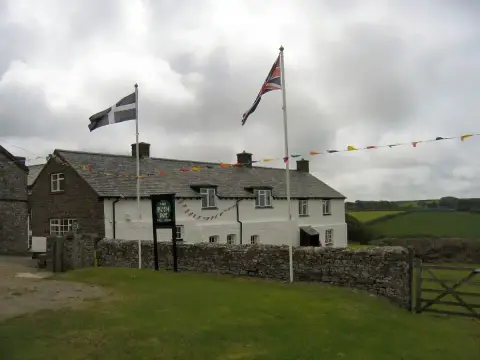
  1. The Bush Inn

    Grade C

    Morwenstow, Cornwall

    The pub cites hospitality from around 950 AD and a 13th-century building, and offers no documentation for either. Two searches on 12 September 2026 turned up nothing to support them and two blanks worth recording. Historic England's list holds 23 entries in Morwenstow parish - the church, six chest tombs, the vicarage, Tonacombe Manor, Hawker's hut, the ship's figurehead by the lych gate - and not the inn; the only
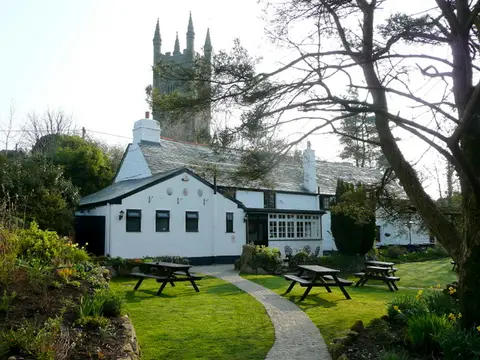
    Claims AD 950; no early record found.
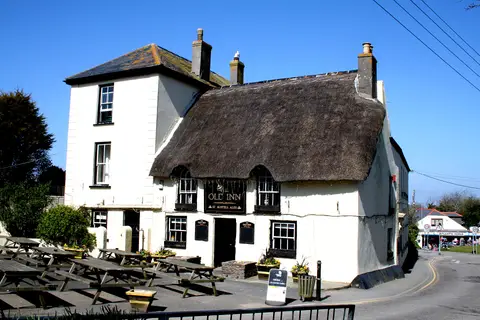
  2. The Old Inn

    Grade C

    St Breward, Cornwall

    The 11th-century date, tied to monks building the nearby church, comes from the pub and from tourism lists; no documentary or architectural dating was found. The pub's own about page is more careful than the lists that repeat it: it says the middle bar and kitchens were built in the 11th century as lodging for the monks, that the house is believed to have begun trading as a public house in the 15th century, and that

    Claims 1000; no early record found.
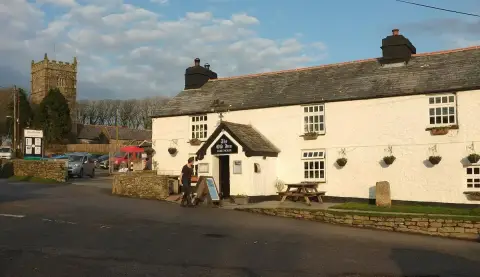
  3. The Crown Inn

    Grade C

    Lanlivery, Cornwall

    The 12th-century date is CAMRA's: its Cornwall entry calls the Crown a 12th-century listed pub on the Saints' Way, and the inn's own website gives no date at all. The listing the grade was recorded from has now been read. Historic England designated the Crown on 28 August 1987 and calls it an inn, probably of early 17th-century origin, with alterations and additions of the later 17th and early 18th centuries, a

    Dated 1100 by CAMRA; no early record found.
  4. Mylor Bridge, Cornwall

    The inn's own page claims the 13th century for parts of the building, and says plainly what stood here then: a small farm on the edge of Restronguet Creek. So the claimed date dates a farm rather than a drinking house, which is why the grade is C. The page gives one real record: by 1488 the Restronguet Estate Accounts put the rent at 8s 4d a year, which it calls one of the earliest written references to the place.

    Claims 1200; no early record found.
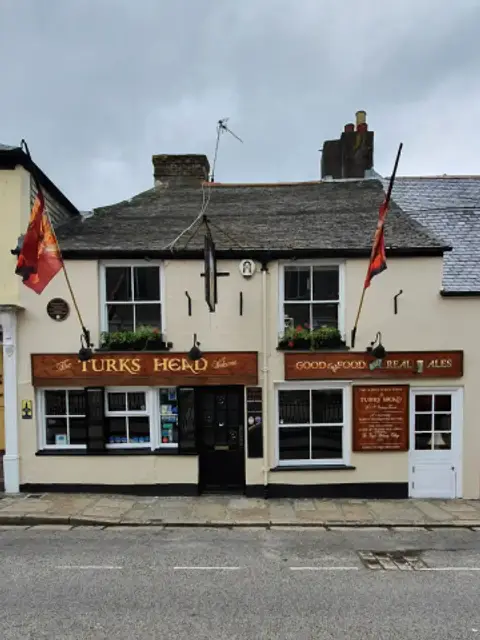
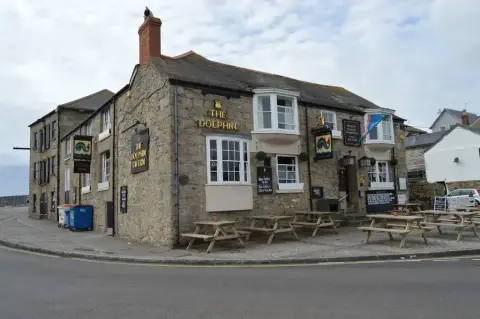
  5. Penzance, Cornwall

    The 1233 is the pub's own claim. Its website, archived in June 2024, said the house is reputed to date from 1233, when Turks were said to have raided Penzance, and that it was the first inn in England to take the name; the site has since stopped resolving. The hanging sign outside claims only 'the oldest pub in Penzance', with no year. CAMRA calls it a 13th-century pub said to be the oldest in the town. The date and

    Claims 1233; no early record found.
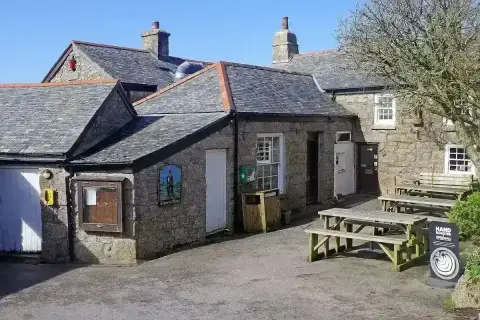
  6. Zennor, Cornwall

    The pub says it was built in 1271 for masons working on St Senara's church, but CAMRA's heritage survey of the Grade II building dates the fabric to the early 18th century. Earlier drinking use on the site is unproven. A second publisher adds a little on each side: John Hobson Matthews, in his history of the parishes of St Ives, Lelant, Towednack and Zennor (1892), dates the south side of the nave at Zennor church

    Claims 1271; no early record found.
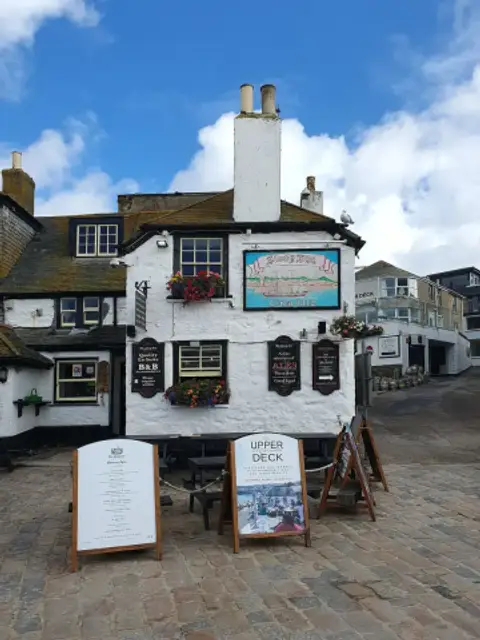
  7. The Sloop Inn

    Grade C

    St Ives, Cornwall

    'Reputedly from 1312' is repeated by CAMRA and the inn itself, and the building is a 17th- and 18th-century house. Historic England's listing, read on 17 September 2026, says so in as many words: the Sloop is listed Grade II, first listed on 4 June 1952, and described as C17-18, low and L-shaped, of colourwashed granite rubble with a tarred plinth, two storeys, slate-hung above the ground floor on the sides of the

    Claims 1312; no early record found.
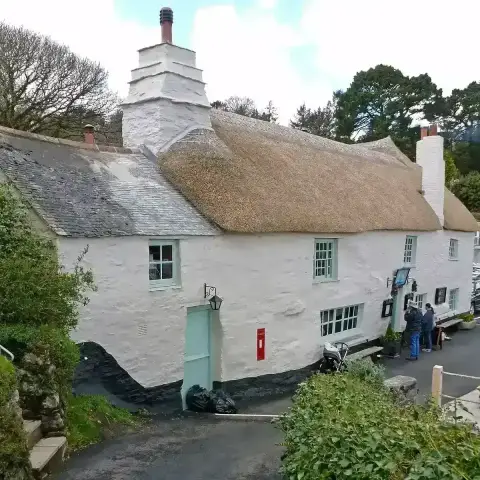
  8. Mullion, Cornwall

    CAMRA and the inn describe a 16th-century partly thatched house beside the church. Historic England's entry, read on 17 September 2026, reads it differently: a public house possibly of the late 17th century, with two mid-19th-century wings to the side and rear, the older part whitewashed stone rubble with a cob first floor under a thatched roof with gabled ends and eyebrow eaves, on a two-room plan with a central

    Claims 1500; no early record found.

The photographs above are other people's work, used under open licences. Every photographer, licence and source page is named in the image credits.

Common questions

Which is the oldest pub in Cornwall?
By claim, the Bush Inn at Morwenstow, which cites around AD 950. The Turks Head in Penzance claims 1233, the Tinners Arms at Zennor 1271 and the Sloop at St Ives about 1312. None of the four has produced a record, so Cornwall's oldest pub is genuinely unsettled.
Is the Turks Head really Penzance's oldest pub?
The 1233 date and the story linking its name to a Turkish raid are tradition only. The one datable event in its history is the rebuilding said to have followed the Spanish burning of Penzance in 1595. The smugglers' tunnel to the harbour is local lore rather than record.
Why do so many Cornish pubs say they housed church builders?
Because a parish church was the largest building project a Cornish village ever undertook, and the workforce had to be lodged and fed. It is entirely plausible and almost never documented. The Old Inn at St Breward, the Crown at Lanlivery and the Tinners Arms at Zennor all tell a version of it.
Which Cornish pub has the oldest building?
Nobody can say, because none has been tree-ring dated. The Old Inn at Mullion is described as sixteenth century and partly thatched; the Tinners Arms is listed but surveyed as early eighteenth century; the Pandora at Restronguet is cob and thatch, carefully rebuilt after a serious fire in 2011.