3 pubs checked · updated 18 September 2026

The oldest pub in Oxford

The short answer

Oldest claim

The Bear Inn

Says 1242. The first record is 1774.

Grade C · Tradition

Oldest proof

The Chequers

On record from 1605.

Grade C · Tradition

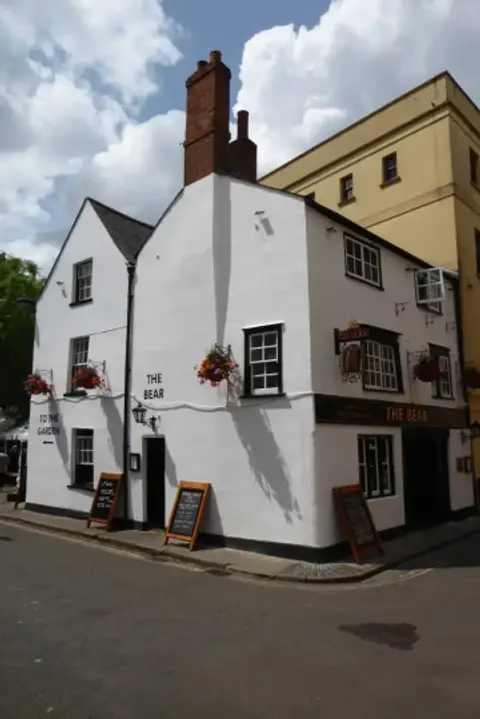
By claim, the oldest pub in Oxford is the Bear Inn on the corner of Alfred Street, which advertises 1242. By evidence it is the Chequers, down a passage off the High Street, which can be traced to 1605. Neither pub is quite what its sign says: the Bear's date belongs to a different, now-demolished inn on the High Street, while the present house traded as the Jolly Trooper from 1774 and took the Bear name afterwards.

Oxford's inns are among the best-documented in England, and it has not helped their reputations. The historian H. E. Salter spent the 1920s working through the deeds of the city and the colleges, and the result is a property record dense enough to say when a particular house first appears and what it was called — which is why several Oxford pub claims can be shown to belong to buildings that no longer exist. The medieval Bear Inn stood on the High Street, was known as Le Tabard by 1432 and the Bear by 1457, and closed in 1801; the pub that now carries both the name and the 1242 date is a smaller house round the corner. Salter also found the Turf first recorded as a public house, under the name the Spotted Cow, only towards the end of the eighteenth century. What Oxford genuinely offers is a set of very small old rooms — a tavern reached down an alley, a bar backing onto the city wall, a corner house wedged between two colleges — and a great many generations of students drinking in them.

Names that outlived their buildings

Oxford shows more clearly than anywhere how a pub name travels. The Bear inherited its name and its history from a substantial medieval inn on the High Street that had been trading under two different signs for centuries before it shut in 1801. That does not make the present pub young — it is a genuinely old, genuinely tiny building, and human bones of medieval date were found in its cellar during works in 2018 — but it does mean the “since 1242” over the door is borrowed. The Chequers takes its name from the chequerboard used by the money-changers who once worked on the site, and in the seventeenth century charged visitors to look at exotic animals and new inventions.

Down the alleys

The best of Oxford’s old drinking is architectural rather than documentary. The Turf is reached by twisting passages under New College’s walls and opens into courtyards against the city wall; it is the pub most visitors remember and the one whose date is least defensible. The Bear sits on a corner between Christ Church and Oriel with room for perhaps forty people. The Chequers is invisible from the High Street until you are in the passage. There is a route between all three in Oxford’s medieval taverns; the difference between the words on their signs is explained in inn, tavern or alehouse; and the wider comparison is at the oldest pubs in England.

Oxford

OpenFreeMap · © OpenMapTiles · Data © OpenStreetMap contributors

Open the full map

The contenders, oldest claim first

Order the contenders
  1. The Bear Inn

    Grade C

    Oxford, Oxfordshire

    A 1241 property bequest and the medieval Bear Inn on the High Street (known as Le Tabard by 1432 and the Bear by 1457, closed 1801) underpin the claim, but that was a different building. The present early-17th-century house traded as the Jolly Trooper from 1774 and later took the Bear name.
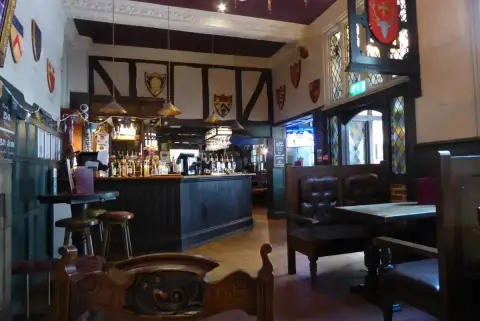
    Claims 1242; first recorded 1774.
  2. Turf Tavern

    Grade C

    Oxford, Oxfordshire

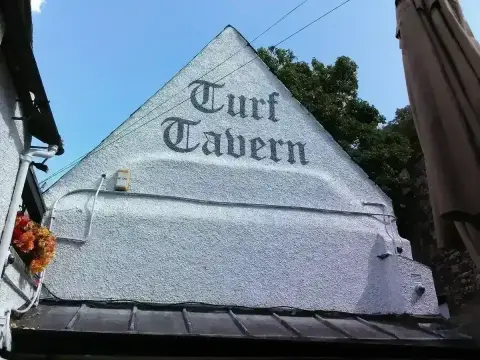
    The 1381 date used by the operator is not supported by published records; the historian H. E. Salter, working through Oxford’s deeds in 1926, found it first recorded as a public house around the end of the eighteenth century, under the name the Spotted Cow. That is the earliest record here, and it is six centuries after the date on the sign.

    Claims 1381; first recorded 1790.
  3. Oxford, Oxfordshire

    The operator says a moneylender's tenement was rebuilt as a tavern in the 1500s and that much of the interior is sixteenth-century, and CAMRA notes that the name Chequers is first recorded in 1605, which is the earliest cited record of drink sold here. A second account, the Oxford History survey of the High Street, fills in the century between them from the property records. It has the house standing in the

    Claims 1500; first recorded 1605.

The photographs above are other people's work, used under open licences. Every photographer, licence and source page is named in the image credits.

Common questions

Which is the oldest pub in Oxford?
The Bear claims 1242, and the honest answer is that the date belongs to a lost inn nearby. Of the three pubs on this page the Chequers has the earliest verifiable record, from 1605, in a house its owners say was rebuilt as a tavern during the sixteenth century.
Is the Bear Inn really from 1242?
A property bequest of 1241 and the medieval Bear on the High Street lie behind the claim, but that was a different building and it closed in 1801. The present early-seventeenth-century house traded as the Jolly Trooper from 1774. It now displays more than 4,500 snipped tie ends, a collection begun in 1952.
Is the Turf Tavern from 1381?
The 1381 date used by its operator is not supported by published records. H. E. Salter found it first recorded as a public house, the Spotted Cow, around the end of the eighteenth century. The buildings themselves are genuinely old and low-beamed, and they back onto a surviving stretch of the medieval city wall.
Which Oxford pub has the oldest building?
None of the three can be dated precisely, and we have not traced a listing above Grade II for any of them. The Chequers occupies a medieval tenement that its owners say was rebuilt as a tavern in the 1500s, the Bear's house is early seventeenth century, and the Turf's low rooms are of uncertain date against the old wall.