9 pubs checked · updated 18 September 2026

The oldest pub in Devon

The short answer

Oldest claim

The Cridford Inn

Says AD 825. The first record is 1982.

Grade C · Tradition

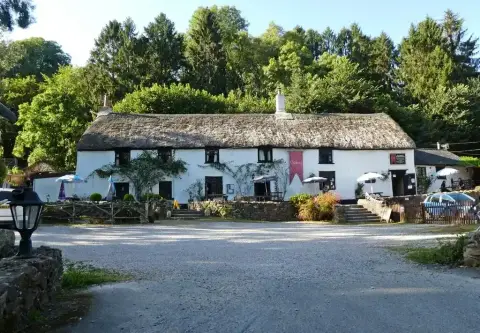
By claim, the oldest pub in Devon is the Cridford Inn at Trusham in the Teign valley, which dates its story to 825 — although the thatched longhouse was a farmhouse until it was converted into a pub in August 1982. By evidence it is a different building on Dartmoor: the Oxenham Arms at South Zeal, a Grade II* granite manor house with a prehistoric standing stone built into its lounge wall, which CAMRA records as licensed since 1477.

Devon's contribution to pub history is not a date but a building type — two of them, in fact, and both are represented here. The first is the church house: a hall put up beside the churchyard in the fifteenth or sixteenth century so that the parish could brew and sell ale to pay for the fabric of the church. Some slid into commercial drinking after the Reformation, and the Devon survivals are among the best in England. The second is the Dartmoor and South Hams longhouse, a long low range of cob or rubble under thatch, built for people and animals to share, with fireplaces you can stand inside. Neither type was designed as a pub, which is exactly why the county's dates are so slippery: a genuinely medieval building may have been serving beer for two hundred years or for forty. Five of the pubs here have fabric of roughly the age they claim — most of the list, and a better showing than most English counties manage — and not one of them has a document to match.

Buildings that became pubs

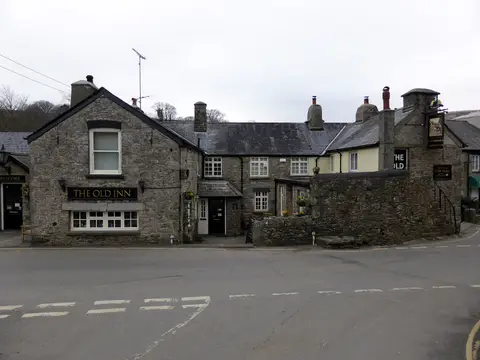
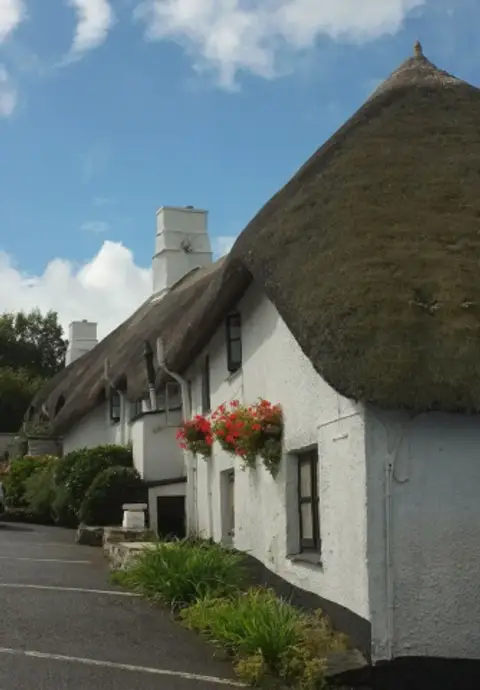
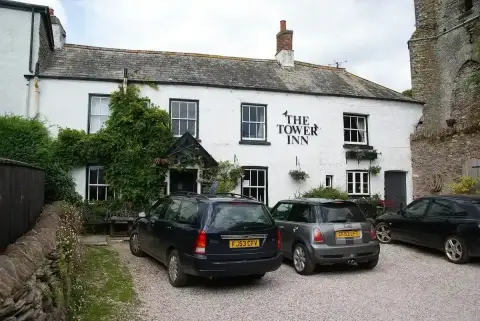
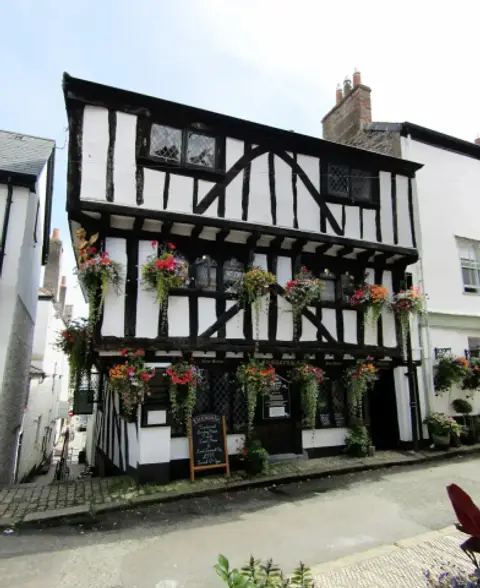
The Cherub in Dartmouth is a merchant’s house of about 1380 squeezed onto narrow Higher Street, with bars and dining rooms stacked over several floors and beams reputedly reused from ships. The Cott at Dartington is a medieval cob longhouse under what is claimed to be one of the longest thatched roofs in Britain, on the old packhorse road to Totnes. The Tower Inn at Slapton began, it says, as cottages for the men building the tower of the chantry college whose ruin still looms over its walled garden — the college is generally dated to the 1370s, which makes the pub’s 1347 look optimistic. The Old Inn at Widecombe keeps thick stone walls and oak beams that CAMRA reports as more than six hundred years old.

The church houses, and the granite

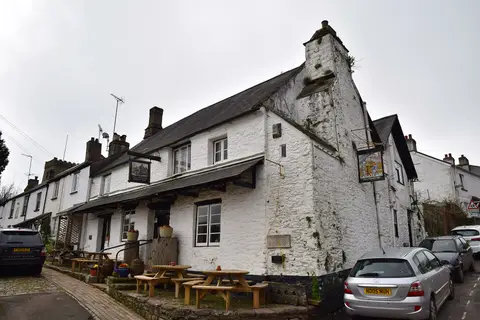
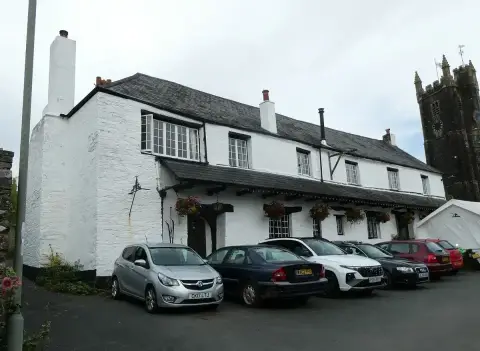
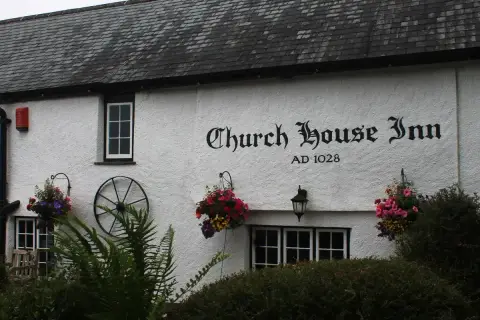
The Church House Inn at Rattery sits beside St Mary’s on a hilltop above the Dart, serving cider from a farm a mile away; its 1028 date is tradition, and even the pub’s own website does not repeat it. The Church House Inn at Harberton is the better building of the two, with old settles and a Tudor screen, and a bar counter salvaged from a bank in 1985. The Church House Inn at Stoke Gabriel is still owned by the parish that built it, two rooms divided by an oak partition, with an inglenook, carved beams and the village stocks outside the door; CAMRA dates it to the sixteenth century and calls it the least altered of the Devon church houses, which is the only dating we have traced for it. The Oxenham Arms is the county’s showpiece: flagstones, low beams, great fireplaces and a megalith in the wall, in a Dartmoor village that the main road bypassed. The Cridford Inn is worth visiting for its medieval mullion window and worth reading carefully. For the national picture see the oldest pubs in England, and for neighbouring Cornwall, where the evidence is thinner still.

Devon

OpenFreeMap · © OpenMapTiles · Data © OpenStreetMap contributors

Open the full map

The contenders, oldest claim first

Order the contenders
  1. Trusham, Devon

    The building is a genuinely old listed Devon longhouse, but it was a farmhouse until it was made into a pub and restaurant in August 1982, which CAMRA's South Devon branch states as plainly as the inn does. Historic England lists it grade II, under the spelling Crideford Inn, and first listed it on 2 July 1986 — four years after the conversion, so the register knows the building as an inn and says nothing about how
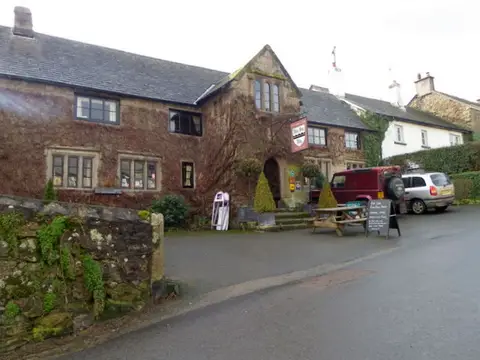
    Claims AD 825; first recorded 1982.
  2. Rattery, Devon

    The 1028 date, tied to monks or masons building the parish church, is tradition and is not repeated on the pub's own website. The standing building is described by CAMRA as a listed 16th-century church house.

    Claims 1028; no early record found.
  3. South Zeal, Devon

    The claim is the inn's own: its history page describes Benedictine monks building a nine-room granite and oak monastery around the South Zeal menhir in the 12th century, and the manor being leased and licensed as an inn in 1477, and CAMRA repeats the 1477. The list entry has now been read, and it reaches neither date. Historic England, which listed the house Grade II* on 20 February 1952, calls it an inn, former

    Claims 1100; no early record found.
  4. The Old Inn

    Grade C

    Widecombe-in-the-Moor, Devon

    CAMRA reports thick stone walls and oak beams over 600 years old in the central section. Historic England, which listed the house Grade II on 23 August 1955, reads it differently and two centuries later: a granite rubble public house of the 16th or 17th century, U-shaped in plan, with wings added at the front in the 18th or 19th century, its older features a stone-flagged floor, chamfered beams and two large granite

    Claims 1300; no early record found.
  5. The Cott Inn

    Grade C

    Dartington, Devon

    The thatched house is long, low and genuinely old, and the 1320 with the story of Johannes Cott is the inn's own, repeated by CAMRA. Historic England, which listed it Grade II on 11 November 1952, dates it early in the 17th century or of earlier origins, remodelled later that century and extended at both ends in the 18th: a three-room-and-through-passage house with gable-end stacks, a plank-and-muntin screen

    Claims 1320; no early record found.
  6. The Tower Inn

    Grade C

    Slapton, Devon

    The pub says it began in 1347 as cottages for workmen building the adjacent chantry college tower. Historic England dates that tower to about 1372 or 1373 and records Sir Guy de Brian, Edward III's standard-bearer at Crecy and lord of the manor, founding the collegiate chantry in 1373 with six priests, a rector, five fellows and four clerks; the tower is listed Grade I and is all that stands of the chantry church.

    Claims 1347; no early record found.
  7. Dartmouth, Devon

    The claim of about 1380 comes from the pub and is repeated by CAMRA's branch. Historic England's list entry, read on 17 September 2026 through an archived copy of entry 1209644, does not support it: the register dates the merchant's house to probably the second half of the fifteenth century and records a restoration for Cresswell Mullet by Blamey and Co. about 1958, citing P. Russell's account of the house in the

    Claims 1380; no early record found.
  8. Stoke Gabriel, Devon

    A church house: built by the parish beside its church, in this case said to have housed the masons who built it, and later used as the courthouse, which is what the old stocks outside the door are for. The national register of listed buildings enters it as a public house of circa the sixteenth century, and describes stone rubble under a slate roof, moulded ceiling beams, a roll-moulded screen at the south end and a

    Dated 1500 by CAMRA; no early record found.

The photographs above are other people's work, used under open licences. Every photographer, licence and source page is named in the image credits.

Common questions

Which is the oldest pub in Devon?
The Cridford Inn claims 825 and calls itself Devon's oldest, but it was a working farmhouse until 1982. On the evidence the answer is the Oxenham Arms at South Zeal, a late medieval granite manor house that CAMRA records as licensed since 1477 and rates as a nationally important interior.
What is a church house, and which Devon pubs are one?
A parish hall with a brewhouse, built to raise money for the church next door. Three of them are here. The Church House Inn at Rattery is described by CAMRA as a listed sixteenth-century church house; the Church House Inn at Harberton keeps an early oak plank-and-muntin screen from the same tradition; and CAMRA calls the Church House Inn at Stoke Gabriel the least-altered of the many Devon examples.
Is the Cridford Inn really from 825?
The building is a genuinely old listed Devon longhouse, architecturally assessed as fifteenth century. The 825 date, the Domesday link and the mosaic dated 1081 found under the floor in 1988 are the inn's own claims and are not independently verified. It became a pub in August 1982.
Which is the oldest building among Devon's pubs?
The Cherub in Dartmouth is believed to be the oldest building in that town, a timber-framed merchant's house of about 1380, and it is accepted as fourteenth century. It was built as a house rather than an inn, so its age is a fact about Dartmouth's architecture rather than about drinking.